
How much seam allowance should you add?
All beginner sewists are tempted to make seam allowances wider—just in case 😉 Yet they often don't take into account the seam location and the fabric's characteristics/quality. Where are wide allowances appropriate, and where are narrow ones better, and why?
Fabrics prone to fraying require a wider allowance, even on seams where you normally use 0.7–1 cm. Increasing the seam allowance by 1.5–2 times is an optimal solution.

A felled (flat‑felled) seam also requires a wide seam allowance—simply because it's very difficult to fold over and enclose all raw edges with a narrow allowance.

At the sleeve hem/garment hem a larger allowance is also appropriate, since it allows you to adjust the length during fitting. In these cases it's not recommended to keep the seam allowance under 4 cm.

If you're sewing for a non‑standard figure, you can increase the usual seam allowance 2–3 times so you can make alterations to the construction during the process without problems.

When are wide seam allowances inappropriate?
Sleeve cap/armhole — allowances are definitely not needed here. Extra centimeters will pull the seam and dig into the underarm.
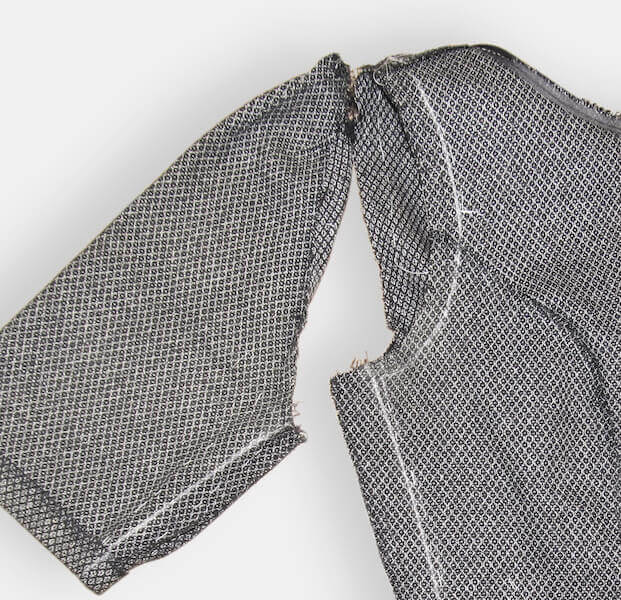
The same applies to the neckline — after fittings it's better to shorten the seam allowance before assembly.
There are seams—such as the Moscow seam—that don't normally assume wide allowances: the standard width will be reduced to a minimum anyway.

If your figure is typical, you've chosen an appropriate fabric for the model, and you're using the recommended seams, you don't need extra margin on the seam allowance. You can rely on the pattern instructions, especially if they include a detailed section with seam allowances for each specific area.
And finally — a list of regulated seam allowance widths for different parts of the garment:


