
Why your serger is skipping stitches
Does this happen to you? You set everything up, correctly, start working... and then—hello, trouble begins. It just won't sew properly, no matter what you do.
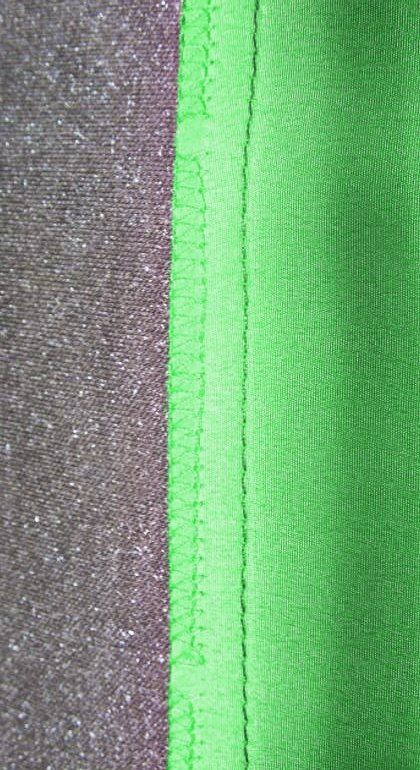
I called a technician to adjust everything properly (just in case I messed something up out of inexperience).
And here is what he told me, which I will share with you.
As practice shows, poor stitch quality is often not related to a faulty or poorly adjusted serger mechanism. So don't rush to turn the dials! That should be left to a professional. The cause is most likely incorrect thread tension or the wrong choice of needles.
My serger is a three-thread model, meaning the stitch is formed by one needle and two loopers. Therefore, you need to clearly distinguish which thread goes where, what it is intended for, and what it is connected to—the needle or a looper (and which one). Understanding these nuances helps you figure out which thread is “ruining” the stitch, i.e., which thread needs to be adjusted.
## Threads
You need to use special threads for sergers. Regular sewing machine threads are not suitable. Furthermore, all threads should be of the same quality, especially in terms of tension. Otherwise, you will get skipped stitches.
## Needles
If your needle is bent or dull, you will hear a dull thud while working—this indicates skipped stitches.
To check the condition of the needle, run your thumbnail along it—if there is a bend, you will feel it. You can also examine the needle under a magnifying glass. If you discover that the needle is bent, do not try to straighten it. It won't do any good; on the contrary, it could lead to potential damage to the serger.
By the way, the technician said that if a needle is high-quality, it will never bend. IT WILL BREAK. And in that case, the only option is to replace it.
For your work, buy needles recommended by the manufacturer specifically for your serger model. This is because needles come in different lengths and with different shank shapes and tip types.
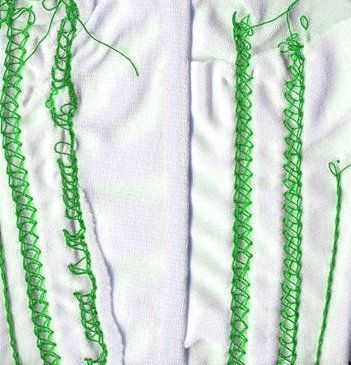
A serger can also skip stitches due to incorrect needle installation. The flat side of the shank should face away from you, and the long groove should face toward you. And always make sure to insert the needle as far as it will go! If there are two, they are installed in a staggered position—one lower, one higher.
## Presser foot
If your presser foot is not applying enough pressure, you will also see skipped stitches. You need to increase the presser foot pressure.
## Other causes
If none of the above causes apply to you, but you are still getting skips, check if there is lint under the needle plate; check for dust and hair in the looper compartment, and ensure the needle plate is installed correctly.
Well, if even that doesn't help, then it's time to call a technician!
I hope it doesn't come to that, and that my tips are useful to you)🙂


Everything was explained in great detail. Thank you! It turns out there are so many nuances :rolleyes: