Choosing Sewing Thread: Archive Tips for Beginners
When starting to sew clothes, a beginner sewist will certainly pay attention to choosing a sewing machine, fabric, needles, and even scissors. But somehow I am almost sure she might completely forget to study the thread basics, and thread is a very important component of high-quality sewing for any project! Whether you work with fabric or leather, sew or embroider—all these processes may require a specific thread, because it is in our best interest to make a high-quality, durable stitch!
The selection of threads in stores is simply huge! I suggest gathering all the information for beginners here in one place and sharing our experience. 😉
I'll try to classify the main sewing threads.
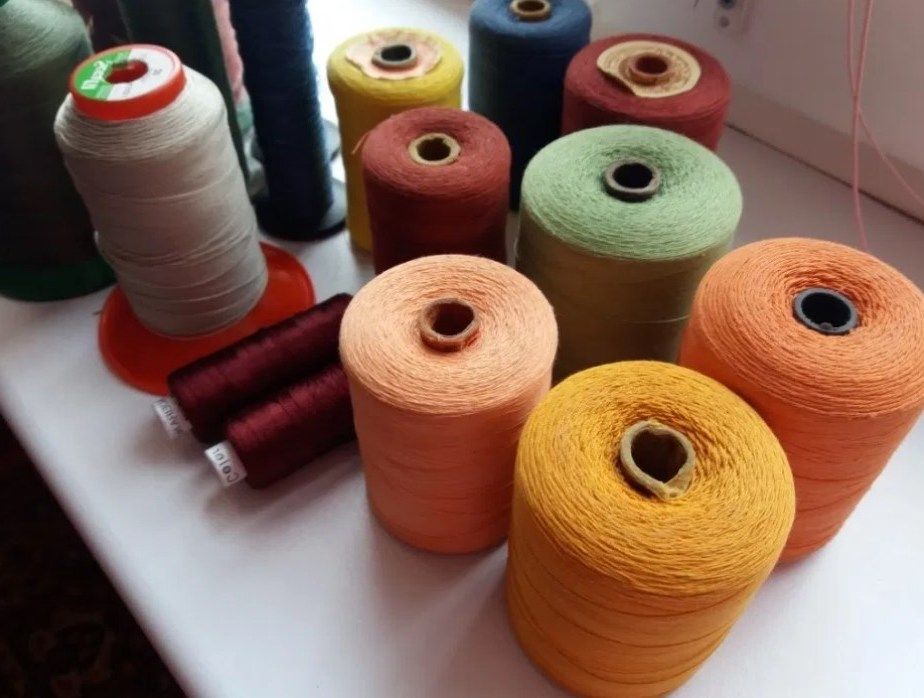
100% cotton thread
The most in-demand thread for sewing bed linens, and clothing for adults and children made of natural cotton fabrics. Suitable for decorative embroidery (both hand and machine).
100% polyester thread (nylon)
All-purpose and most common threads. Thanks to their tight twist, they fuzz much less than the previous ones. They have a uniform thickness. Quite strong. The stitch line turns out smooth, even, and beautiful.
Spun polyester thread
Quite elastic, so they are suitable for working with knit fabrics.
Thread for sergers and coverstitch machines
For working on a serger or coverstitch machine, synthetic threads sold on large spools are the best choice. They are quite fine, elastic, and at the same time have excellent strength!
Reinforced threads
The thread core is Lavsan, wrapped with another fiber. Below are the most common variations and their markings:
LS – consist of 56% Lavsan and 44% Siblon, withstand temperatures up to 150 degrees;
LKh – consist of 56% Lavsan and 44% cotton, withstand temperatures up to 200 degrees;
LL – consist of 100% Lavsan, withstand temperatures up to 100 degrees (Important! May shrink after washing!).
Polyamide thread (kapron)
Twisted threads are used for sewing leather goods. Such threads boast extra strength and sufficient elasticity. They can be waxed—these threads provide good stitch grip and are protected against moisture penetration.
Polyamide monofilament threads
They practically blend in with the fabric. Suitable for blind stitches and for hemming garments, as well as for decoration (beads, applique). This thread also has a fairly significant drawback—stiffness and a heat limit of up to 100 degrees. Often used for making costume jewelry.
Monofil and Monolon
Two more varieties of monofilaments. They are softer and more comfortable to work with. They can be used together with polyester thread (set as the upper or lower thread depending on which side of the seam you want to make barely noticeable). For light-colored fabrics, a clear thread is produced, and for dark fabrics—a smoky one.
100% silk thread
Insanely beautiful, but, alas, not strong. Used for machine and hand embroidery, as well as when working with silk (the texture of the fabric and thread match as closely as possible, resulting in very neat stitches).
Textured threads
Bulky and stretchy, they perform well when working with knitwear, as well as when finishing edges. They are used to create topstitched seams. Such threads can be twisted (for working with high-speed sergers) and untwisted.
Elastic thread (spandex)
The core of this thread is spandex covered with a polyester braid. This thread has amazing stretch—up to 4-7 times its original length! In sewing, it is used for gathering fabrics (set as the bobbin thread, while the upper thread is loosened). In crafting, it is also in demand—it is used to make bracelets, beaded necklaces, and other costume jewelry.


This is a good overview, even for people who are not beginners. I have sewn for quite a long time, but Monofil and Monolon were new to me. I would be interested to try them.
The list also calls for embroidery threads, both machine and hand. I am no expert in embroidery, but I can share the threads I have used.
For hand embroidery, six-strand cotton floss is a common choice. It is usually sold in 8–10 m skeins and comes in hundreds of colours. Quality varies, so test for colourfastness, especially before embroidering clothing.
Colour numbering can be confusing. If one brand runs out, compare shades against a conversion chart; colours that look alike can differ once stitched.
Floss is available in solid colours and variegated colourways. I have not used the latter myself.
I have also used metallic threads, which contain very fine foil for shine. Their feel and handling vary by quality, and they can be used on silk or denim.
For machine embroidery, choose top and bobbin threads for the machine and project. I often find rayon a versatile top thread because of its sheen, but it is still worth testing on the intended fabric.