
How to clean an iron soleplate: sharing proven appliance care secrets
Hi everyone! I was reading a thread about iron soleplates the other day, here is the link:
/sewing/2035-which-iron-soleplate-coating-is-the-best-sharing-our-experience
I'm about to buy a birthday gift for my mom and am looking for a new iron for her. I've already decided on the soleplate—it will be ceramic—but I noticed that the question of how to clean an iron of dirt and residue has become a very hot topic in the thread. I want to show off a little and share some proven tips for maintaining and cleaning various iron soleplates. I invite you to join in too! I'm sure many will find this information useful, because even with the most careful use, an iron requires periodic cleaning!
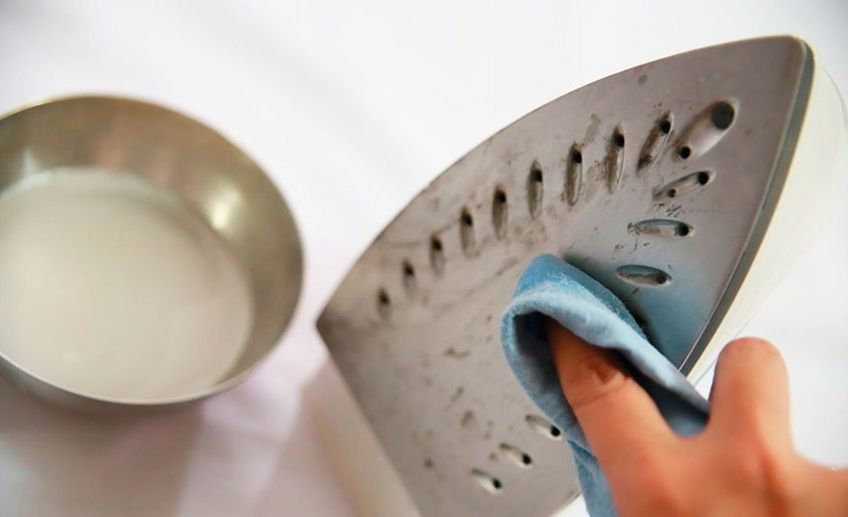
Before trying one of the tips from the internet, find out what material the iron soleplate is made of. For example, Teflon is VERY sensitive to any kind of abrasive, so it is more problematic to maintain. For Teflon surfaces, use a special cleaning stick. You can buy one at any large supermarket or appliance store for a small price. Such a stick is suitable not only for Teflon but for any other surface as well.
Before using the stick, be sure to read the instructions that come with it. As a rule, it is used as follows:
- heat the iron in an upright position over a piece of scrap fabric or paper;
- wipe the hot soleplate with the stick;
- the stick will start to melt on the soleplate, drip down, and smell unpleasant (this is normal);
- turn off the iron and wipe the soleplate clean of any remaining stick residue with a clean natural fabric.
I have been successfully using this method for several years now. Sometimes I even use it just to "refresh" the soleplate, making it smoother. The stick does not leave stains on clothes, but I still always iron a scrap of fabric after wiping off the residue to avoid any "surprises."
There are also a huge number of safe "folk" methods for cleaning an iron soleplate.
The gentlest option is a wet cloth. To clean the iron, pick out an unnecessary piece of cotton or linen fabric, soak it well, and wring it out slightly. Lay the fabric on an ironing board with the edges hanging down. Run the hot iron over the edge of the board until the stain disappears.
Teflon (and, accordingly, other soleplate surfaces) also handles cleaning with soap, vinegar, and hydrogen peroxide well.
If the stain is fresh, you need to soap it well while the iron soleplate is warm, leave it until it cools down completely, and then remove it with a damp sponge and wipe it dry.
Apply vinegar or peroxide to the hot iron soleplate using a cotton pad. Iron a piece of natural fabric, and the stain may come off.
There is also a salt method (I do NOT recommend using this on Teflon and suggest using it very carefully on ceramic). To remove burnt-on residue, pour regular salt onto a sheet of thick paper and iron it with the iron set to its maximum heat. Wipe the iron with a dry wool cloth.


Well... Girls, not all pencils are created equal! I wouldn't buy the cheapest one.
I use a Genie pencil myself, it costs 55-60 UAH and lasts a very long time (in my case, at least a year, since I rarely have to use it). Chemical pencils don't contain abrasives, so don't be afraid to use them regardless of what kind of soleplate you have.
They all have the same base (the most basic ammonia), so when using it, a fairly strong smell of ammonia appears. It's better to open a window. ;)
By the way, about household chemicals! Try removing stains with a degreaser (stove spray), sometimes it can help! Apply it, leave it for half an hour, and wipe the iron with a damp cloth.