
Angora wool and its features
I already talked about wool in my previous article (if you haven't read it, check out the article Features and types of wool), and to make your choice easier, I will share my knowledge about another warm material – angora. It is made from the down of Angora rabbits (hence the name). Because of the raw material, the fabric and yarn are very soft, fluffy, pleasant, and warm. However, just like goat and sheep wool, it is divided into different types depending on the breed of rabbit used.
Only 5 breeds are raised on an industrial scale. They differ in hair length (from 5 to 15 cm) and color. The rabbits themselves vary in weight and size.
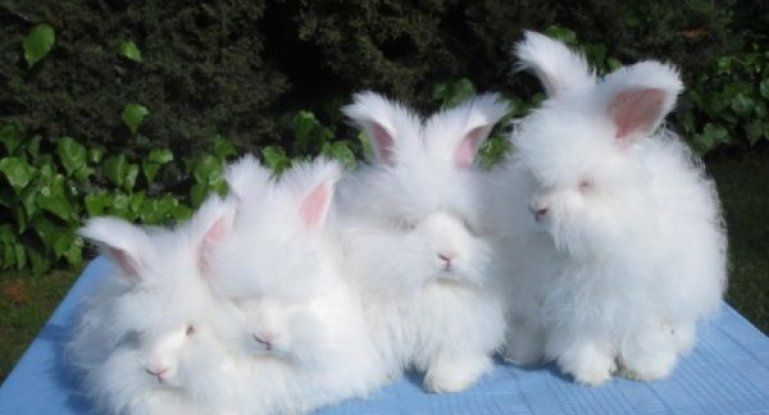


## Myth or reality? Many people think that rabbits are killed to obtain their wool. But this is not true; the yarn is made from rabbit down, which sheds naturally, so the animals are brushed 2-3 times a year. Rabbit fur itself is used for coats and other clothing, but only when the rabbit's life comes to an end.
In fact, there are two grades of angora down:
- First grade – the ratio of down to other hair is 70/30 percent;
- Second grade – a ratio of up to 50%, with the difference being that the down is very short or sparse.
> Important! If the yarn is made from the second grade, the down sheds easily when the threads are twisted, but since the material also contains rabbit hair, the finished product wears well, though not as long as other types of wool.
Angora is used for the same purposes as wool. But while wool is suitable for everyday clothing, Angora rabbit down is better used for formal wear (which is not worn as often). To increase the lifespan of angora items, buy yarn or fabrics that contain at least 30% synthetic materials. This makes the finished garment soft, warm, and delicate, while also ensuring it doesn't wear out quickly.


As for care, there are a few rules here too:
- Use special detergents;
- Hand wash in cold water;
- Dry on flat surfaces, avoiding direct sunlight.
Many believe that angora items should not be washed at all, only dry-cleaned. But I personally don't own any items, so I can't verify this. My mother used to wash them, but perhaps there are some manufacturing specifics now that mean washing could lead to the fibers shedding.
If you have washed angora, please share your feedback. I'd be very interested to hear, as I really like the material (I'm due to give birth in winter and I'm thinking about an angora outfit; I've already picked one out, but I'm afraid it will be a one-time wear if it can't be washed).


I have a couple of angora sweaters. But taking care of them is quite a hassle. A long time ago, I bought my husband an angora sweater, and without thinking twice, I washed it in the machine on the wool cycle. As a result, it shrank a lot, and the pile matted, meaning the material started to feel like coarse coat fabric to the touch. On the plus side, it became much warmer and is just my size. I wear it now when I need to bundle up.