
Tapestry fabric – where to use it?
Woven tapestry fabric is very popular in certain circles — accessory designers, interior designers, and workshops that specialize in high-end home textiles. So if you want to save even a little on tapestry items, it's worth studying the matter more closely 😉
Tapestry fabric is characterized by a dense jacquard interlacing of threads. That brings both advantages and disadvantages: the material can be extremely heavy, especially if it has a three-layer weave — which is more of a drawback. On the plus side, this gives it its characteristic density, mechanical durability, and resistance to stretching and shrinking, especially if synthetic threads are present in the composition.

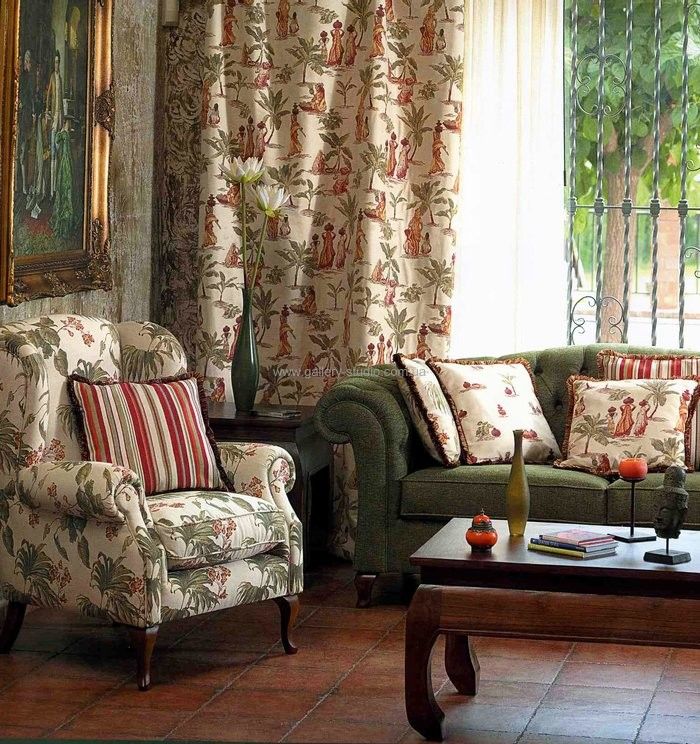
Tapestry is also easy to care for, so it can confidently be used to make household items: tablecloths, upholstery, bedspreads, curtains.
Tapestry tablecloths are recommended for autumn and winter — the heavy texture lends itself to that kind of decor.

However, lighter shades are also appropriate for a summer version.

Of course, a ready-made tablecloth costs a fair amount, yet sewing one from fabric and finishing it with braid, fringe, or crocheted lace is quite simple.
The same goes for bedspreads — they turn out cozy, soft, and pleasant to the touch.

Using tapestry fabric for upholstery is a classic, and in modern times the material can be treated with a coating so furniture is as easy to clean as possible. The same applies to curtains.
For those who make bags, I highly recommend considering tapestry fabric as a versatile material — due to its density it holds shape well, doesn't shrink, and won't stretch out.

And the finished product always looks striking, especially when paired with leather.

Contemporary interior designers have brought wall tapestry panels back into fashion — an interesting accent that quickly transforms a space, giving it a touch of luxe.

In short, if you haven't worked with tapestry fabric yet — keep this valuable tip in mind 😉


Tapestry will never go out of style and will always be expensive. Even DIY tapestry embroidery kits cost at least 30-40% more than similar cross-stitch kits — if only because tapestry uses more embroidery floss, and you also need to know how to stitch it. But the result is definitely worth it (y)