Basic Leatherworking Tools

I've long wanted to write an article about leatherworking tools. The hammer and needles are missing from the photo. While some crafters use sewing machines, I hand-stitch all my work. Therefore, my arsenal includes a steel hammer weighing approximately 300-350 grams. I don't recommend getting a lighter hammer—you need impact and swing. As for needles, I bought special leatherworking needles. Their tips are blunt, unlike regular embroidery needles, but sometimes that hinders the work a bit. That's why I often use my old, slightly bent needles with large eyes.

It is important to purchase high-quality, sharp scissors. It would be best if they were specifically for leatherwork. Believe me, you won't regret it. Over time, they will dull, so use them only for their intended purpose. Alternatively, you could take them to a shop to be sharpened, but it won't be very effective. The scissors in the picture cost me 75 UAH. I also use a utility knife, but it's optional.

Glue. I've read many forums, and every master uses different bonding agents. In my case, Nairit works perfectly. It has a somewhat toxic smell, so you need to work in a ventilated room. For the last six months, I've been buying "88" glue for my projects. It's universal and suitable for everything. I don't recommend choosing super glue or 505—they make the bonded areas hard and unsuitable for further work.

The stitching chisel deserves special attention. There are two in the photo. One has 4 prongs with 4 mm spacing. The other has a rotating head (it's cheaper, but I don't recommend buying it). What are they for? To create holes in your future project. The price for my chisel was 105 UAH.

When the leather is hard or there are too many layers, use an awl. Choose one of the more expensive ones so it serves you for a long time.
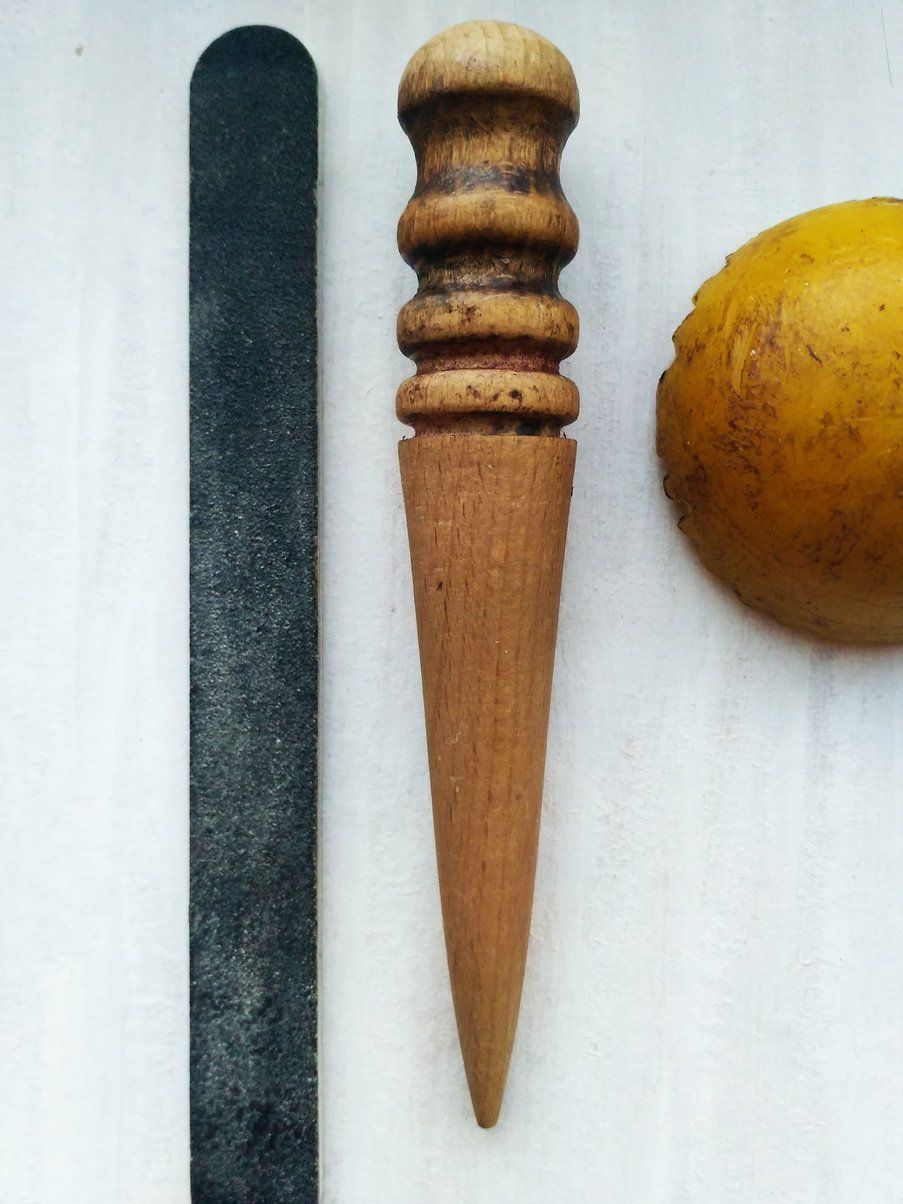
What is a slicker? Usually, it's a wooden tool with various grooves for burnishing leather edges. Also, use natural wax. If you need to prepare edges for further manipulation, use nail files or sandpaper.

For the seams themselves, choose only natural waxed threads. Buy basic colors so you always have a universal option on hand. In the future, I will talk about rubberized edge paint, how to use it, how to do a saddle stitch, and what other tools are needed.


