
Overview of non-fusible and specialty interfacing materials
These materials include flizelin, spunbond and woven materials.
Flizelin resembles fusible flizelin in its properties. It is used to strengthen various garment elements, for embroidery, and in accessory making.
The main types of flizelin are designated as:
- L 11 – suitable for plissé, bouclé or thin crushed fabrics;
- M 12 – also suitable for plissé and bouclé fabrics, for medium-weight crushed fabrics;
- S 13 – suitable for dense bouclé fabrics.
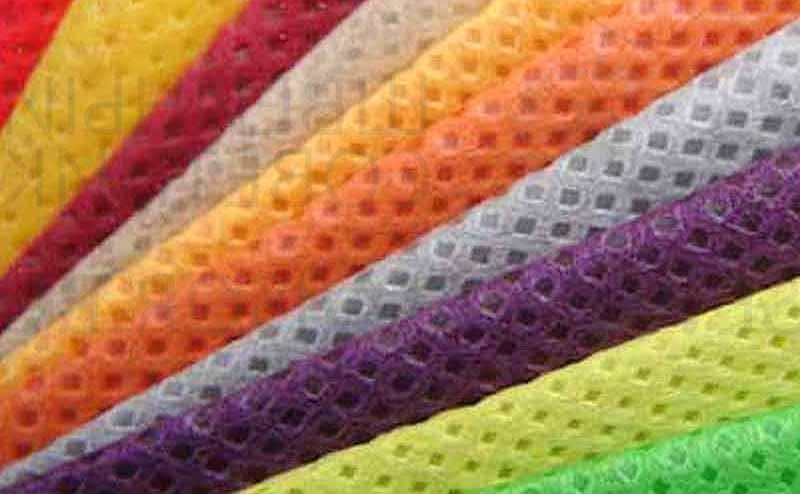
Spunbond is made from molten polymer material. It comes in various weights and colors. It is used as interfacing when making bags and shoes because it has high strength.
Woven materials are used in the production of corduroy, velvet or silk garments. Such non-fusible lining material can be lining fabrics, muslin, or voile. To prevent shrinkage, this interfacing should be pre-shrunk (decated). The non-fusible interfacing is cut from the base pattern piece and basted to the main piece. The sewn pieces are then used in the work as a single piece.
Special interfacing materials include water-soluble or heat-soluble flizelin and tailor's canvas.
Flizelins are used for temporary fixation of pieces, since these materials dissolve after washing or ironing. They are very convenient to use in patchwork and machine embroidery.
As the name suggests, tailor's canvas is used to reinforce the front panels and facings of jackets.

Compared with doublerin, tailor's canvas has a higher density. It can be either non-fusible or fusible.


I prefer non-woven fusible interfacing. It's easy to work with and affordable. You can choose the weight you need. Sometimes, though, I use a woven interfacing. But those are one-off options. I don't use a tailor's canvas at all — I prefer to apply two layers of fusible interfacing. Although I understand that for jackets a canvas is indispensable. But I don't sew them ))