How to Choose Dressmaking Shears and Sewing Scissors
Well-chosen scissors help you cut fabric cleanly. The best choice depends on the material and the task, so it is useful to keep more than one type in a sewing kit.
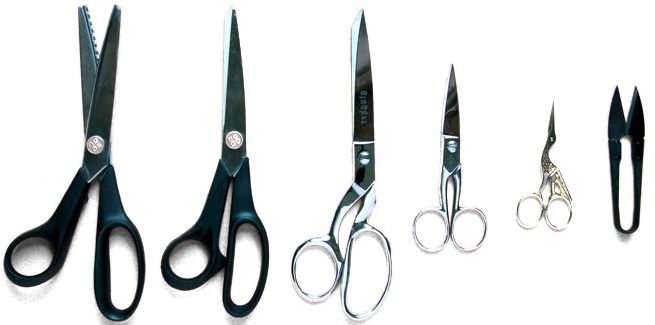
Dressmaking shears
Dressmaking shears have long, sharp blades and comfortable handles. A length of about 25 cm is common. They are versatile for cutting fabric, but a smaller pair can be easier to control for tiny pattern pieces.
Pinking shears
Pinking shears have zigzag blades. On woven fabric, they can reduce fraying on a raw edge, but they do not replace a suitable seam finish where one is needed. They are also useful for decorative edges on fleece or felt. Tooth spacing varies, often by several millimetres.
Scissors for fine fabrics
Keep a very sharp, clean pair for fine fabrics such as silk, muslin, chiffon, and batiste. Sharp blades help produce a neat cut; support slippery layers carefully rather than relying on the scissors alone to keep them from shifting.
Thread snips and embroidery scissors
Thread snips are for trimming threads and making small cuts. Use a seam ripper to unpick seams. Stork embroidery scissors are popular for close, precise work in embroidery, appliqué, Richelieu cutwork, and Hardanger.
Care for scissors
- Wipe away lint and residue after use.
- Follow the maker's care instructions; a drop of suitable oil at the pivot may be appropriate for some shears.
- Do not force dull blades through fabric. Have valuable or specialised scissors sharpened by a qualified professional.

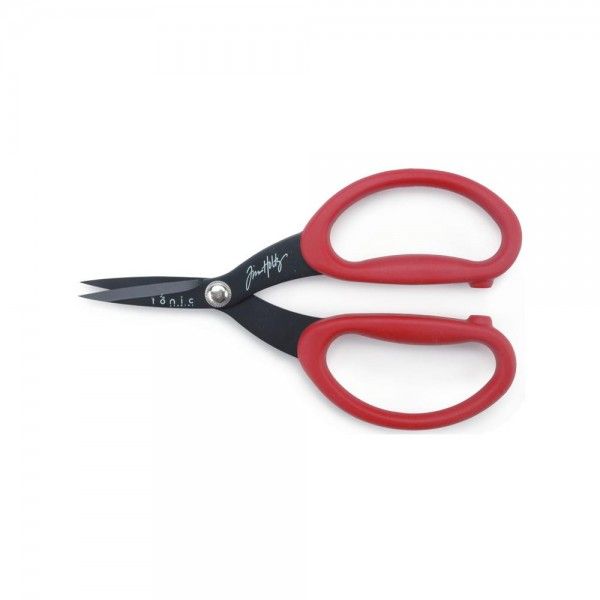


They come with blades of different lengths )) I chose this shorter pair specifically for embroidery and to learn Hardanger 😍