
Eco-Printing on Fabric With Natural Materials
Botanical printing with plant color is an old technique that creates one-of-a-kind patterns in greens, browns, and reds. It can be used for stoles, scarves, and lightweight garments.


This archive method uses leaves and flowers rather than commercial fabric paints or fixatives. Results and wash-fastness vary with the fabric, plant material, and care, so test the complete process on a scrap first.
Materials
- Natural fabric, pre-washed according to its care label to reduce later shrinkage.
- Parchment paper or a material rated for steam heat.
- A rolling pin or wooden roller.
- Twine.
- A steamer insert or a steaming rack that fits inside a pot.
Choose leaves and flowers with visible pigment. Use only plant material you can handle safely; avoid protected, toxic, or irritant plants and wash your hands after handling them. Do not heat unknown plastic film. Work carefully around the hot pot and steam, following the cookware instructions.

Lay the fabric flat and arrange the plant material on it to make a design.

Fold the edges toward the center and cover the bundle with parchment or another steam-safe material.

Roll the bundle tightly onto the roller, secure it with twine, and steam it for about 10 minutes as in the original example. Timing can vary by fabric and equipment; keep the bundle clear of the water and do not leave heating unattended.

Remove the bundle with suitable protection, let it cool completely, then unroll it carefully and remove the leaves and flowers.

Dry the fabric flat outdoors in the shade, away from direct sunlight. The color may become softer after drying while retaining its natural palette.
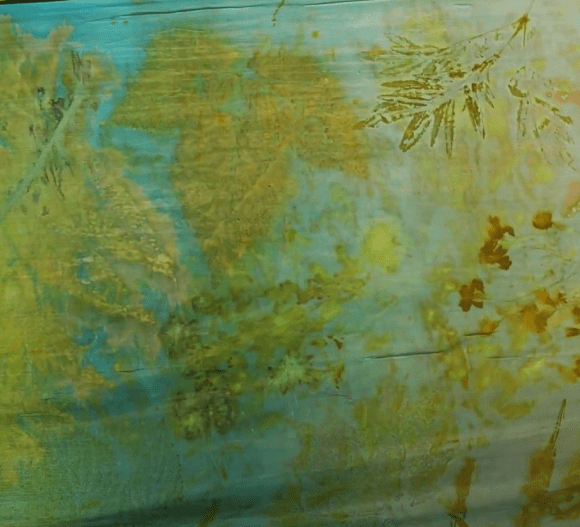
White, cream, light brown, and other fabrics in natural tones can all work as a base. Make a sample first to check how the chosen fabric takes the print.


I have wondered about colorfastness too. But remember how hard it is to remove grass stains after a child has crawled on the grass on their knees. Sometimes even a stain remover does not help.