
Guipure and Lace: How to Choose and Use Lace for Sewing and Decor
Lace items have been highly valued for centuries and remain relevant today. To choose and use this material correctly, you need to learn a little more about lace and guipure, as well as some unusual techniques for their application.
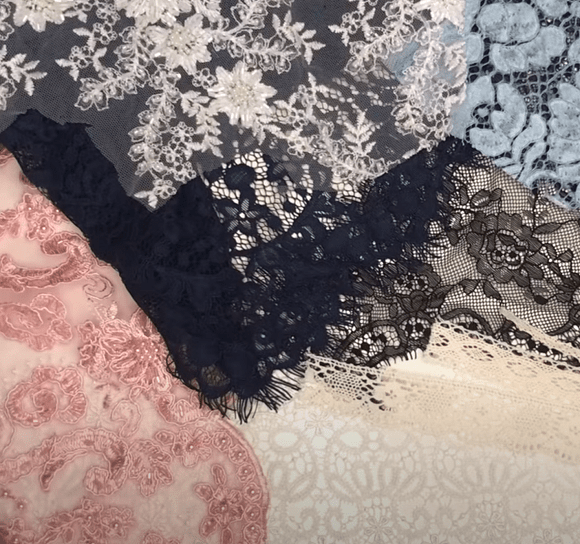
Let's start from simple to complex.
1. Lace trim
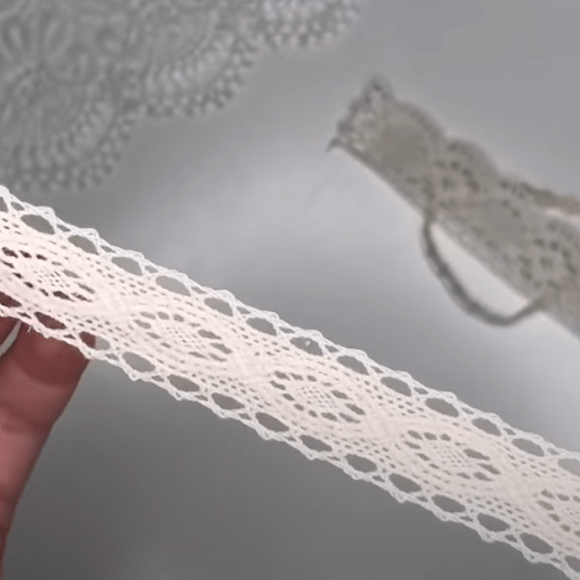
It can range from 1 to 5 cm in width and is most often made with a geometric pattern. There is natural cotton lace trim and synthetic lace trim. The former is soft and is used for lingerie and summer clothing, particularly for finishing seams. It looks good in combination with cotton, linen, and calico, but it gets "lost" and looks cheap on fabrics with a shiny surface.
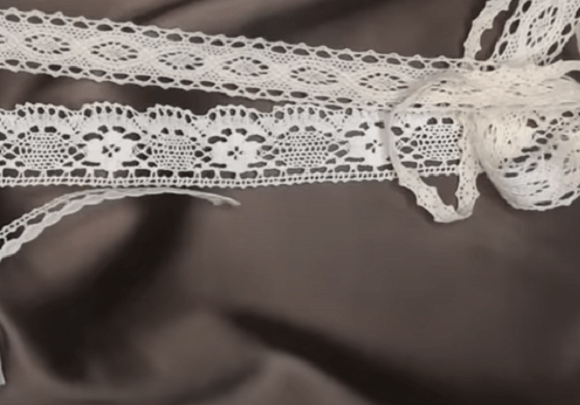
For finishing and decorating clothing made of satin, silk, and expensive materials, a thinner, translucent synthetic border or trim is more suitable.
2. Borders
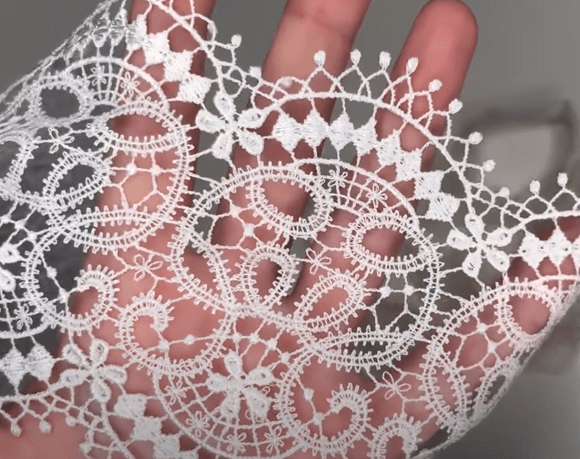
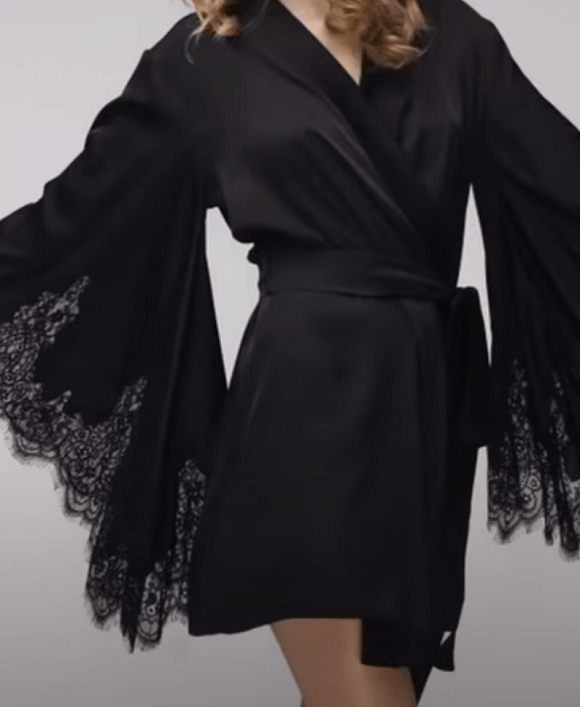
These can have different widths, patterns, and densities. They have a scalloped edge on both sides and are often decorated with fringe. Such lace is used for finishing sleeves (cuffs), skirts, and bodice of dresses.
Tip!If you want to create an original lace decor, choose a double border. It is distinguished by the fact that it has a double-sided symmetrical pattern, and a dividing strip runs between the individual elements.
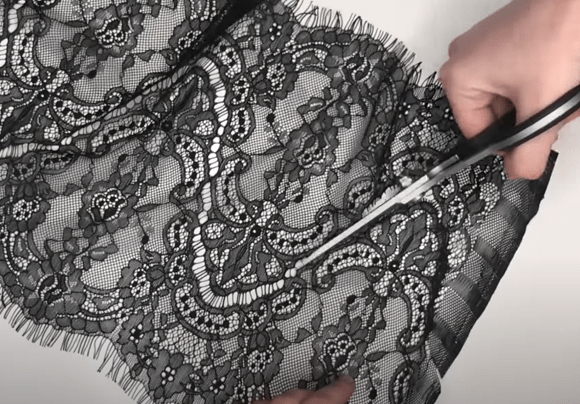
Such lace can be cut in half and used to finish the hem of clothing and sleeves.
Lace borders can also be elastic; this version of the material is intended mainly for lingerie, as well as for sewing stretch trousers and leggings.
3. Lace fabric
It has a full width, a mesh base, and elements that are denser compared to guipure.
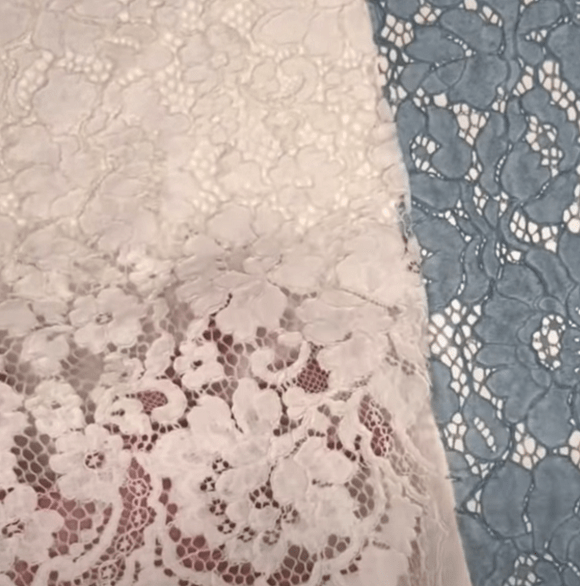
It is used on its own; skirts, dresses, and sundresses are cut and sewn from it.
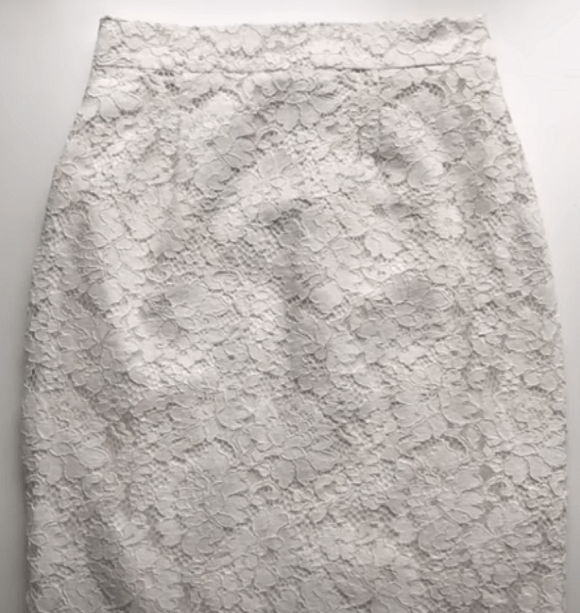
Unlike guipure, lace fabric is less airy and allows for sewing clothes without a lining (for example, blouses). When buying material, pay attention to the edge finish. Fabric with scallops is preferable, as in this case, there is no need to perform a hem, which makes the garment heavier.
Today you can also buy another variety of lace fabric - macramé lace. A polyester variety is affordable, while natural cotton is more expensive.
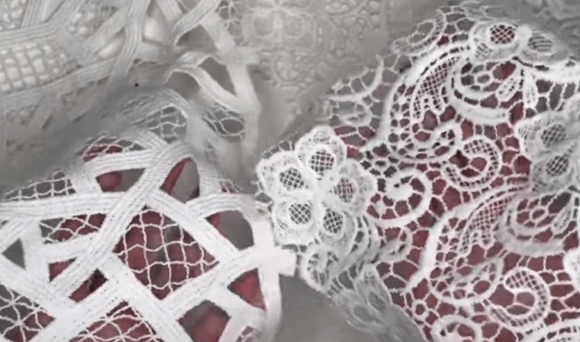
It is even denser and is used for beach sets, light cardigans, and simple-cut tops.
4. Guipure
It has a thin mesh base and elements that can be located close to each other, in the form of a border or pattern. Clothing details are cut from such material. You can also cut off the scalloped edge or cut out individual elements to use them for finishing sleeves, pockets, collars, and for delicate appliqués.
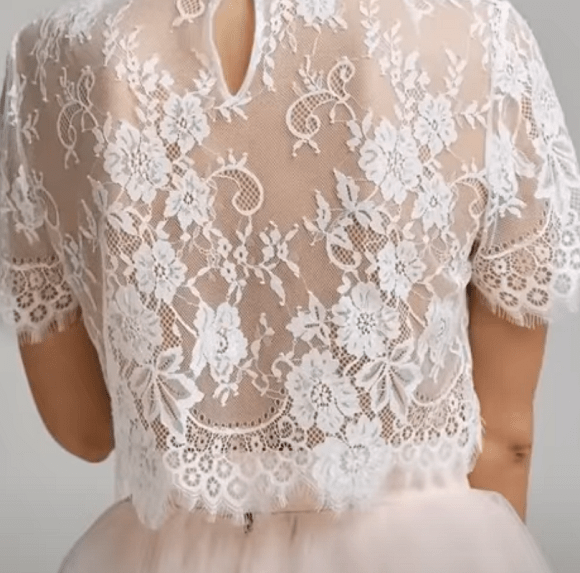
A variety of this material is spiderweb lace, a pattern on which is embroidered with a thin cord. It is even more delicate, translucent, and often decorated with sequins. This is a magnificent material for sewing festive and evening wear.

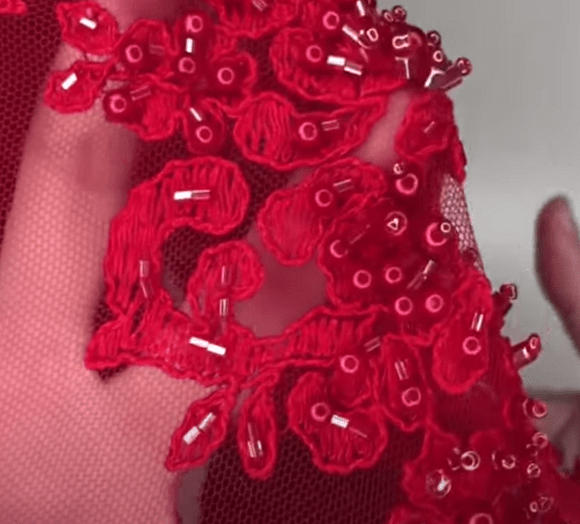
You can also include mesh lace in this category. It has richly embroidered scallops with beads, sequins, and bugle beads, and rarely scattered fragments on the mesh, which can also be cut out and used for decor.
I hope this short overview will help you in choosing guipure and lace to bring your original ideas to life.
If you want to see lace used in a simple garment refashion, see the related guide: a summer tank top with lace decor.


Cool review! (y) I just realized that I don't understand these things at all, like, not even a little bit 🙃 As for guipure/lace, I choose purely visually: I "try on" a piece of lace on my hand, and if I like the pattern, I start thinking about where to use this beauty 😀 Thanks for the info!