
Waxed fabric – where to use it and how to make it yourself
A quick primer 😉 Waxed fabric is a very dense material that is moisture-resistant and highly durable against external elements. Simply put, it makes for very sturdy, dirt- and water-resistant items like raincoats, bags, backpacks, and jackets. On a smaller scale, you can even sew a lunchbox that just needs a quick wipe after use.
If you want to use this fabric in a practical project, a reusable eco bag is a good next step.

Of course, you can achieve a similar effect with a commercial product, but in our case, the treatment will be completely natural and wax-based: it is suitable for asthmatics, children, and allergy sufferers who react well to bee products.
The main question is: where to get the wax? Granulated wax is sold in pharmacies, and block wax can surely be found from any beekeeper. In the latter case, you will have to grate the wax yourself, for example, using a grater.

For the experiment, we will take a small piece of cotton and a sheet of parchment paper. Place the paper on the ironing board, lay the fabric sample on top, and sprinkle wax particles over it.

Cover everything with a second piece of parchment and start systematically ironing every centimeter of the surface.
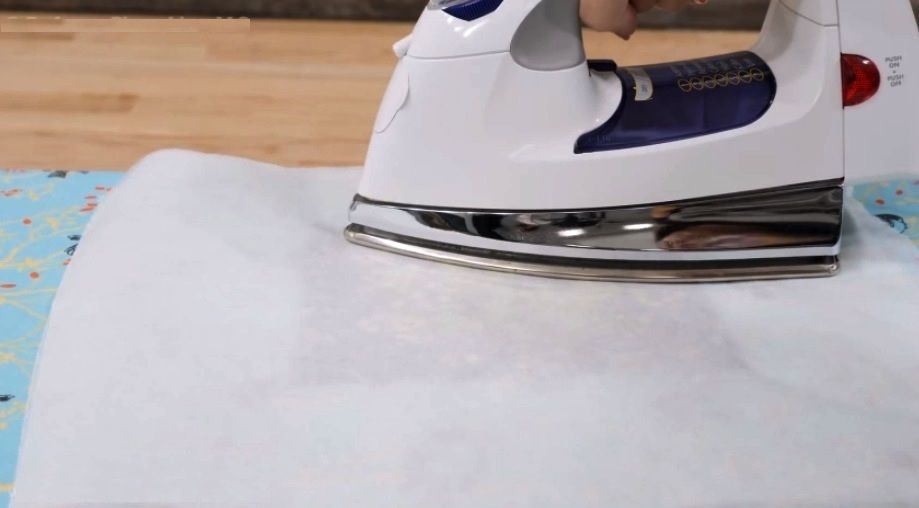
Due to the high temperature, the wax melts actively and immediately absorbs into the fabric, making it noticeably darker and stiffer. Areas where the wax didn't reach will be easily visible; you will need to add a few more granules there and repeat the procedure.

Once the fabric has completely cooled, remove the parchment.

And you get a dense waxed fabric with a beautiful matte sheen – an eco-friendly product 👍


Cool video! I was thinking, you don't have to treat the whole item, but say, pant legs and sleeves. It would be good protection for uniforms for fishermen and even for kids! And the idea with the hairdryer is definitely better than an iron, uniform heating and no risk that you won't be able to clean the soleplate later!