
Popular techniques for decorating tables, shelves, cabinets, dressers, and bar counters
If you have decided to make a shelf or table yourself, build a bar counter, or refurbish a dresser, it is not enough to just come up with an original shape, choose materials, and create a unique piece. It is important to finish the item properly. Modern designers offer various techniques for the final decoration of decor items.
- Painting is the simplest and most accessible method of transformation. Before painting, the surface is cleaned, leveled, puttied, and rust is removed. Enamels and varnishes are used; they are applied with a brush, roller, sponge, or sprayer.
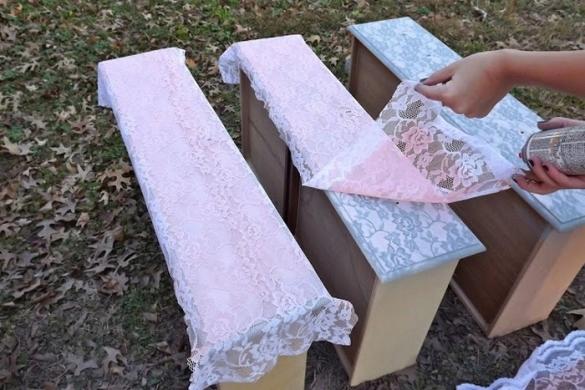
- Lace painting: first, the surface is painted with a base coat. After it dries, lace is attached to the painted area, and a contrasting color paint is carefully applied (using a spray gun is recommended in this case).
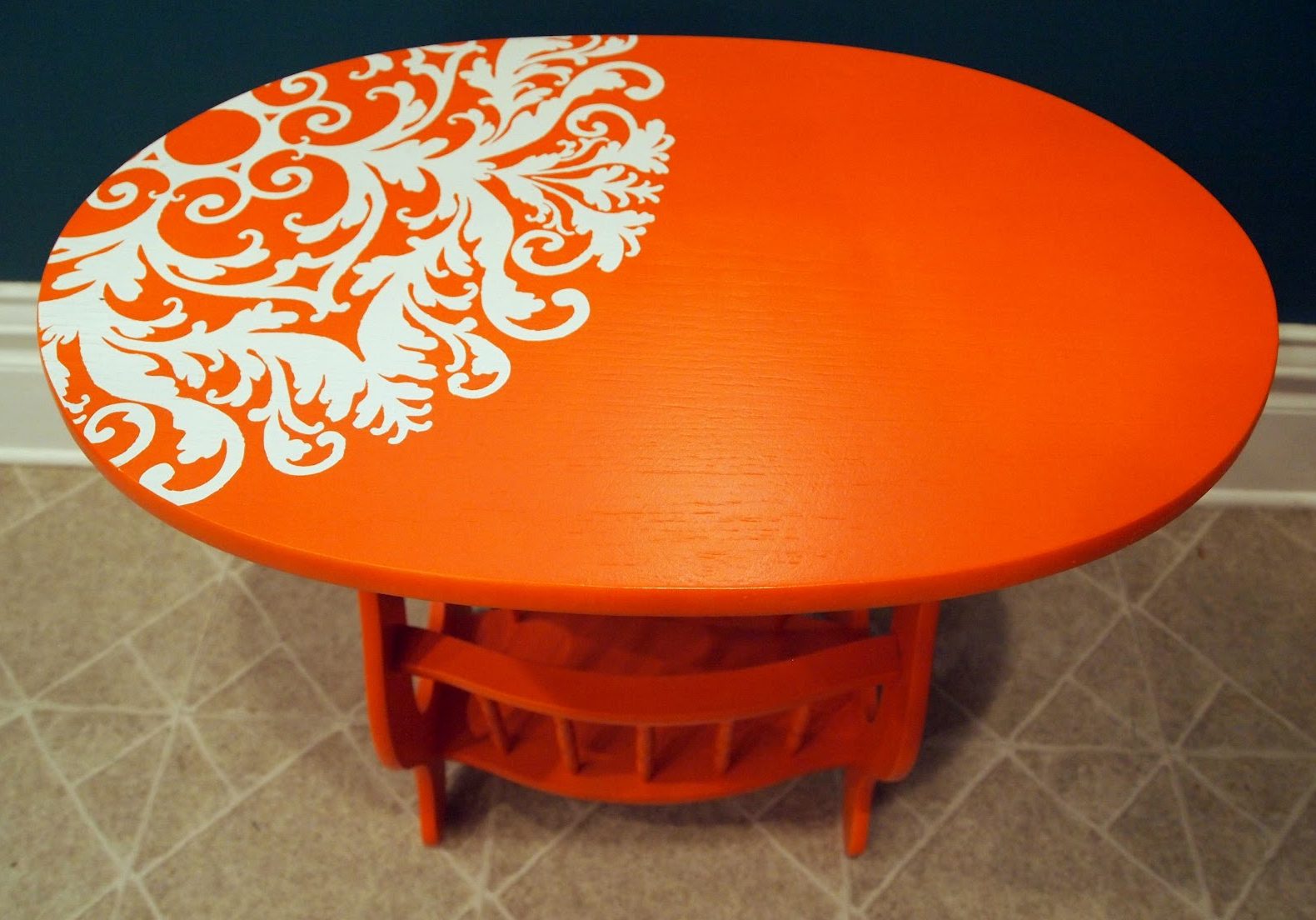
- Painting: used to create a bright image on the surface of the item. You will need acrylic paints and brushes. If you lack artistic skills, you can use stencils and templates.
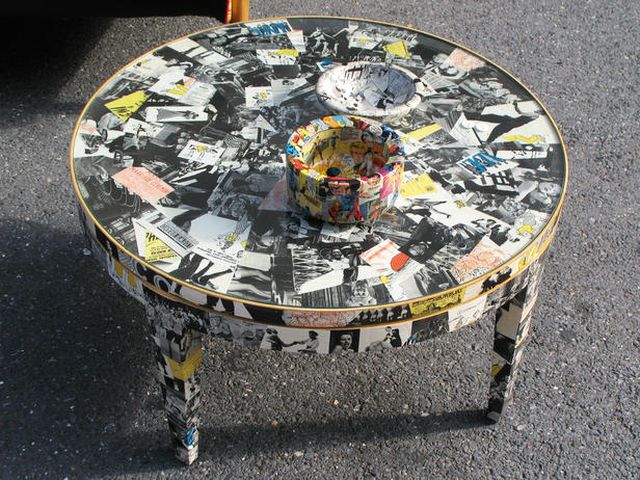
- Decoupage: chosen images are cut out (using paper drawings) and carefully glued onto a prepared smooth surface. After the glue (PVA works well) has dried completely, the item is covered with a clear protective varnish.
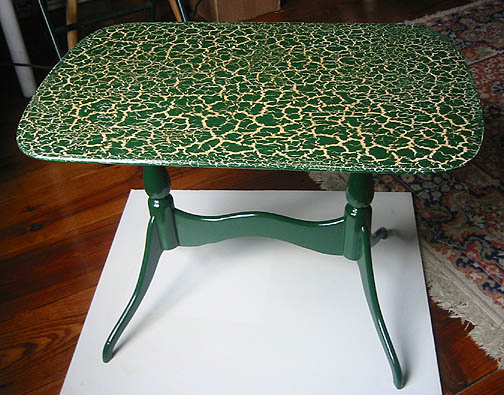
- Craquelure: this is the "aging" of an item by creating artificial cracks in the paint layer. It can be one- or two-step and is applied over decoupage, painting, or a solid color finish. It is performed using a special craquelure varnish and pigment for the cracks.
- Tile: suitable for finishing a tabletop located on a porch or in a garden. You can buy new tiles for the finish or use leftovers from renovations. The same technique is used as for wall or floor tiling.
- Mosaic: created using mosaic elements, colored glass, pebbles, or seashells. When creating a mosaic, it is important to create a beautiful "pattern" and securely fasten all elements.

- Epoxy resin: a liquid substance that hardens quickly in the air, allowing you to fill cracks in old wood. Pigments can be added to the mixture.
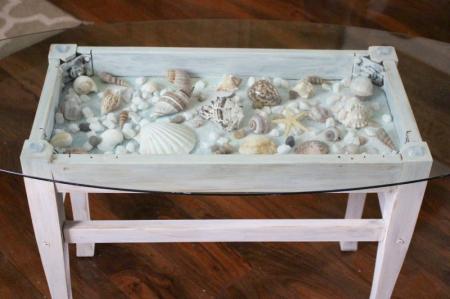
- Glass-covered decor: suitable for creating tabletops. A small recess is made in the tabletop and filled with decorative elements (this could be sand, seashells, beautiful pebbles, dried flowers, beads, or miniature toys), then covered with glass.
- Gilding: standard gold-colored acrylic paint or ultra-thin imitation gold leaf (metal leaf) is used (secured with varnish).
PS. When creating decor, you can combine these finishing methods.


