
Overview of Fusible Interfacing Materials
Fusible materials are auxiliary, but they significantly facilitate and speed up sewing!
Modern outerwear construction is simply impossible without them. Only by using fusibles can you achieve crisp contours for finishing details—collars, cuffs, and plackets.
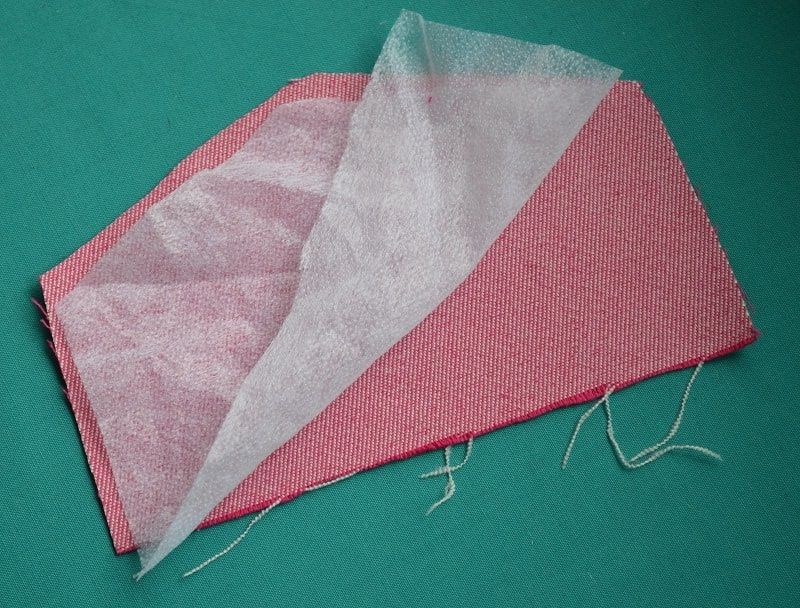
They are also highly sought after when sewing items from delicate fabrics.
The main purpose of fusible materials can be broadly divided into two large groups:
- stabilizing (reinforcing) the main material;
- bonding layers of fabric together.
Materials can be bonded at home using a steam iron.
Heating time and temperature are determined based on the composition and thickness of the main fabrics and the fusible material.
Let's look at the main types of fusible interfacing materials.
## Fusible Web (Heat-n-Bond)
This is a thin, transparent web made of randomly intertwined polyamide fibers. When exposed to heat, the web melts, bonding the fabric layers. When cutting, the dimensions of the interfacing must precisely match the dimensions of the main pieces without seam allowances.
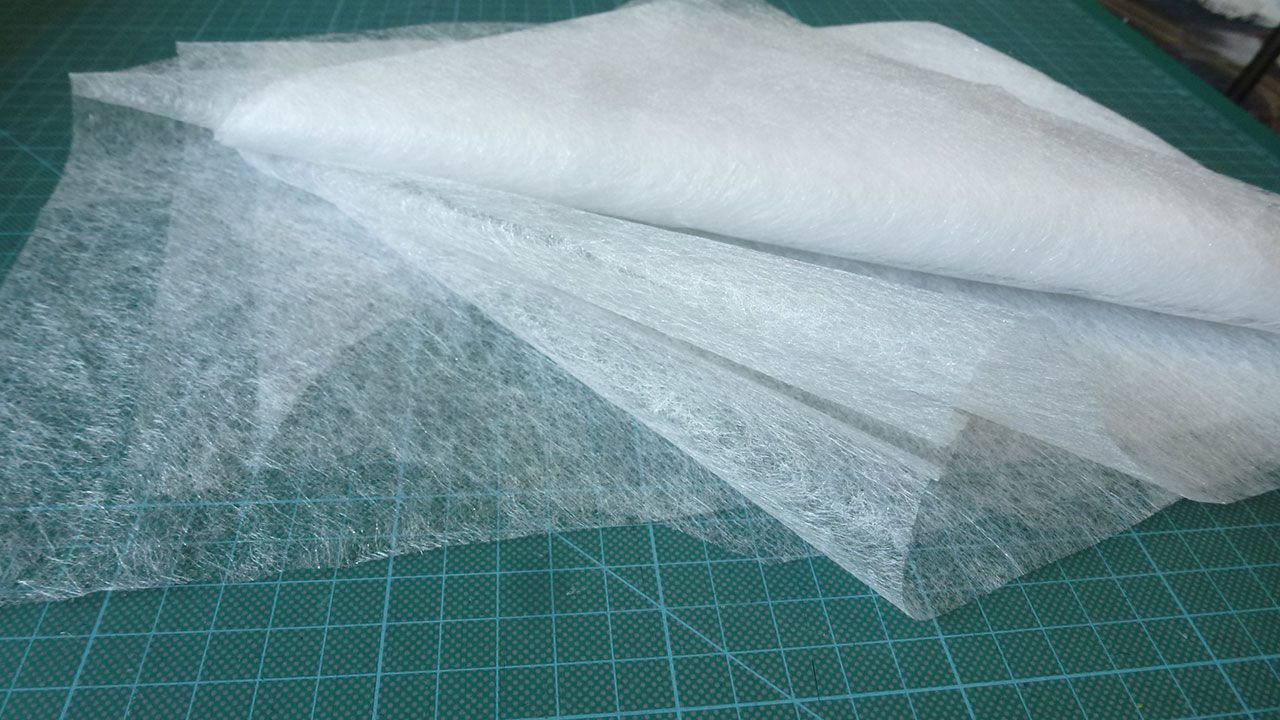
The web is produced in sheets and tapes. Fusible tapes are convenient for securing seam allowances, hem folds, and for attaching appliqués.
## Fusible Interfacing Fabrics
These are made by applying adhesive to backing materials such as non-woven interfacing (fusible fleece), thin knit, or loose-weave fabric.
Fusible interfacing is used to bond cuffs, collars, and yokes across the entire surface of the pieces.
Types:
- Fusible stay tape or stay tape – a strip of stitch-bonded interfacing; the stitching along it prevents the strip from stretching; stay tape is indispensable for edges of fronts, pockets, and vents—i.e., surfaces that must not stretch; on knit garments, tape is used to reinforce zipper insertion areas;
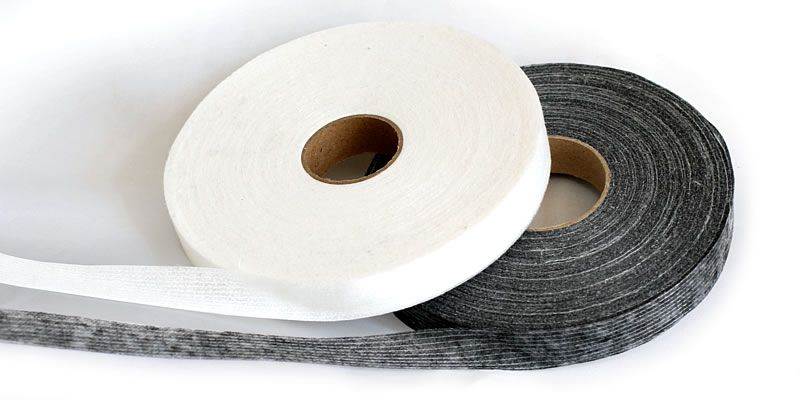
- Fusible woven interfacing (dubblein) – used to stabilize collars, cuffs, and waistbands; in lined garments, it is used to interface yokes and even the entire bodice and back. Fabrics of varying density are used as a base—gauze, knit, etc. The adhesive can be applied over the entire surface or in dots;
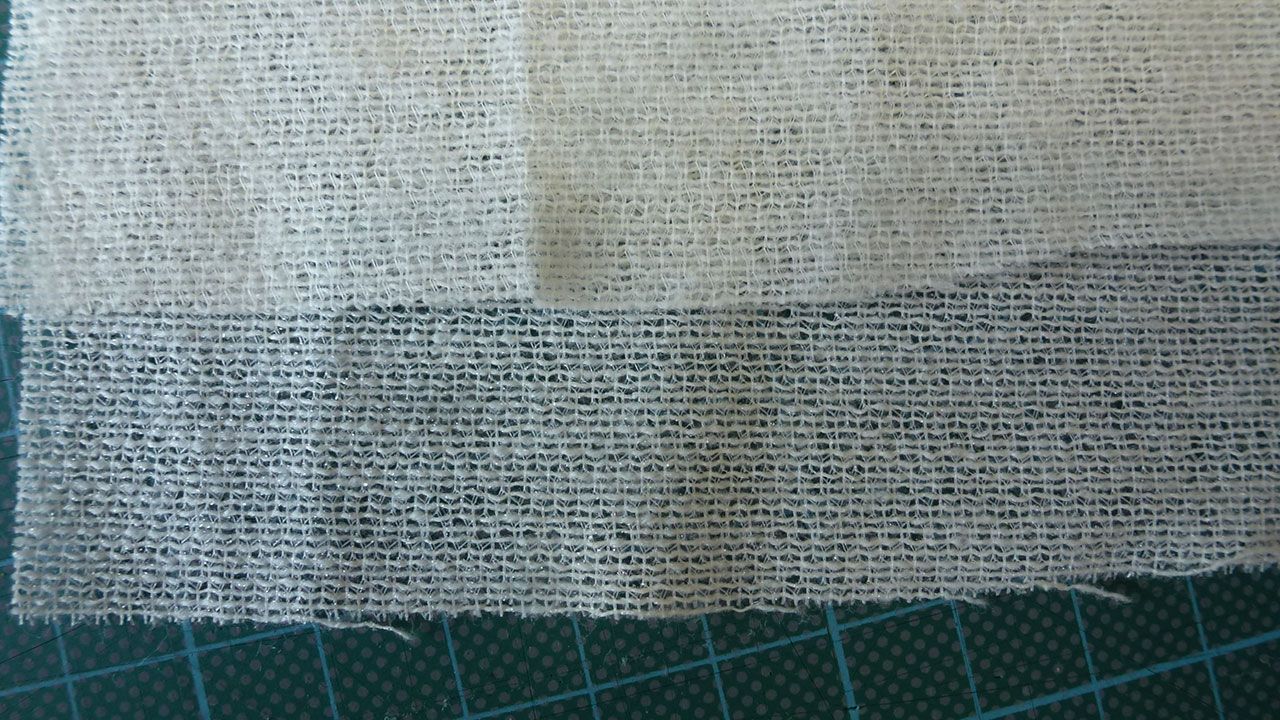
- Stitch-bonded interfacing – a middle ground between standard non-woven interfacing and woven interfacing; the material drapes excellently and does not crease;
- Fusible waistband tape – used for reinforcing waistbands, available in various widths and colors;
- Fusible batting – thinner than standard batting. Adhesive is applied in dots. Used in sewing headwear and bags.


I've tried many times to think of what I could use to replace fusible materials, but nothing ever came to mind. It is what it is; sometimes, without regular interfacing or fusible backing, it's like being handless...