
Coverstitch machines: which model to choose? Sharing our experience!
Hello, fellow makers!
It's no secret that knitwear is very popular and is likely here to stay. Knit fabrics have their pros and cons, but that's not what this is about.
Today I would like to touch on the topic of coverstitch machines, which allow you to create neat, elastic seams on this type of fabric.
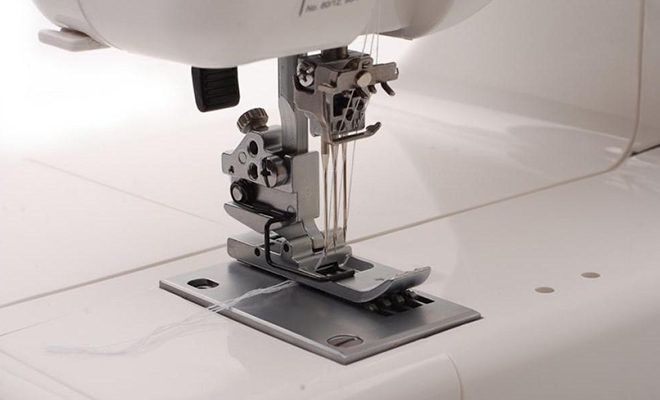
I think, for obvious reasons, we shouldn't cover professional equipment, but talking about coverstitch machines for home use or small studios is definitely relevant.
Essentially, this type of machine performs chain stitches and flat seams. It uses two or three needles, and, accordingly, three or four to five threads. A significant advantage compared to an overlocker is the ability to sew anywhere on the fabric piece. Trimming seam allowances is not provided.
The latest models from some brands allow for top coverstitch – such a stitch looks as close as possible to professional-grade work.
If you have experience working with such equipment, I suggest sharing your models below with a brief description of their features and, preferably, an explanation of why you chose that specific machine. For those who sew to order regularly, I am sure your information will be useful. 😉
For my part, I can highlight several criteria for choosing a coverstitch machine that you should definitely pay attention to:
- First, the seam width, which depends on the number of needles. For example, a two-needle machine performs seams up to 5.5 mm wide, and a three-needle one up to 6.5 mm.
- Second, the number of stitches the model is capable of performing.
- Third, the ability to adjust the presser foot pressure (this improves the quality of handling knits of different densities) and the maximum presser foot lift height.
- Fourth, the presence of a simplified threading system (some relatively budget-friendly models have air threading – it's very fast and convenient!).
- Fifth, the sewing speed. Not the most important point for me, but it is of considerable importance for a studio.
- Sixth, the presence of a special free-arm platform for sleeves and pant legs.
That's about all I can think of. Maybe you have something to add. 🙂


If we're voting, I'd like to nominate mine (or rather, the one from the atelier where I work) – Brother CV3550.
We bought it together with a colleague (we rent a space together, so we split the cost), and we chose it together too. This option is much cheaper – 13-14 thousand UAH, and it's quite realistic to find both new and used ones in Ukraine. It paid for itself in about 3-4 months, taking into account orders for items with coverstitch seams.
Among the pros – seven operations, seven stitches, and the ability to perform a top cover stitch. It is suitable for both thin and thick knit fabrics (presser foot height is adjustable to 5 and 6 mm) of various elasticity and texture. It creates a professional hem, chain stitch, and decorative topstitching. The seam width is also adjustable – 6/3 mm.
The relatively low price, I think, is due to the lower sewing speed – one thousand stitches per minute. For home use or for an atelier without mass production, this is, IMHO, quite enough.