
How to attach fabric to different surfaces – a guide to types of glue
In handmade projects, you often need to glue textiles to wood, glass, cardboard, or leather. Which glue should you use in each case? Read and save – this information might come in handy for your next DIY project 😉
First, here is a selection of adhesives most commonly used for textiles.
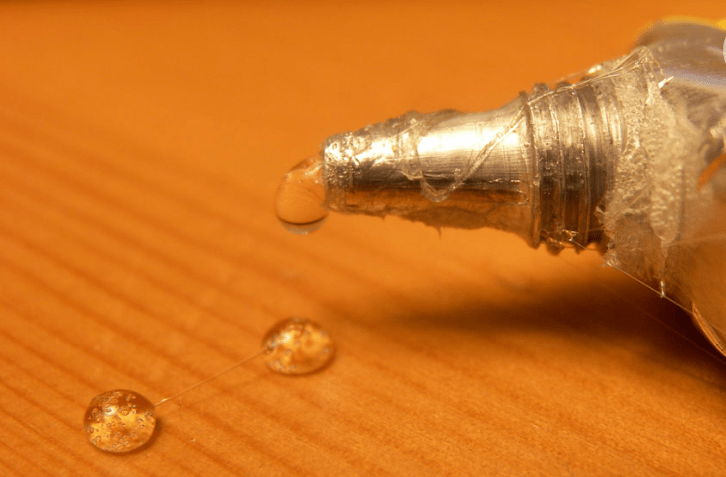
- Liquid Thread: bonds both thin and thick fabrics, and is also suitable for artist canvas. After bonding, the pieces can be washed, ironed, and even boiled.
- Second (Cyanoacrylate): acts almost instantly and reliably bonds not only fabrics but also materials like carpet. It withstands both ironing and washing, but is poorly compatible with plastic and other fully synthetic materials.
- Rapid: excellent for gluing fabric to hard surfaces, as well as foam rubber and polyethylene. It can also be used on leather/faux leather. It has high water resistance.
- BF-6: handles bonding fabrics like wool, felt, burlap, and all types of knitwear perfectly. It dries slowly, so you can easily adjust the position of the pieces relative to each other. Not suitable for light-colored fabrics due to its yellowish tint, which may show through on light surfaces.
- Dubok: has all the characteristics of the previous glue, and additionally, it handles synthetic fabrics well. An important condition is that the pieces must be kept under a press.
Adhesives that will help when creating doll clothes, ribbon embroidery, quilting, and other patchwork crafts.
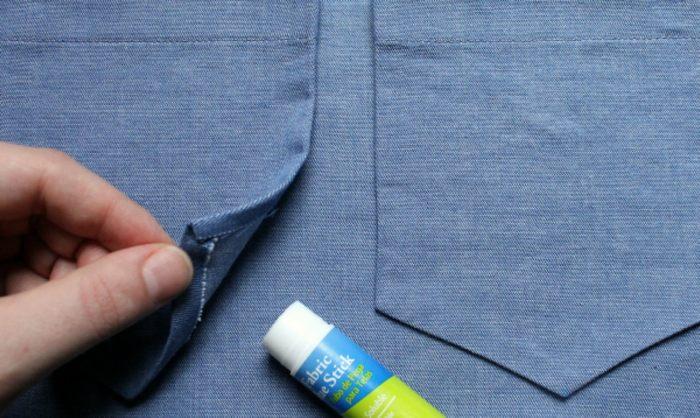
- Regular glue stick: doesn't have super-bonding powers for years, but nothing better has been invented for temporary fixation.
- Hot glue: applied in dots, so it is very economical and easy to use. The downside is that it is not suitable for very thin and delicate fabrics.
- Specialized textile glue: for example, Gutermann or Prym, which are transparent, water-resistant, and gentle on all types of textiles.
- Moment Crystal: has enviable bonding strength, but we recommend it only for thick fabrics, as it simply seeps through thin ones.
If you need to glue fabric to cardboard or paper, pay attention to the following selection.
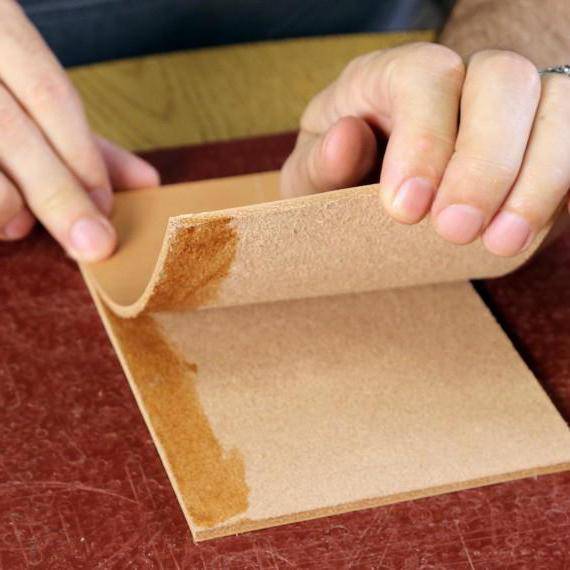
- PVA glue: a quality product works wonderfully for joining paper and fabric. To avoid surface deformation during drying, it is better to place the pieces under a press.
- Double-sided tape: guarantees a firm bond without deformation, but is mainly suitable for rectangular pieces.
- Rubber cement: ideal for thick fabrics like denim. If an especially strong bond is needed, the surfaces can be additionally moistened with acetone.
- Universal glue: bonds paper and fabric permanently. It will be impossible to separate the pieces after bonding.
What to use to glue fabric to plastic, metal, or glass?
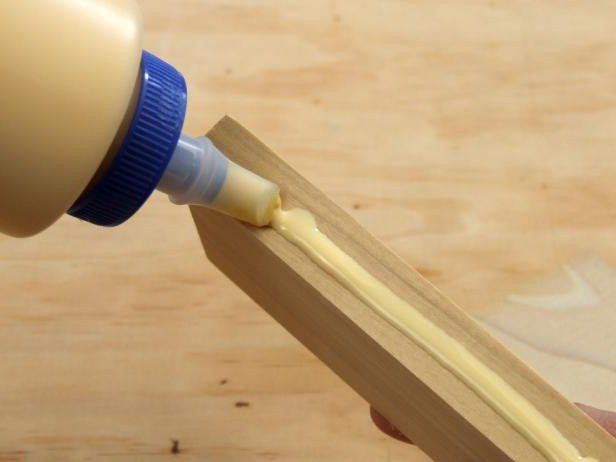
This is a tricky task, but for plastic and metal, it is solved by pre-sanding the surface to make it more adhesive.
In such cases, epoxy glue with a hardener, Moment Second glue, Moment 88, Titan (for vinyl and plastic), or two-component Acrylfix 705 are used. You can also try automotive tuning sprays like 3M Spray 77.
I hope this overview is useful! Additions are more than welcome 👍
When working with strong adhesives or acetone, ventilate the room, protect your hands, and test the glue on a scrap or hidden area first.


