
Types of Fabrics — A General Overview
For a beginner seamstress, it is very important to understand the classification of fabrics and to know their properties and features.
One of the main criteria characterizing a fabric is its fiber composition. Accordingly, fabrics are natural, blended, or chemical.
Natural fabrics are made from plant or animal raw materials. The former use cotton fibers (cotton fabrics) or flax stalks (linen fabrics). The latter are produced using wool and down from domestic animals (woolen fabrics) or silk fiber obtained from the cocoon of the silkworm (silk fabrics).
Fabrics made from chemical fibers can be divided into artificial and synthetic. The most common artificial fabrics are viscose (made from cellulose polymer) and acetate (made by processing an acetylcellulose solution). Synthetic fabrics include polyamide fabrics (made from nylon or polyester fibers).
The second, but no less important, criterion for choosing a fabric is its properties. It is these properties that mainly determine the fabric's area of application.
Cotton fabrics

These fabrics have high hygroscopicity and strength; they are easy to wash and iron. Cotton fabrics are used for sewing clothing and home textiles — bed linen, curtains, and similar projects. For clothing, suit and dress fabrics as well as shirting fabrics are produced. There are also cotton fabrics for outerwear and furniture upholstery.
Linen fabrics
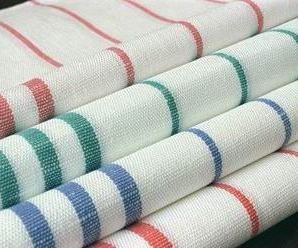
Linen fabrics are silky and flexible. They possess excellent hygienic properties, high strength, and behave perfectly during washing. However, compared to cotton fabrics, linen is coarser and harder to iron. Linen fabrics are subdivided into suit and dress fabrics, linen for bed and table textiles, and interior fabrics (for curtains and upholstery).
For more practical details, see the separate English guide: What to consider when sewing with linen.
Woolen fabrics

The main property of woolen fabrics is their ability to retain heat. In addition, they are hygienic and quite durable. To prevent pilling, other fibers are added to such fabrics. Woolen fabrics are characterized by their luster, flexibility, and softness.
Woolen fabrics can be divided by purpose into suit and dress fabrics, coat fabrics, and fabrics for home textiles, such as blankets and bedspreads.
Silk fabrics

Natural silk fabrics are hygienic, wear-resistant, and durable. They are light and delicate in texture, drape perfectly, and are easy to wash and iron.
For sewing clothing, both 100% silk and blended fabrics with linen or wool are used. Besides clothing, silk is used for wall and ceiling decor, curtains, and bedspreads.
Viscose fabrics

Viscose fabrics are similar in composition to linen and cotton fabrics. They have high hygroscopicity and behave perfectly during washing. Since viscose is a substance obtained artificially from natural raw materials, its properties are greatly influenced by the processing method. Viscose can resemble linen, silk, or woolen fabric. This determines its purpose. For clothing, the use of viscose fabrics is mainly limited to dress and lining materials. Viscose is also used for home textiles (curtains, bed linen, tablecloths).


For a beginner seamstress, it is very important to understand the classification of fabrics and to know their properties and features. One of the main criteria characterizing a fabric is the composition of the fibers. Accordingly, fabrics can be natural, blended, or chemical. Natural fabrics are made from plant or animal raw materials. The former use cotton fiber (cotton fabrics) or flax stems (linen fabrics). The latter are produced using wool and down from domestic animals (woolen fabrics) or silk fiber obtained Show full quoteCollapse