
Features of Cashmere Wool Yarn
In everyday life, the word "cashmere" is often used to emphasize the exceptional softness, lightness, and delicacy of yarn. But in reality, cashmere is not just a set of properties; it is one of the most expensive and high-quality types of wool yarn.
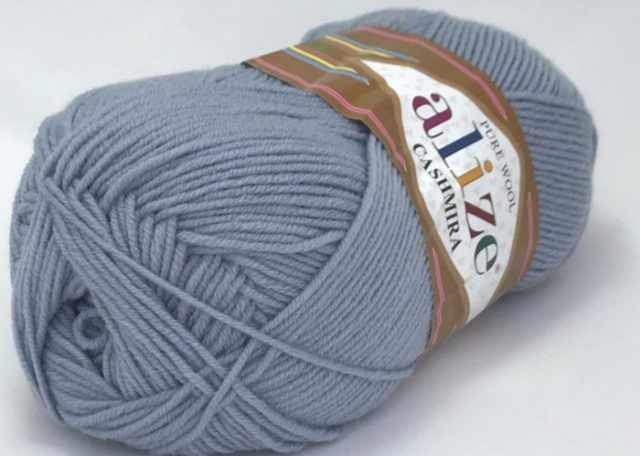
It is produced from the winter down of the markhor goat. This goat lives in the Himalayas at high altitudes, where temperatures fluctuate from minus 50 degrees in winter to plus 40 degrees in summer. The animal is protected by a thick undercoat. This undercoat is hand-combed using a special tool. No more than 200 g is obtained from a single animal.
Furthermore, down from different parts of the body also varies in its properties! The most expensive is from the neck and belly of the markhor. Cashmere yarn is spun and dyed exclusively by hand.
It is these production features that account for the high price of such wool. The cost of 1 kg of pure cashmere usually starts at 100 dollars. If you are offered something budget-friendly labeled "cashmere," do not doubt it – it is 100% a fake! What are the disadvantages of this yarn?
- as mentioned above, the high price;
- over time, pilling forms on the surface of the fabric, which must be removed with a special cashmere comb (on high-quality yarn, such pilling forms less frequently);
- caring for cashmere items requires knowledge and time.
## But, of course, this yarn has more advantages:
- it retains heat much better than other types of yarn while remaining breathable. Therefore, such items can be worn not only in winter but also in summer;
- down fibers woven into the yarn are several times thinner than a human hair, so the threads are very soft and pleasant to the touch; cashmere items are not itchy, they do not irritate the skin, and they can be worn almost against the bare skin;
- the cashmere thread is very light; 50 g can contain up to 700 m of thread; items can be knitted with the yarn held in several strands while retaining its properties;
- if cashmere items are cared for properly, they will hold their shape for a long time and will not shrink when washed; over time, the softness and fluffiness of cashmere only increase.


As far as I know, the most expensive cashmere is Scottish. Italian, French, and German are cheaper.
What I really like about cashmere is that despite its extraordinary lightness, it is very warm. The undercoat fibers it is made from are hollow inside. Each one works as a thermal insulator ))
The problem is that it is very difficult to choose real cashmere. Nowadays, they have learned how to make such fakes... :( You can't tell by touch, the label looks perfect, but in reality, it's a volatile mixture. The only thing left is to rely on brands.