UV Resin for Crafts: Safe Handling and Curing Guide
UV resin is a one-part, UV-curable craft resin, usually based on acrylates. It can cure clear and works well for some small jewelry and decorative coatings. It is not interchangeable with every epoxy: suitable layer depth, flexibility, adhesion, and compatible surfaces depend on the specific product.
Working and curing times vary by brand, lamp wavelength and output, layer thickness, pigment load, and transparency, so there is no universal one- or ten-minute cure time. Follow the product label and Safety Data Sheet (SDS), keep each layer within the stated maximum thickness, and cure it for the full specified time. Pigments and opaque inclusions can block UV light and slow or prevent a complete cure. Work away from direct sunlight and other UV sources to prevent premature curing, but do not rush the application. Resin that remains soft or unexpectedly sticky may be undercured and should not be put into use.
Use a resin-curing lamp whose wavelength and output match the resin manufacturer's instructions. Use a nail lamp only if the resin label specifically confirms compatibility. Shield your eyes and skin, never look directly into the LEDs, and do not place bare hands under the lamp. Never microwave UV resin or heat it in an appliance used for food. If a manufacturer permits warming to reduce viscosity, use only its stated method. UV resin alone does not guarantee a structural bond, so choose findings and adhesives that are suitable for the surface and expected load.
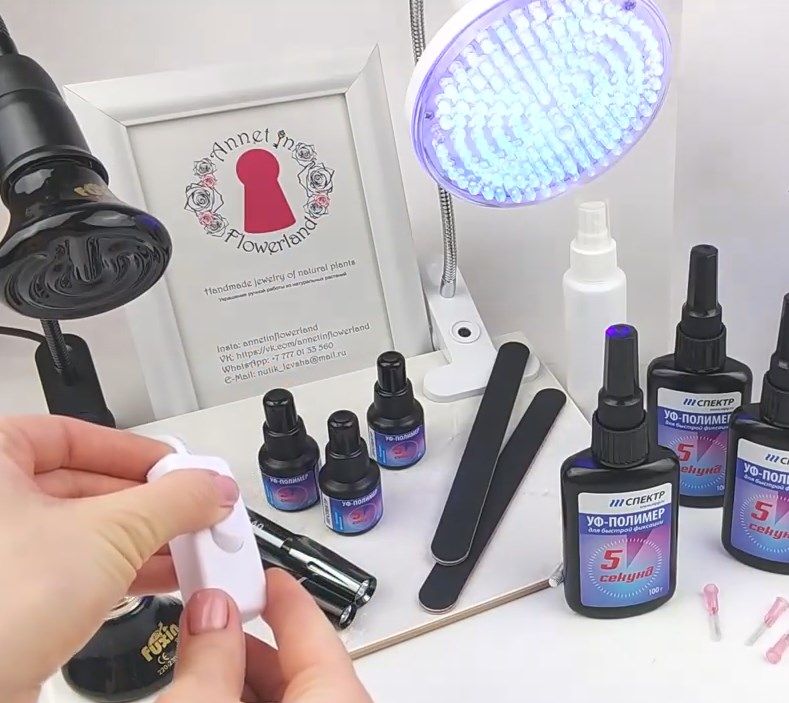
UV resin is often convenient for thin coatings and shallow, UV-accessible castings; an appropriate two-part casting resin may be better for deeper or opaque forms. To reduce bubbles, dispense slowly, guide bubbles out with a clean toothpick or similar tool, and use only the bubble-removal method specified by the resin manufacturer. Never pass a lighter or torch over uncured UV resin. Keep resin, alcohol, solvents, and their vapors away from flames, heat, and sparks.
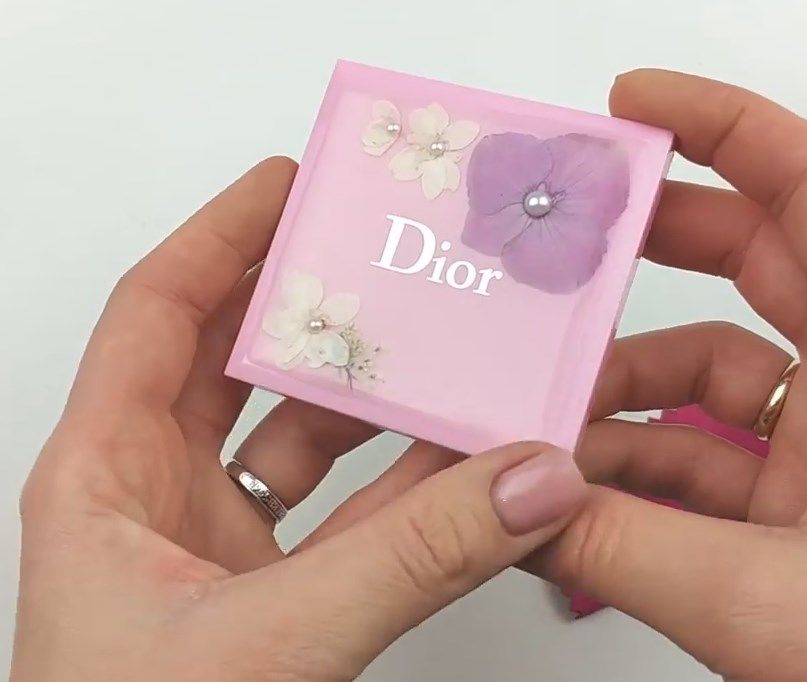
The example below decorates only the exterior lid of an eyeshadow compact. Test the resin and cleaner on an inconspicuous area first because some plastics and coatings can soften, crack, discolor, or lose adhesion. Keep resin and cleaner away from the cosmetics, mirror, hinge, closure, and any edge that contacts skin. Do not use craft resin on food-contact surfaces or for prolonged skin contact unless the specific cured product is certified for that use.
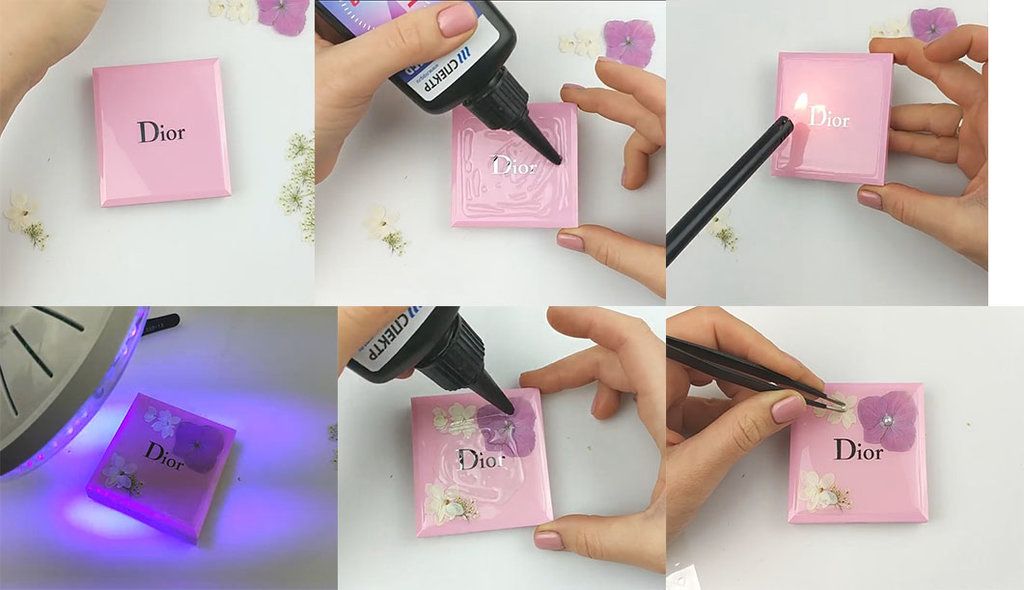
Before starting, read the product label and SDS. This is an adult craft: work in a well-ventilated area, wear nitrile gloves and splash-resistant eye protection, cover the work surface, use dedicated nonfood tools, and keep children and pets away. Do not touch uncured resin. Clean and dry the compact's exterior with a manufacturer-approved cleaner that is compatible with the plastic. Apply a thin layer of resin and remove bubbles without flame. Arrange completely dry flowers, then cure the layer with a compatible shielded lamp for the time specified by the resin manufacturer. Add a second thin layer, position the beads, and cure every exposed area as directed. Do not use the compact until the resin is hard, dry, and fully cured, and check that all decorations are securely bonded. If the product is designed to leave an oxygen-inhibited tacky surface, remove it only with the cleaner named by the manufacturer, while wearing gloves and maintaining ventilation. Do not use an unspecified solvent, and never wash uncured resin or resin-contaminated cleaner down the drain. Contain used wipes and other residue and dispose of them according to the SDS and local rules.