
Embroidery and Decor with Stones: How to Choose Materials
Natural beads, rhinestones, and cabochons help create unique decor for clothing and accessories. To avoid buying low-quality fakes, you need to know how natural stones differ from glass and plastic ones. First, you won't have to overpay for a fake, and second, the item itself will last for years without peeling, fading, or losing its appeal.
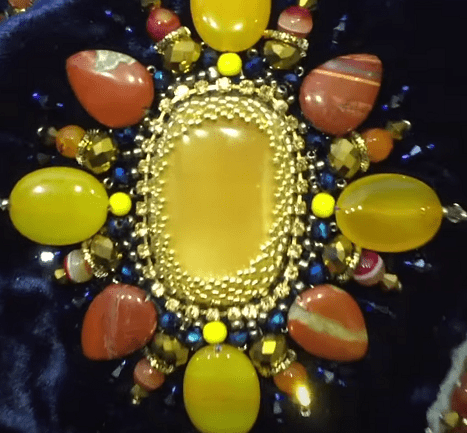
So, what should you look for when buying stones:
1. Weight
Plastic beads and cabochons weigh much less than natural stone. It is harder to distinguish items made of glass and epoxy resin; there are other methods for that.
2. Thermal conductivity
All artificial materials heat up very quickly. If you hold a natural stone in your hands and then press it to your cheek, it will remain cool.
3. Pattern
If the pattern is very clear, with sharp color transitions and stripes that break off at the hole, you are dealing with a fake made using paint and tinting. Sometimes stones are scratched and dyed, which is especially visible if you shine a flashlight on them.
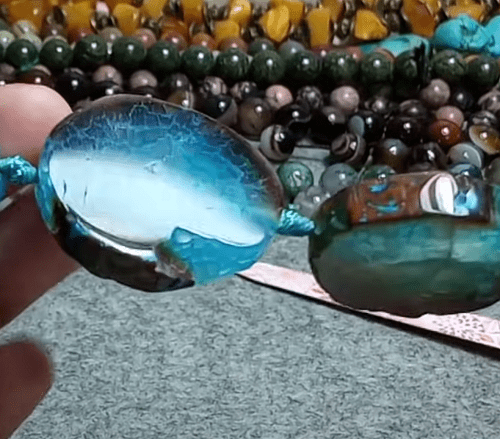
4. "Cotton," bubbles, and inclusions. You can see these in transparent beads: artificial quartz, amber, rock crystal. If air bubbles are visible when held up to the light, it is definitely glass; such stones are very cheap.
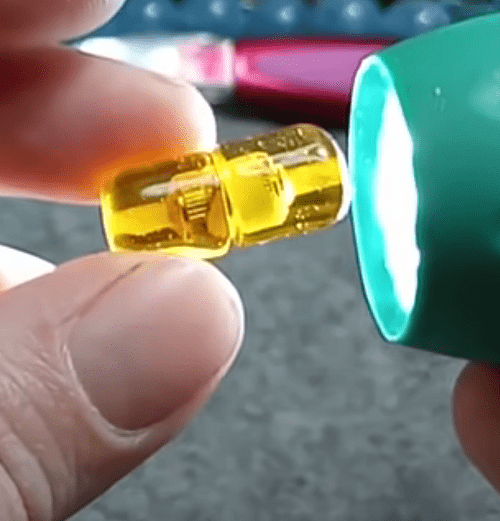
The same can be said about glitter and small pieces of foil—they are often added to amber, which gives it an unnatural shine.
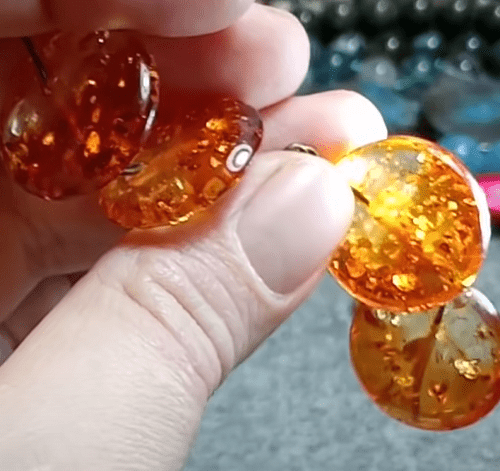
Darkening in the center of the stone ("cotton") is characteristic of glass; in natural stone, opaque inclusions are located chaotically.
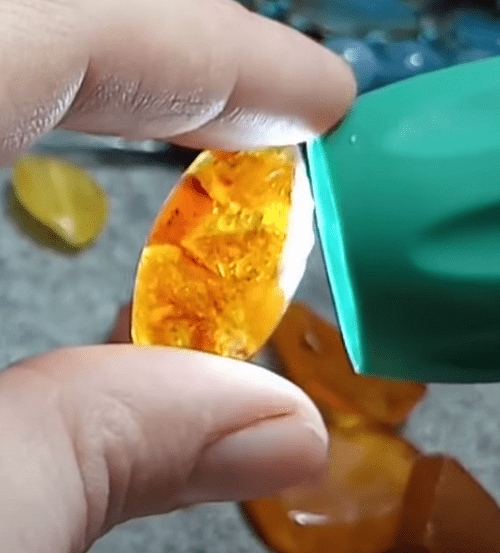
4. Shine
Even with good polishing and faceting, natural stones will not have a perfectly smooth surface. Beads that are too shiny, sparkling, identical in size, with a clear pattern or complete transparency are definitely fakes, even if the store markets them as natural.
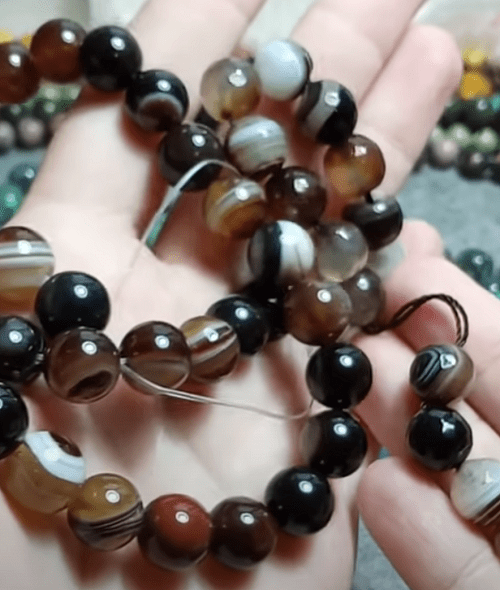
Today, you can also find beads on sale made from pieces and dust of semi-precious stones, using a special adhesive composition and polishing.
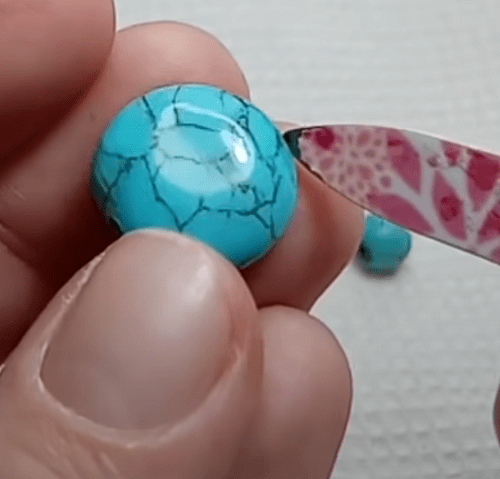
Such ornaments are practically indistinguishable from real ones and can be used for high-quality work, for example, to create brooches.
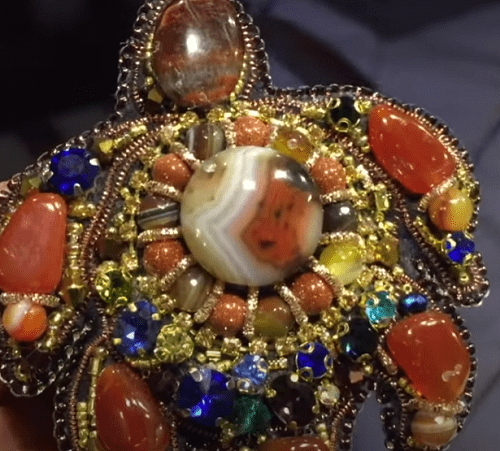


Artificial beads often show a mold line. Usually, it's a strip running around the entire perimeter, roughly in the middle. You can also test amber with a solvent, like acetone. Natural stone won't be affected, although it's still better to test on the back side. Plastic, however, will melt when exposed to acetone.