
Embroidered Art Fabric: Archive Technique for Accessories
This is an archive idea for a textile collage with embroidery, used as a decorative panel in bags, wallets, or cosmetic pouches. The result depends on the base, seams, density of embellishment, and intended use; it is not necessarily one of a kind or suitable for every accessory.

Choosing a base and decorations
The sample uses green cotton with a geometric print, fabric scraps, trim, lace, organza, and satin ribbons. Check whether materials bleed, fray, and tolerate bending, abrasion, and care together. Scissors, needles, pins, beads, sequins, and buttons need careful handling; small details are not suitable for items used by young children.

Strips of different widths can be sewn to the base by hand, with a straight stitch, or with zigzag. Finish raw edges and yarn ends as the chosen fabric requires.
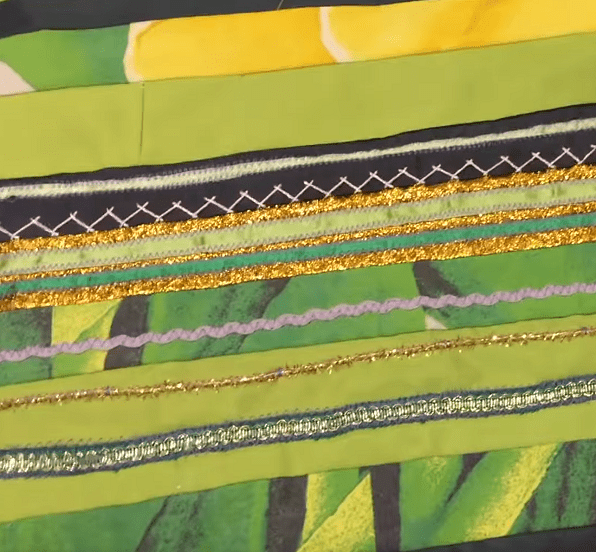
Decorative stitches in silver, gold, or another thread can be worked along the strips, then ribbons, beads, buttons, or sequins can be added. Check every detail is secure and do not use decoration where it can snag, shed, or obstruct a fastening. If glue is chosen, use only a fabric-compatible product as its maker directs, in a ventilated space, and allow it to dry fully before sewing or use.

The finished panel can be sewn into different accessories, such as a denim cosmetic pouch with a decorative insert. It is an item for storing belongings, not a food container; observe the limits of its materials and hardware.


It is indeed very bright for a bag, but a cosmetic pouch—why not? A wallet could be made with this technique too.