Sewing a Swimsuit: Secrets to Creating Perfectly Fitting Beachwear
Sewing swimsuits is no easy task; it requires not only creating a pattern that accounts for optimal fabric tension but also properly finishing edges and choosing the most important ingredient: the material.
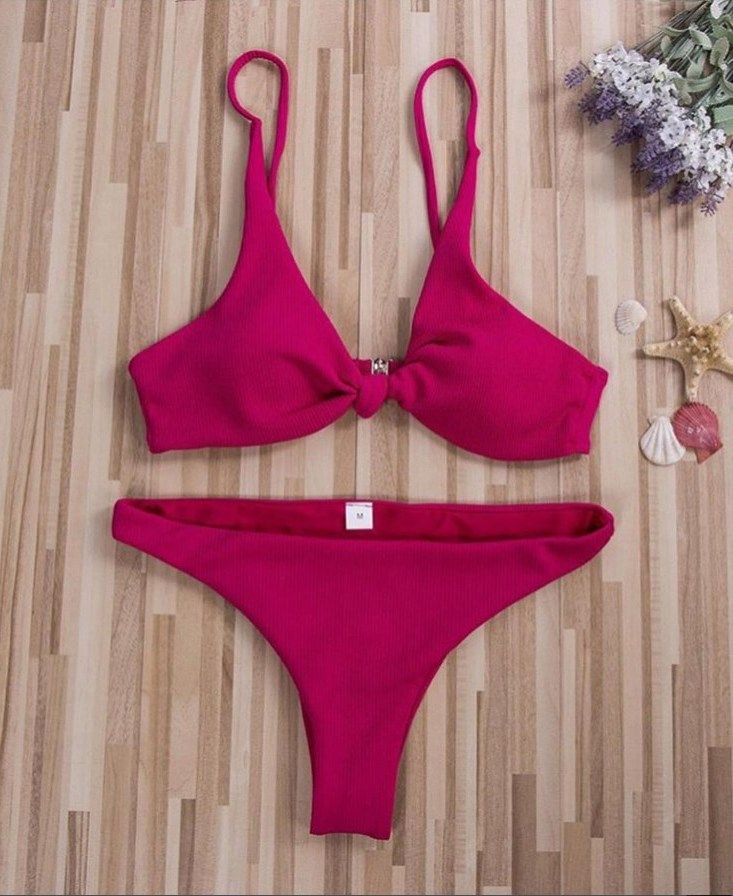
A unique feature of swimsuits is that while they look like lingerie, they function as outerwear. This imposes certain limitations on the choice of fabric—it must be sufficiently dense, yet elastic and capable of holding its shape well.
## Choosing the Fabric
So, what criteria should we use when selecting fabric for a swimsuit:
- Resistance to drying out, fading, and exposure to salt and chlorinated water;
- Shape retention when wet, with no deformation after washing and drying;
- Good stretch—the finished swimsuit should fit the body snugly without pinching or chafing the skin;
- Density—the fabric should not be transparent when wet;
- High hygroscopicity—the swimsuit should dry quickly;
- High resistance to mechanical stress, including constant stretching;
- Safety—since swimsuits are made from synthetic fibers, it is important that they are non-toxic.
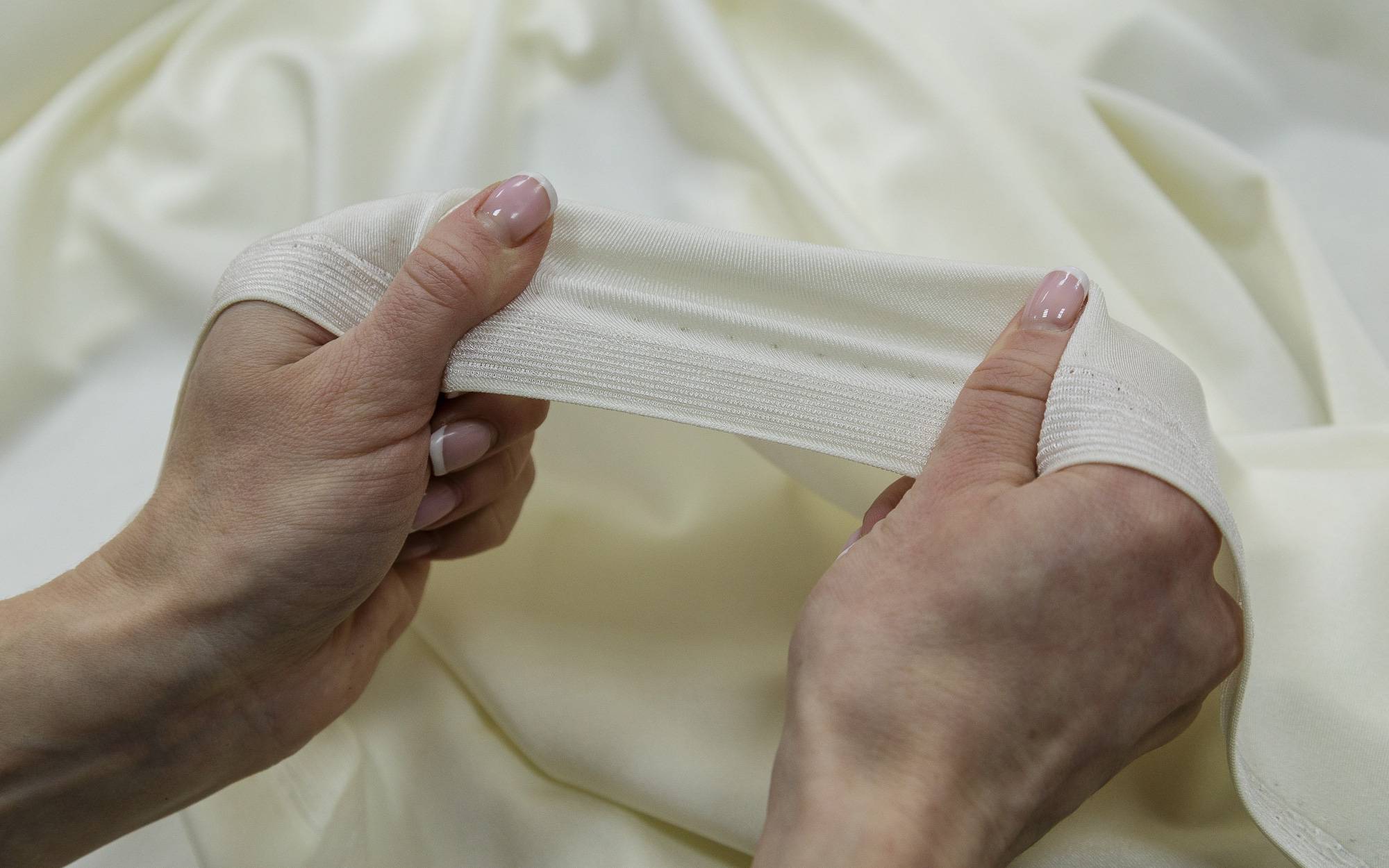
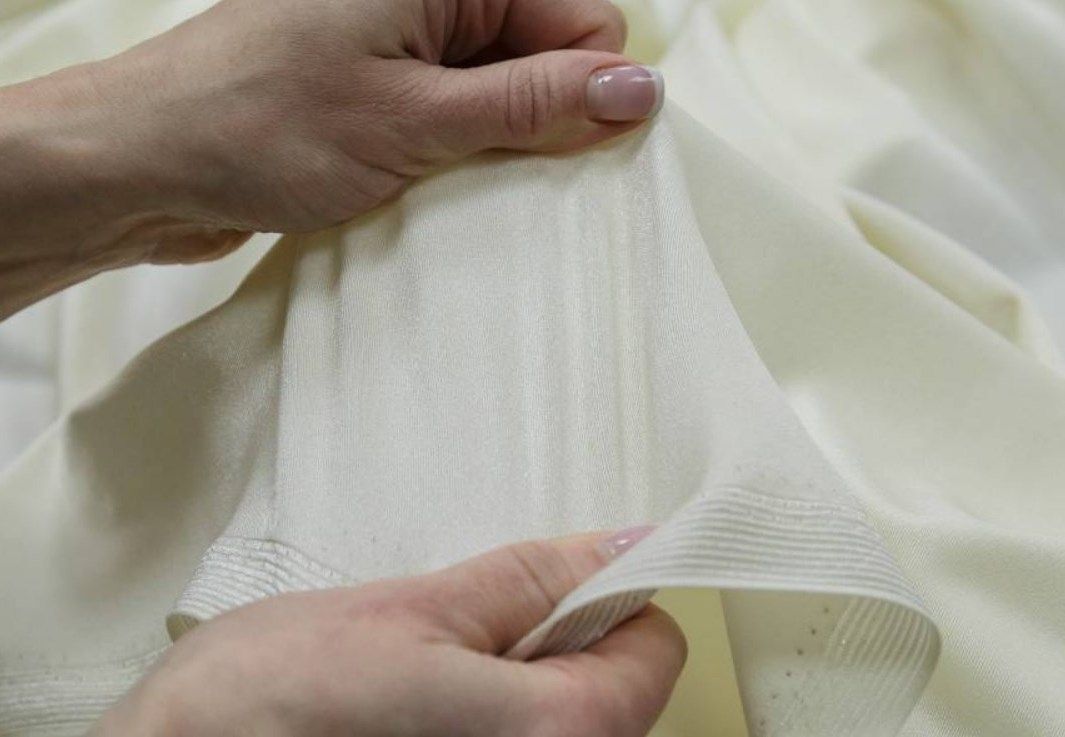
In addition to all the above, the fabric should be bright and beautiful. Biflex meets all these parameters. It is elastic, thin, durable, and resilient; it stretches perfectly in any direction and easily returns to its original size.
Biflex is easy to care for. It can be machine-washed with standard detergents. The fabric dries instantly, does not pill, and is virtually wrinkle-free.
## Sewing Recommendations
Now, let's briefly go over the basic rules for sewing swimsuits and trunks.
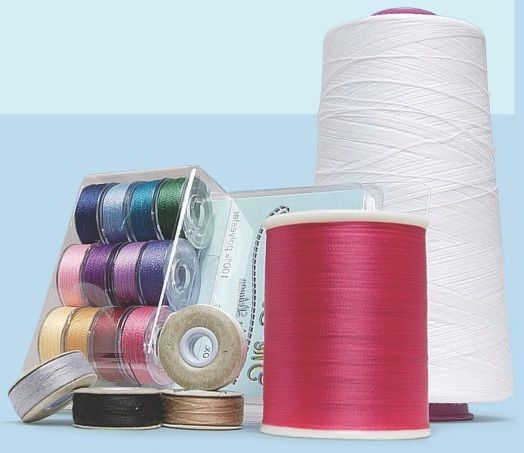
1. Use thin needles and thin synthetic threads for sewing. Before basting and stitching, place the pieces right sides together.
2. If you decide to sew a swimsuit from knit fabric, choose a special ballpoint needle, which prevents the fabric loops from tearing when pierced.
3. Water-resistant threads are best for stitching the pieces together. As a substitute, you can use textured threads for an overlocker.
4. To ensure the seams remain elastic, use a narrow zigzag stitch. Set the stitch width between 0.5 and 1 mm with a length of 3 to 4 mm. You can also experiment with other elastic stitches available on your machine—naturally, test them on a scrap piece first.
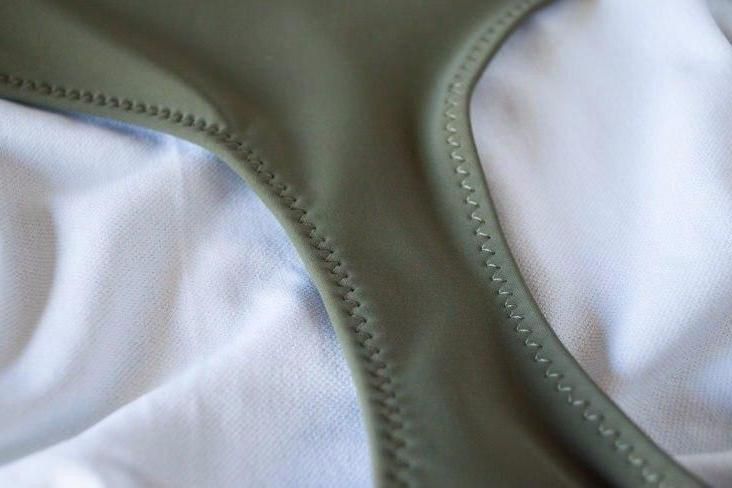
5. Always backstitch at the beginning and end of your seams!
6. Finish the seam allowances with a zigzag or overlock stitch.
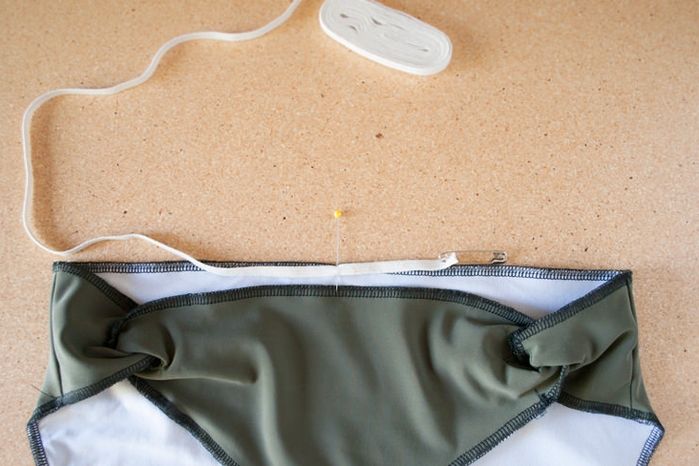
7. To ensure the swimsuit fits snugly, insert a special shape-retaining, water-resistant elastic along the seams—this helps define the waistline. The same trick is used for bikini bottoms to accentuate the glutes.

Have you ever sewn swimsuits? If so, what other nuances are there?


In the last photo, there's a drawstring and a cord made of supplex, but the idea is quite clear. :)
Besides supplex, you can use stretchy polyester, polyamide, or lycra. Cotton also works, but only if we're talking about knitted models rather than sewn ones. It's pretty, but to be honest, not very comfortable to wear - you'll still find yourself needing elastic bands...