
How to work with stretch denim
Classic denim is a durable but coarse material. When Lycra or elastane fibers are added to the denim thread, the fabric becomes much more comfortable: it drapes well, stretches to fit the body, becomes softer, and retains its durability.
But to sew with stretch denim, you need to follow a few simple requirements 😉
## 1. Adjusting the pattern to fit.
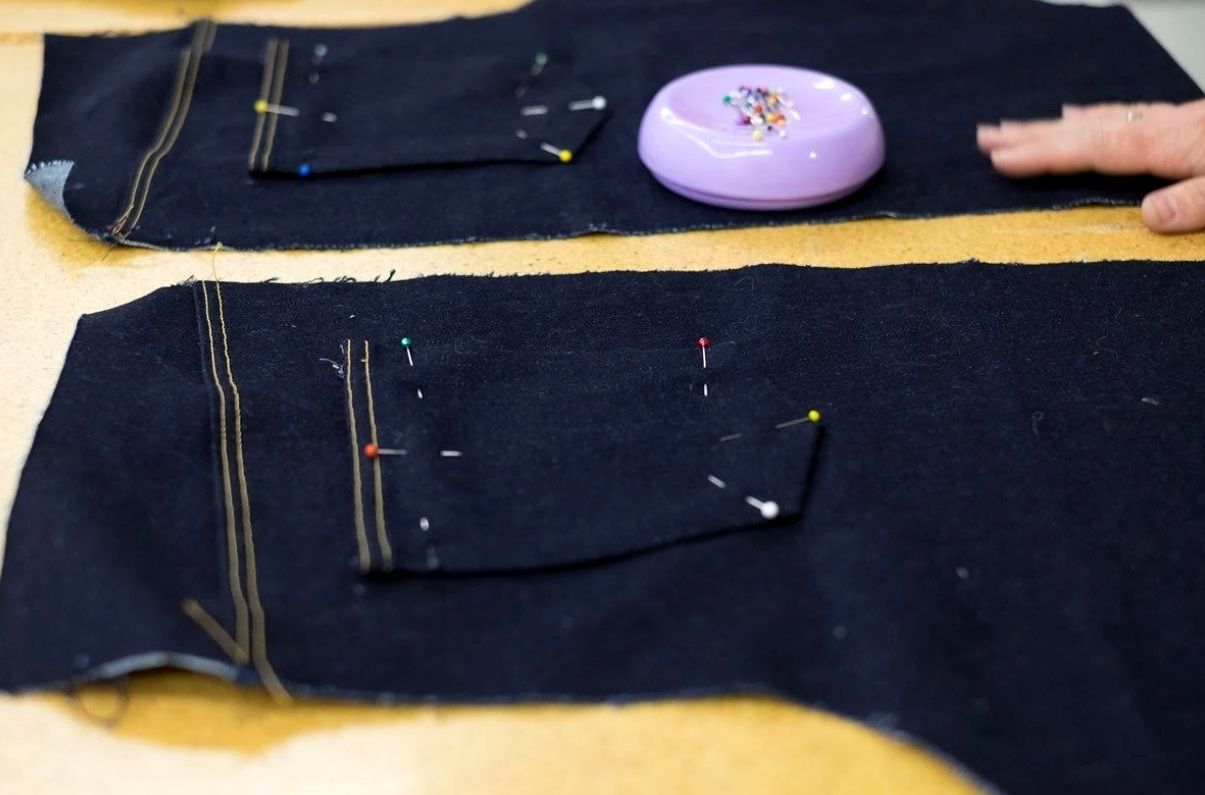
When drafting patterns for elastic fabrics, you need to consider their degree of stretch. Denim can stretch in one direction or two (bi-stretch). When using medium-stretch denim, ease allowances for all parts of the pattern can be zero, i.e., only body measurements are taken into account when drafting lines. When designing garments from high-stretch bi-stretch materials, ease allowances can be negative (i.e., the pattern width along circumference lines will be smaller than the body measurements). The difference can reach 15% (!) of the actual measurement. Also, when calculating patterns for thin and highly stretchable denim, vertical dimensions are reduced as well. For example, when designing trousers from bi-stretch fabrics, circumference ease is zero, and the rise height is shortened by at least 1-1.5 cm.
## 2. Finishing the cut edges.
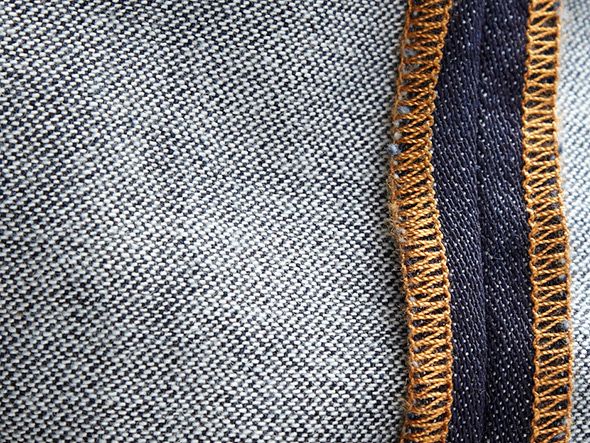
Using a serger or at least a zigzag stitch for denim edges is mandatory. And if the fabric density allows, it is advisable to additionally secure all seams with bias tape.
## 3. Pre-shrinking the fabric.
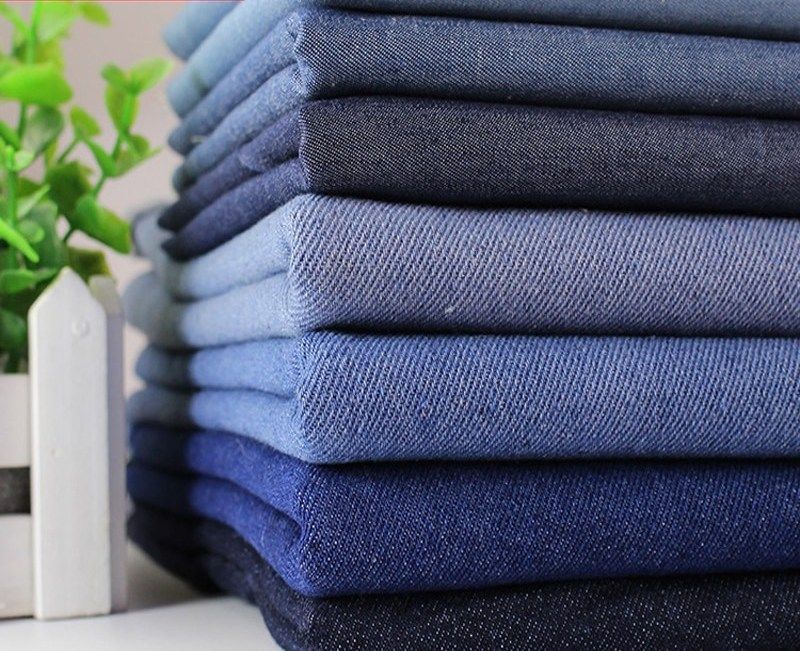
Stretch denim can shrink unpredictably. It is impossible to accurately predict shrinkage in numbers: it all depends on the manufacturer and the quality of the fabric. Therefore, the raw fabric must be soaked alternately in hot and cold water and dried. The temperature should not exceed 40 degrees: at higher temperatures, elastane fibers can deform – as they can with rough manual wringing (it is better to just let the fabric drip dry).
## 4. Sewing with a stretch needle.
A special needle will allow you to gently push the elastic fibers aside rather than tearing them. If the denim is dense and stretches only slightly, it is preferable to use a denim needle.
## 5. Stitching without tension.
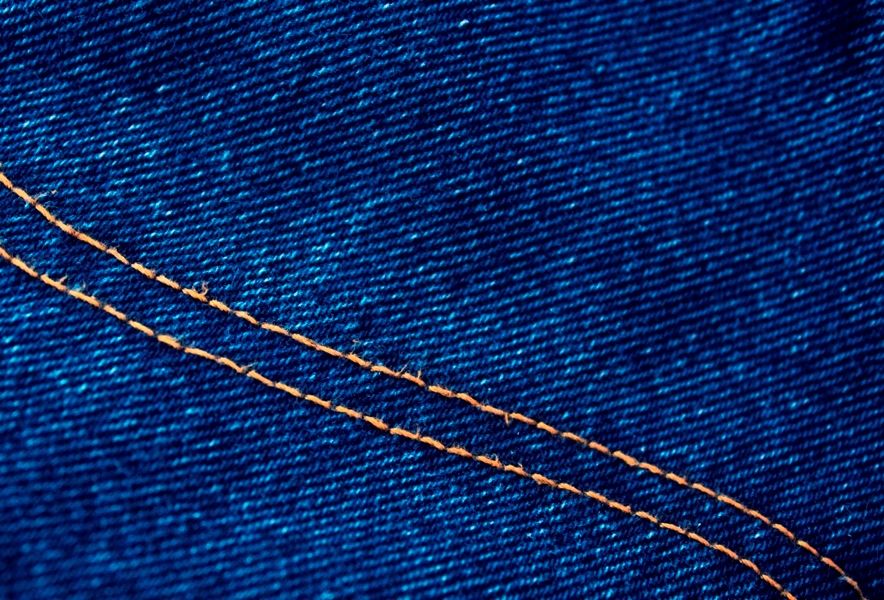
Of course, keeping stretch fabric static without tension is not easy. Therefore, the stitch often turns out stretched and wavy. You can avoid this by simply placing a sheet of paper under the fabric.
Ladies, if anyone has any other useful thoughts on life hacks for stretch denim, you are welcome to share them in the comments ))


Here, I specifically found info comparing two types of needles – for thin stretch denim and for regular "stiff" denim. I hope it will be clear and useful 🙂