
Tips for sewing with faux fur at home
Using faux fur as a material for sewing clothes is quite manageable even for beginner sewists.
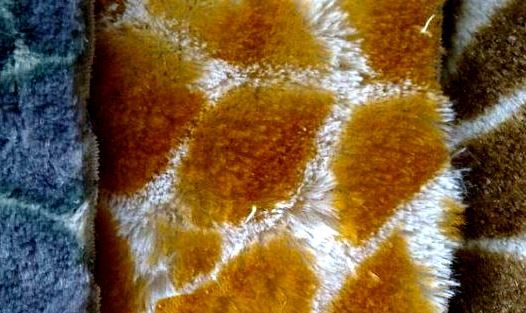
You just need to consider the characteristics of the fur and choose simple patterns with a minimum number of seams.
It is best to avoid darts, pleats, patch pockets, and gathers.
Buttonholes are best replaced with loops made of cord or thin strips of leather.
As for buttons, it is better not to sew them on with thread, but to attach them to a loop made of cord or leather. You can also use hook-and-eye closures or replace them with decorative buckles and clips.
Reinforce the edges of the front openings and the hem with fusible stay tape. This will prevent the fur from stretching. If the faux fur has a knit backing, apply fusible tape to all raw edges. Usually, a 15 mm wide cotton tape with a fusible coating is used.
It is advisable to make facings for finishing edges as one-piece. Use them to finish the front openings, collar, lower edges of sleeves, and cuffs. For facings, use non-fusible materials such as calico or cambric.
Stitch faux fur pieces on a straight-stitch sewing machine using a standard stitch. Therefore, when cutting, you must account for seam allowances of 10-15 mm.
Use tried-and-tested patterns for sewing fur garments. Ideally, cut a mockup out of scrap fabric first, make the necessary adjustments, and only then cut the fur using those patterns.


