How to find the grainline: six proven methods
Option one – works almost every time. Understanding that the grainline runs parallel to the fabric selvage makes it easy to find. Of course, this assumes the fabric has a selvage. 🙂 If it doesn't, read on.
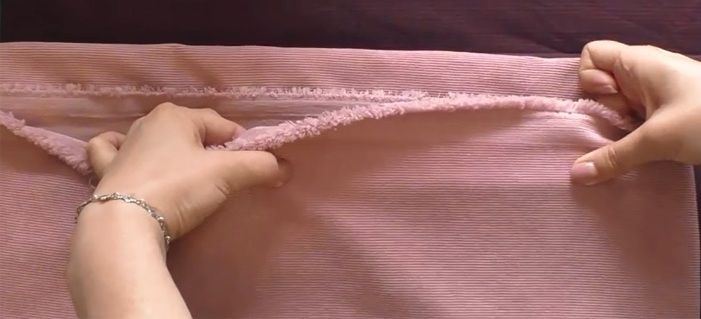
Option two – suitable for non-knit fabrics. All fabrics stretch slightly along the weft thread and are static along the grainline. To determine the grainline direction, take a piece of fabric without a selvage and pull it in different directions. Where you feel the fabric stretch, you have found the weft thread; where it does not stretch, you have found the grainline.
Option three – if the previous two didn't work. Sharply, but not too hard, stretch the piece of fabric. If you do this in the direction of the grainline, you will hear a sharp snap; if you do it along the weft thread, the sound will be quiet and dull. Option four – for verification. Examine the fabric against the light: the grainline threads should be smooth and even, while the weft threads are the opposite.
Digging into the depths of my memory, I found two more options, but they don't always work with all fabrics (the result depends on the composition), so they are only suitable for double-checking or if all previous methods have failed.
Option five. If you know for sure that the fabric is a blend, for example, cotton and wool, rest assured that the cotton threads will be the grainline, as they are stronger.
Option six. If the fabric consists of cotton and silk threads, the silk will be the grainline, as it is stronger.
I hope you won't have to go beyond the first or second option. 😉


We covered the first 2 back in school during home economics class, and then we would pull out a thread and set it on fire to determine the fabric composition.