Sewing Folklore and Word History
Hello, everyone! I am glad to join this community of crafters. Here is a light collection of sewing folklore and word-history notes—not a sourced guide to clothing history.
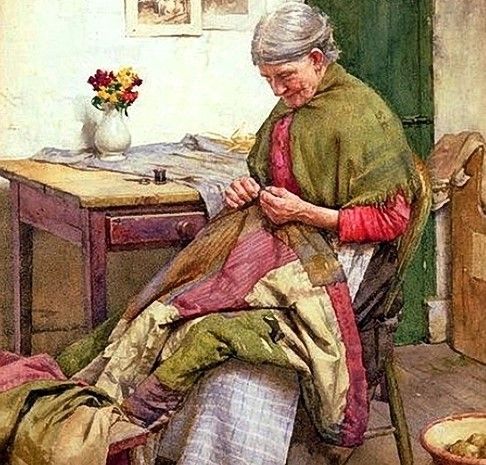
Sewing has a very long history, including garments made from animal hides. Rather than trying to date its beginnings, rank textiles, or attribute inventions without sources, this short post focuses on the stories that clothing words and details can inspire. The source also repeats familiar claims about the earliest fabric, netting, the name nylon, Leonardo da Vinci and scissors, and early trouser construction; without supporting sources, they are not presented here as established facts. A familiar story says Napoleon added sleeve buttons because soldiers wiped their noses on their sleeves; treat that as a popular anecdote, not verified history.
The original Russian post makes a wordplay with losiny, its term for leggings, and los, meaning “elk” or “moose.” The Russian name is historically associated with close-fitting trousers made from elk hide. That etymology belongs to Russian word history; it does not explain the English word leggings.
The English word sweater is connected with sweat; early garments described by that name were associated with exercise and promoting perspiration. That word history is not a current medical or weight-loss recommendation.
How long clothing lasts varies greatly with its material, construction, care, and how often it is worn. A single three-year figure is not presented here as a benchmark for living standards.
Buttons have long served practical and decorative roles. The source imagines a lavish suit associated with Francis I of France, who reigned from 1515 to 1547—not in the 12th century. No reliable source is supplied for a button count or status rule, so treat that part of the story as folklore rather than historical fact.
Have a lovely day, and enjoy the spring mood 🌺


Interesting collection of facts! I have heard that Francis had either 12,600 or 13,600 buttons, though that was on a ceremonial outfit. Supposedly, this distinctive feature was why he lost both his throne and his life: the buttons gave the would-be assassins a clue. They were not merely sewn on, either—each one had to be unfastened. And at the fateful moment when he was wounded, Francis supposedly bled to death while all the buttons on his doublet were being undone. 😔
These days, you could put 100,000 buttons on yourself and people would call it a new trend. Wouldn’t that make a great idea for a Lady Gaga dress? 😄