
Fabric Storage – Organizing Your Craft Stash
Those who sew regularly and have been doing so for a long time know that properly sorting and arranging your craft supplies is a science in itself.
First, you need to sort your "treasures." Fabrics are usually categorized by various characteristics:
- quality
- manufacturer
- color
- intended use
To decide on a storage method, you need to understand what exactly damages fabrics:
- light (both artificial and sunlight)
- dust
- humidity (especially when combined with temperature)
Therefore, open shelves for fabrics are definitely not the right choice if you live in a dusty steppe or humid maritime climate.
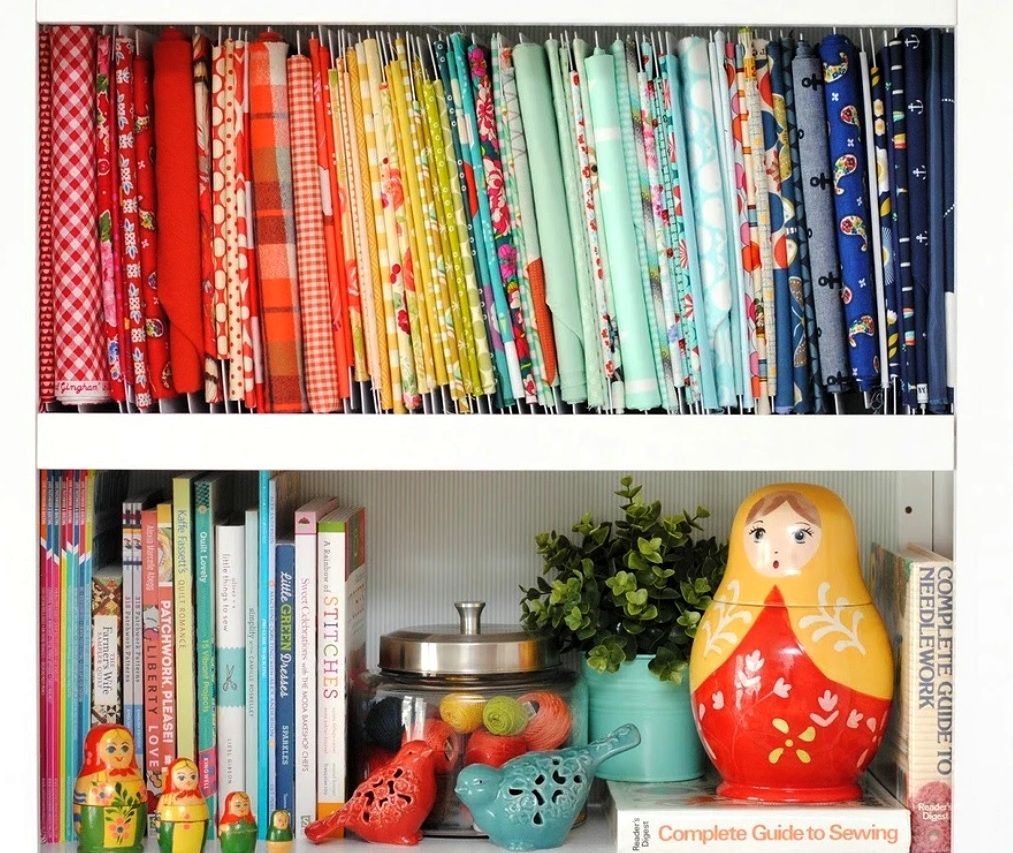
The best ways to preserve fabric brightness and fiber condition are to place them on different levels of a closed cabinet.
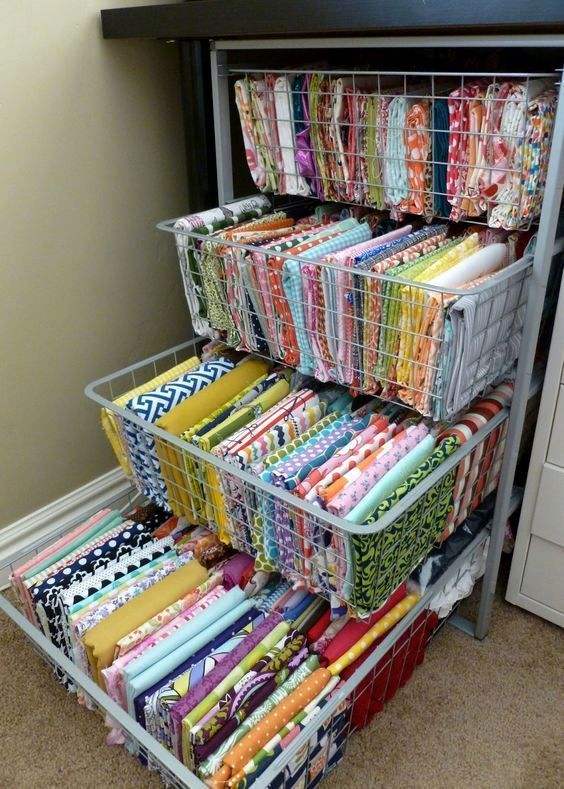
Or sort them into plastic containers.
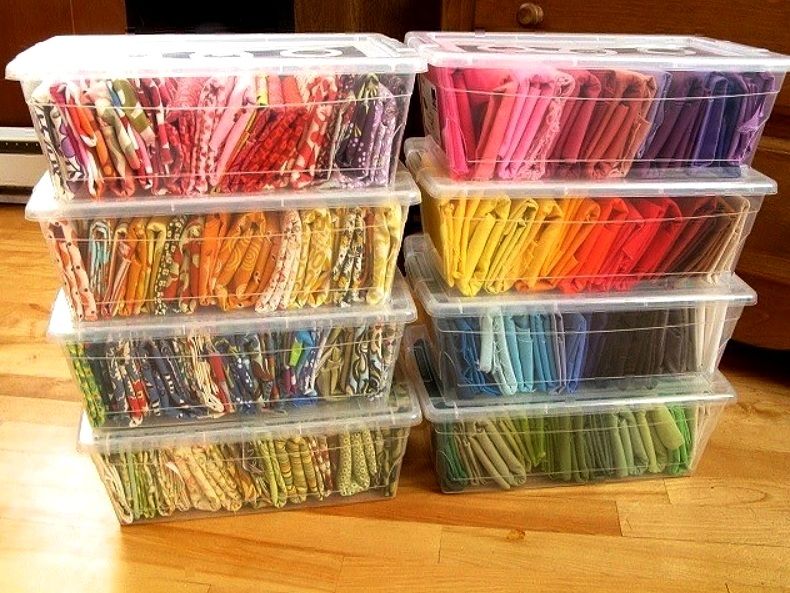
When using closed storage, it is very important to fold fabrics neatly, preferably by wrapping them around a cardboard base.
Fabrics can also be stored hanging – a great way to avoid creases and deep wrinkles.
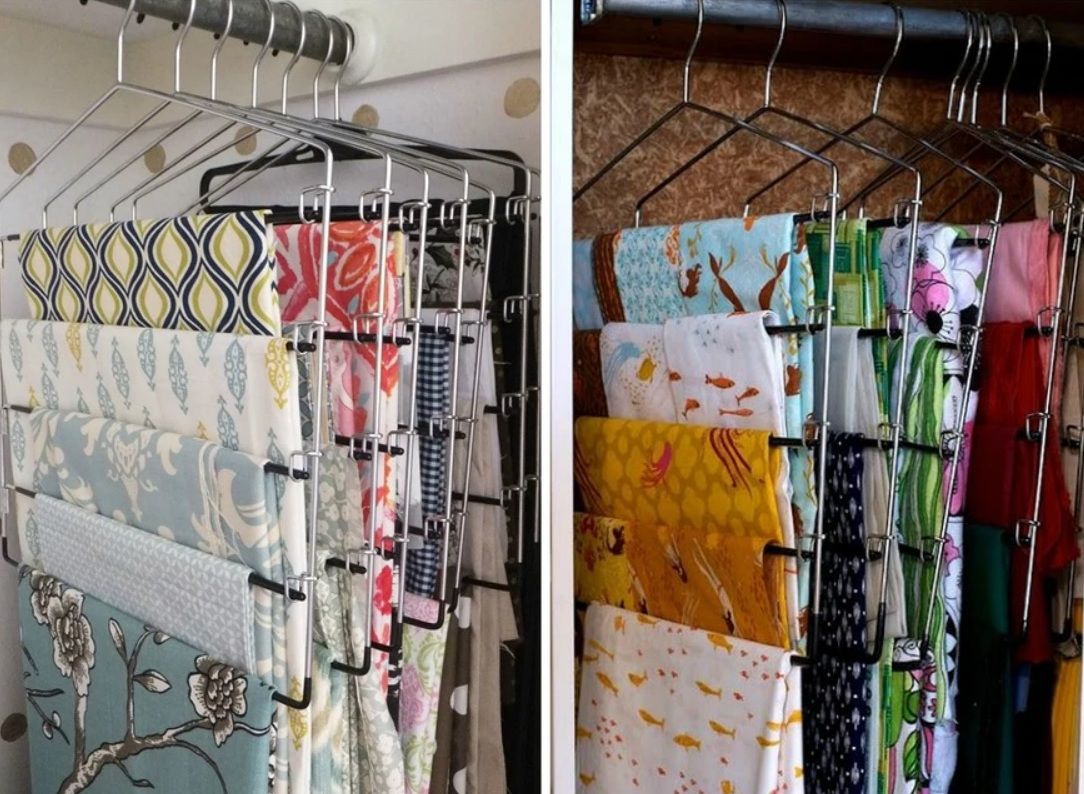
Rolling fabrics, a method loved by many crafters, also works well: in this form, the fabric will maintain its "face" perfectly.
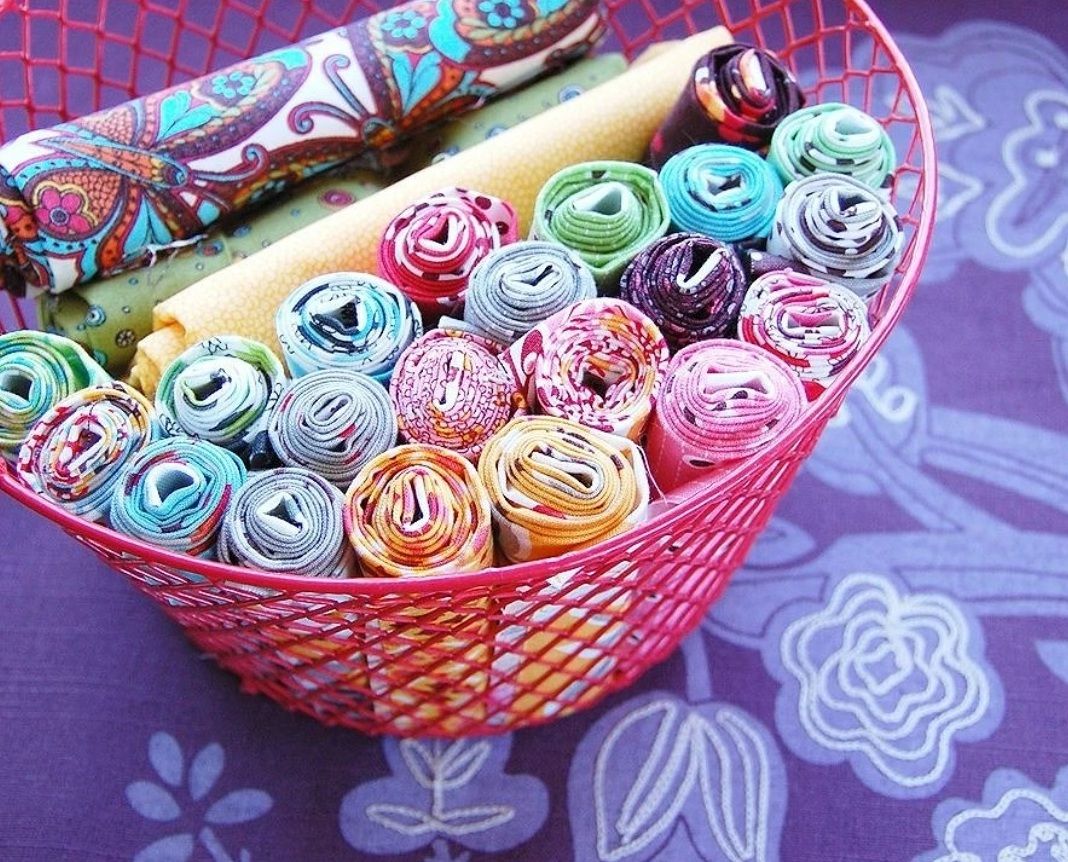
And finally: even if your storage is perfectly organized, remember that fabrics need regular "hygiene." Your stash should be periodically aired out, refolded, and sorted – this is the only way to maintain their quality.


Closed storage, I think, is more suitable for a humid climate. Remember how swimsuits and towels take a long time to dry at the seaside, especially at night... And so that clothes and fabric scraps don't develop a musty smell, they need to be thoroughly dried (to a perfect state!) and ironed. No moisture - no smell.