How to tint a doll body with pastel: soft shading and blush
A soft doll-body tinting tutorial with pastel: prepare the surface, mix the shade, rub in the pigment, add blush to the joints, and seal everything with matte acrylic varnish.
BeginnerFree
Translated
Things you will learn
Pastel is suitable for gentle tinting, not for radically changing the doll body colour.
Sand the surface carefully: pastel highlights uneven areas and can create blotches.
The pigment should be rubbed into the material, while joint cuts and body lines are worked with a fine brush.
Seal only with matte acrylic varnish; gloss varnish can go on unevenly and ruin the soft effect.
Soft matte doll-body tint
After pastel tinting, the doll body looks softer and more natural: you can tone down pink plastic, add a warm golden shade, or define the joints with a light blush.
Materials and tools
Materials
Dry artist pastel, Use dry pastel that can be scraped into pigment dust.
Prepared doll body, 1 piece, The body should be cleaned and sanded before tinting.
Fine sandpaper, Needed for careful surface preparation: pastel shows every uneven area.
Matte acrylic varnish, Gloss varnish is not suitable for pastel: it may apply unevenly and spoil the soft matte finish.
Palette or sheet of paper, 1 piece, Useful for scraping pastel and mixing shades.
Red or reddish-brown pastel for blush, Used on joints and body lines.
Tools
Utility knife, Used to scrape pastel onto the palette.
Finger, sponge, or soft applicator, The pigment needs to be rubbed in evenly, not just placed on top.
Fine brush, For joint cuts, joints, and precise blush.
Varnish safety setup, Seal the doll in a ventilated place and protect the work surface.
Files and resources
Preparing a doll before paintingRelated preparation material exists in Russian only for now; translate it before linking from the English page.
Painting a doll body with acrylicUse this related tutorial when the body colour needs to be changed radically rather than softly tinted.
Preparation
Prepare the body before pastel
Clean and sand the doll body. Work especially carefully with fine sandpaper: pastel goes on thinly and immediately reveals scratches, bumps, and poorly prepared spots.
Mix the shade on a palette
Choose dry pastel shades in advance. If you need a complex tone, mix several colours on the palette and test the shade before applying it to the doll.
When to choose pastel
Pastel gives a translucent, matte, airy effect.
Use pastel for a gentle tone shift
This method works when you need to make a pink doll body paler, add a warm golden tint, or softly bring the body to life with blush. For a radical colour change, pastel does not replace acrylic.
How it differs from acrylic
Acrylic gives a dense covering layer, while pastel works as a thin tint.
Scrape pastel onto a palette
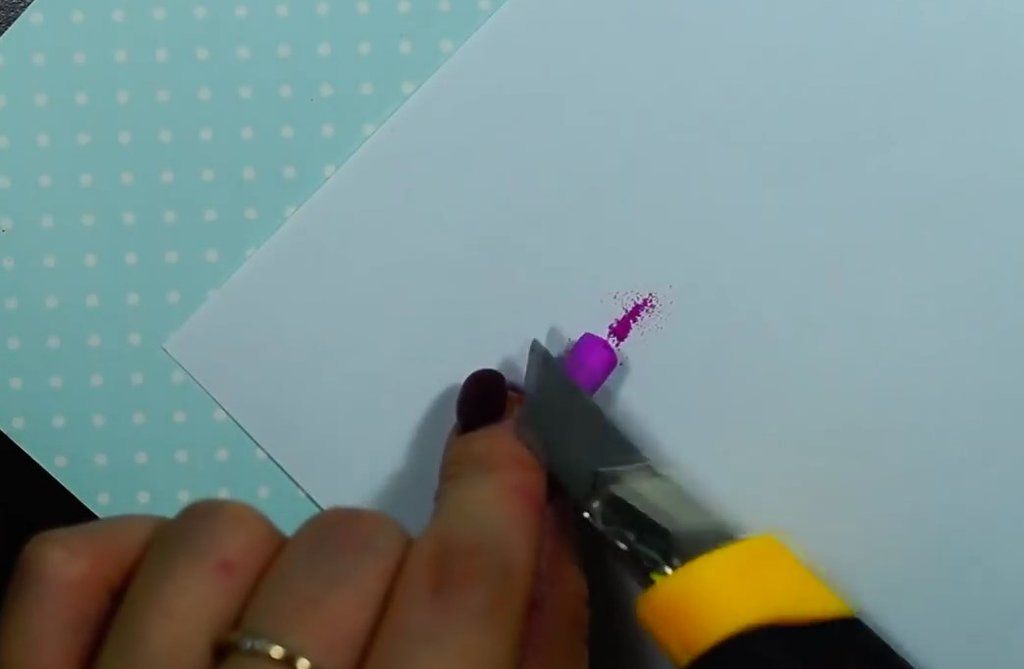
Use a utility knife to scrape a little dry pastel onto a palette or sheet of paper. This makes it easier to control the amount of pigment and mix shades.
Scrape dry pastel in small amounts and mix shades on the palette.
Apply pastel to the body
The main technique here is not brushing on colour, but evenly rubbing pigment dust into the surface.
Rub the pigment into the surface
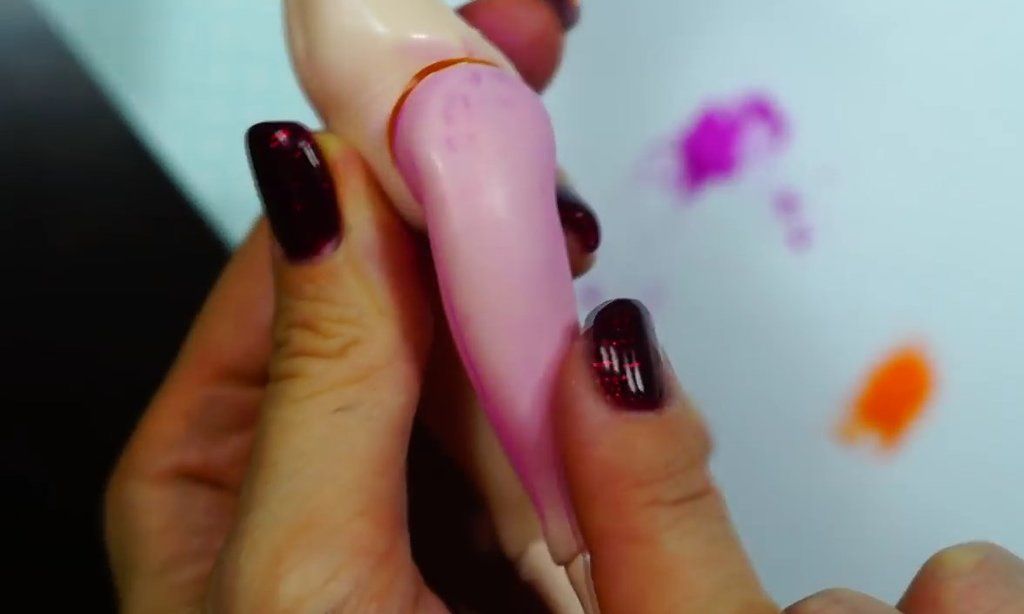
With a finger, sponge, or soft applicator, start rubbing pastel into the doll body. Work carefully and evenly so the pigment settles into the material instead of creating blotches.
Rub the pastel evenly into the surface so the colour does not become blotchy.
Check the evenness
Several light layers are safer than loading the surface with too much colour at once.
Work pigment into the joint cuts
Use a fine brush to add pigment to joint cuts and hard-to-reach body lines. These areas often remain lighter and reveal the original body colour.
Blush and sealing
Final blush makes the body look more natural, but the result must be sealed.
Add blush to joints and body lines
Scrape a little red or reddish-brown pastel and apply it with a brush to the main joints and body lines. Keep the shade soft so it reads as a natural shadow.
Seal the pastel with matte varnish
Seal the result with acrylic varnish. Use matte varnish only: gloss varnish can apply unevenly over pastel and spoil the delicate effect.
Do not flood the surface
Apply varnish thinly in a ventilated place. A heavy layer can create spots and runs.
Finish and variations
Finish
Expected finish
The finished tint stays soft and matte: the body colour changes delicately, and the joints and body lines look more natural.
Check after the varnish dries
Inspect the joints, hands, feet, and bend areas. If some pigment has faded after sealing, repeat a light tint and seal again with matte varnish.
Variations
Golden tint
For a warmer effect, mix skin-tone pastel with a small amount of bronzer or golden highlighter.
Paler tone
To tone down pink plastic, work with a light skin-tone shade and apply pastel in thin layers.

 BeginnerFree