
Decoupage brushes and their varieties
Starting any artistic endeavor, including decoupage, one of the most difficult choices is selecting brushes.
Let's look at the most common decoupage brushes:
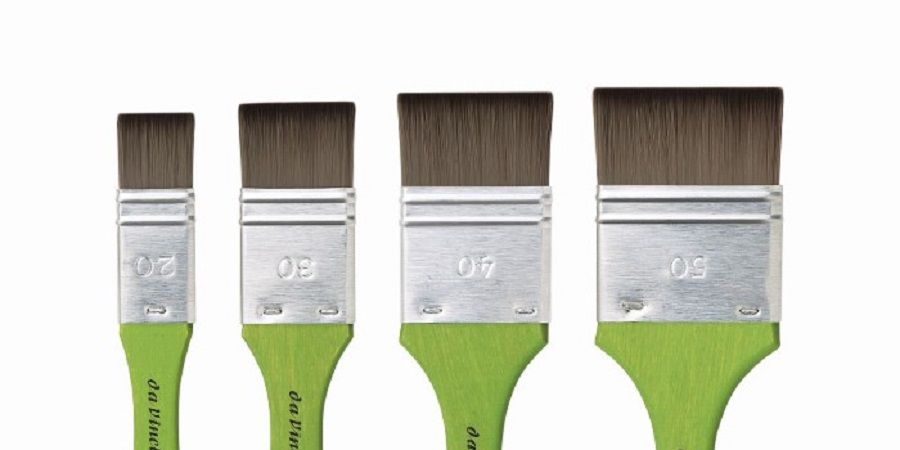
Flat wide brushes have long bristles, which allows them to absorb a lot of paint. Wide brushes are used for:
- working with backgrounds or large details that need to be painted;
- applying base coats (primers) and top coats (varnish).
When choosing brushes, be sure to buy wide synthetic ones; you are guaranteed to find a use for them.

Round universal brushes are used in all areas of artistic creativity (painting, traditional decorative painting, decoupage, etc.). They are universal because the line thickness can be varied. Depending on how much pressure you apply to the brush, you get a corresponding thickness. Thanks to this feature, the brush is suitable for both painting large areas and drawing fine details.

Flat oval brushes are also considered universal, as they perform the same functions as round ones. They can also change line thickness depending on pressure; you can paint both wide flat stripes and very thin ones using the edge of the brush.

Contour brushes differ from others by their short, firm bristles. This provides better line control and ensures the clarity of the drawing. They are used for highlighting small details.

Flat wash brushes (fletz) are very wide flat brushes. The feature of this tool is that it holds a large amount of paint, allowing you to quickly cover a large area and create textured strokes. Most often, a wash brush is used for creating backgrounds.
Retouching or angled brushes look like a simple flat brush but differ in bristle length and an angled cut. This means the brush has a thin tip, making it much easier to paint point strokes. By tilting the brush slightly, you can draw thin lines, and by applying pressure, the line becomes thicker. Such brushes are usually used as a substitute for expensive tools for creating double-loaded strokes.

Do you use other brushes? Share in the comments.


I also use lettering brushes, riggers, fan brushes, and liners.
They are similar to standard round brushes but have very long bristles. With these brushes, it's easy to make even, long, and very thin lines without lifting your hand from the paper. It's only important to use them with liquid paints, acrylics, or just slightly diluted with water.
Riggers and liners (they are also called liners) are even thinner, and the bristles are a bit shorter, but these brushes make it easier to do lettering.
A fan brush is very flat and its bristles look like a fan. I use it to create transitions in the background.
I've also heard that there is a "One Stroke" technique, although for some reason it's called a double stroke, and special brushes with a trimmed tip are used for it. They say you can get a longitudinal thin line that way. I haven't worked with them myself, but it's very interesting to try.