
Decoupage Glue: PVA or Specialized? Myths and Reality
When starting with decoupage, the first question crafters ask is which glue to choose. Some insist on specialized glue and believe there are no other options, while for others, PVA is the best choice. Based on my own experience, I can note that specialized glue (regardless of the brand) has a tacky top layer. On one hand, there is nothing wrong with that, but on the other, it makes working with napkins very difficult. I use both specialized glue and PVA depending on the situation:
- working with napkins;
- working with rice paper;
- working with decoupage paper.
I only use specialized glue when working with various printouts.
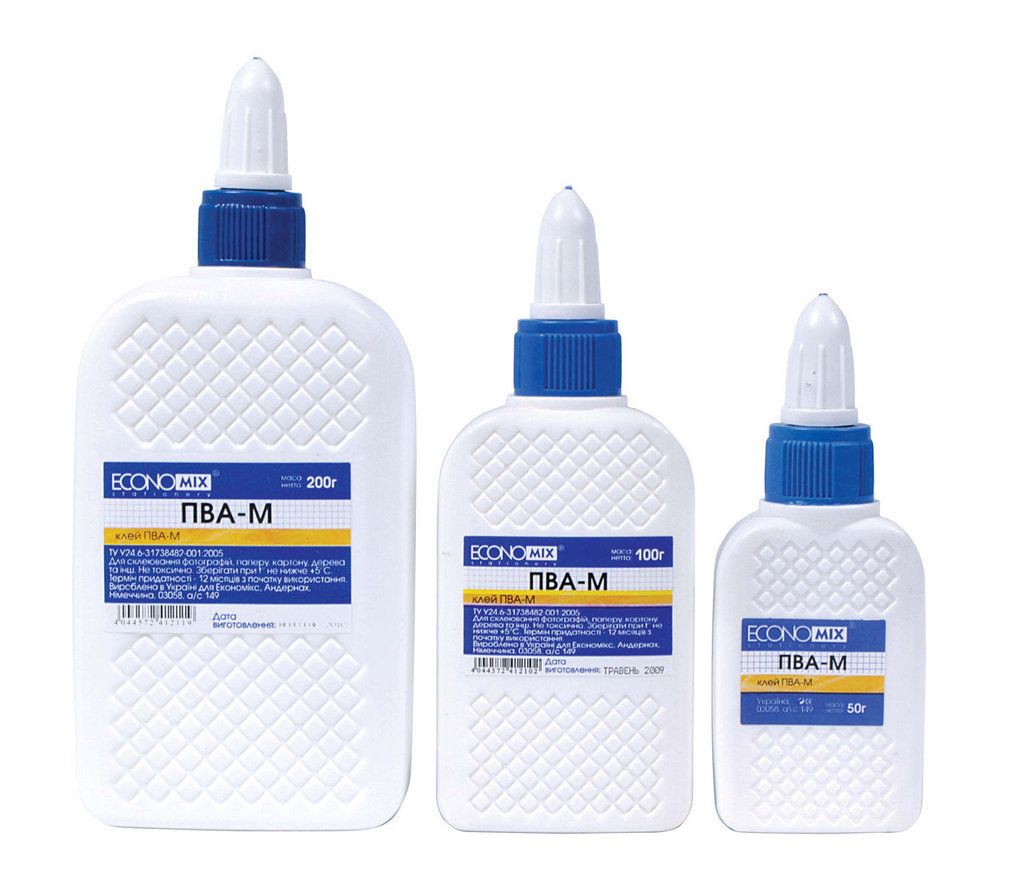

## Myths about using PVA
There are many myths that people have invented about PVA. The most common ones are:
- It turns yellow after some time;
- Poor adhesion (all details fall off over time).
As for yellowing - that is not true! Only the finishing coat can cause a yellow tint. Sometimes it is due to its quality, and sometimes due to incompatibility with PVA. Therefore, if you choose the right varnish and apply it strictly according to the instructions, you don't have to worry about yellowing.
I also debunk the second myth. In 4 years of working with decoupage using PVA, nothing has ever fallen off. Perhaps they are talking about 20-50 years; if so, excuse me, but even tiles fall off walls in that time. Although, I still don't think the appearance would be significantly ruined even after 20 years.


There isn't much difference. Both construction and regular stationery glue work on the same principle. It is believed that construction glue is stronger, but I haven't noticed any real difference between them. In any case, both are too thick and need to be diluted; you can read exactly how to do that here.
How to work with PVA glue? Working solution