
Bead Embroidery for Beginners: Materials and Safety
Beads add dimension and shine to embroidery, and a small ready-made chart is a good place to begin. Courses are not essential for everyone; choosing a clear project and learning a few basic methods at a comfortable pace matters more.
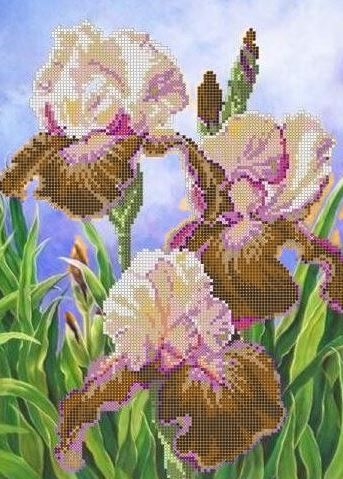
What you will need
- A chart or ready-made kit. For a first project, a printed chart or a kit with the bead quantity already worked out is convenient.
- Seed beads. Round seed beads are usually easier for early, even rows than cut seed beads. Choose beads of consistent size and make sure their holes suit the selected needle and thread.
- Thread. Strong, non-stretch thread—such as nylon, cotton, silk, or polyester—can work for bead embroidery. Match it to the beads and the ground fabric.
- Ground fabric and a hoop. Canvas or a firm fabric makes a chart easier to follow, and a hoop helps keep the tension even.
- Needles, scissors, and a frame. Beading needles are slim and even in thickness along their length; small sharp scissors are useful for fabric and thread. You can frame the finished work yourself or use a professional framer.
Beads, needles, and thread offcuts are small, sharp materials. Work in good light on a stable surface, store them in a closed container, and do not leave them near young children or animals. Avoid stitching on soft furniture or in bed, where a needle can easily be lost.
Three basic ways to attach beads
- Horizontal rows work well for filling areas from a chart.
- Backstitch-style beading is useful for following lines.
- Stem-stitch beading places beads close together for a denser line or area.
Before starting a large piece, test each method on a small scrap. It is an easy way to check thread tension, bead size, and row alignment.
Finishing
When mounting the work on card, do not pull the ground fabric too tight or the design may distort. If the beadwork is raised, choose a frame with enough depth or use a mat so the glazing does not press on it. Bead embroidery takes patience, but a small project is a satisfying way to learn the craft.


I would also mention that it can be hard to work out how many beads an embroidery will need. Ready-made kits are useful in that respect: the blank comes with beads in the required shades and a calculated quantity.