
How to choose a sewing machine for a beginner
If you are serious about learning to sew, you won't be able to do it without a sewing machine. Since choosing this indispensable assistant is a very responsible task, it is better to delve into the topic yourself rather than relying on the advice of store consultants. First of all, you need to decide what tasks you are entrusting to your assistant. It is one thing if you plan to sew a little—shortening trousers, hemming curtains, etc.—and quite another if you plan to start sewing clothes for the whole family!
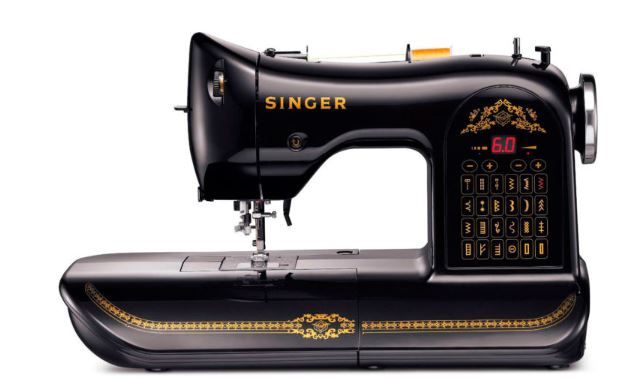
Which machine is the best? Alas, there is no single answer. It is different for every seamstress. For example, which manufacturer's machine is better to buy? Well-known brands include Pfaff, Bernina, Brother, Janome, and Singer. They differ in their set of functions and the ability to be equipped with various accessories. You can read about the advantages and disadvantages of different machines in our review here.
I do not recommend choosing a sewing machine from little-known companies. Of course, they are cheaper, but during operation, you may encounter unexpected problems. For example, it may turn out that additional accessories and spare parts for such a machine are impossible to buy. For instance, the presser foot might attach differently than on most machines, or the bobbin might have a unique diameter. Therefore, if you still decide to risk buying a machine from a unique brand, find out immediately where you can buy additional accessories for it or which other brands are compatible. Also, find out right away where the service centers are located (believe me, you will need them with active use of the machine).
After choosing a brand, decide which type of machine you prefer (I should clarify that we are talking about household machines, as buying an industrial one for beginners is not very reasonable):
- Mechanical: as a rule, these are vintage machines inherited from someone; they can be hand-cranked or treadle-operated. Buying such a machine is questionable, but if you already have one, it will work quite well as a first learning assistant (after all, this is exactly the kind of machine all current famous couturiers started on).
- Electromechanical: a more advanced variation of mechanical machines. The entire internal mechanism remains the same as in mechanical machines, but the motor is electric. When choosing such a machine, keep in mind that those with all-metal mechanical "insides" are preferable, which means they are more durable. You also need to pay attention to the motor power, because electromechanical machines do not have an automatic needle piercing force adjustment function; accordingly, the higher the power, the thicker and denser the fabric you can sew. Electromechanical machines do not have electronic boards; cams are responsible for switching stitches, which must be switched manually. Electromechanical machines are an ideal choice for a beginner seamstress—they are reliable, simple to operate, and affordable.
- Electronic/Computerized: fairly complex devices equipped with a computer board. A microprocessor controls the movement of the needle, and the set of functions performed by the machine depends on its memory capacity. These machines are very convenient to use—you select the desired operation and sew; all settings are already set by default (they can be adjusted if necessary). In addition, most machines have a so-called sewing advisor—a help system for automatically selecting and setting the optimal stitch, stitch parameters, and speed (to select, you simply indicate the type of fabric and the type of sewing technique, and you see the necessary parameters on the display—presser foot name, thread tension, needle type, and size). Furthermore, electronic machines have an electronic needle piercing force booster—a very necessary function for sewing dense fabric (it maintains the piercing force at the maximum level regardless of the RPM).


I inherited an old "Podolsk" machine from my grandmother, a manual one, in a wooden box. That's what I learned on. My favorite unit :) I couldn't bring myself to get rid of it, it stands as a family heirloom.