To start with, I personally am not a fan of an absolutely flawless back. I try to keep all my traveling threads running in one direction and lay them as neatly as possible behind the front of the piece. But that applies to stitched pictures that are pretty much permanently sealed
BeginnerFree
Translated
Instructions
Step 1
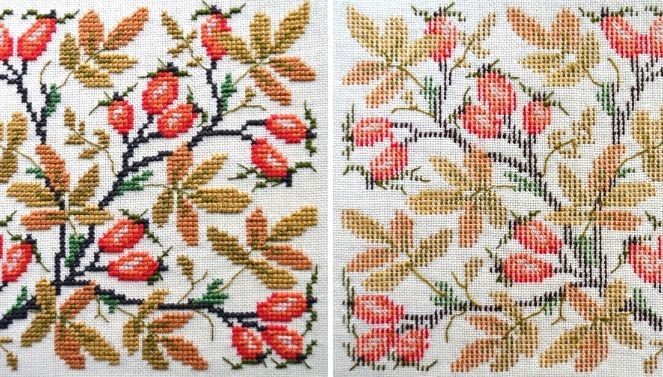
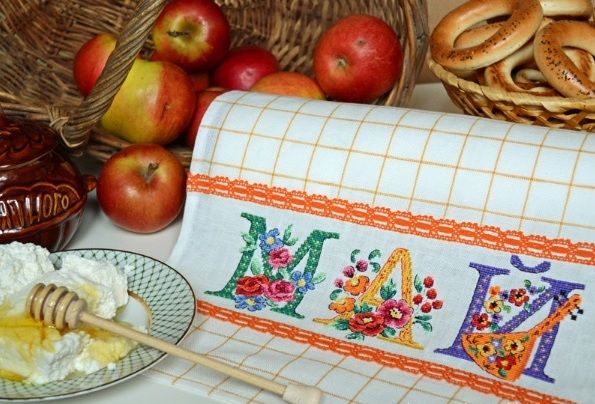
To start with, I personally am not a fan of an absolutely flawless back. I try to keep all my traveling threads running in one direction and lay them as neatly as possible behind the front of the piece. But that applies to stitched pictures that are pretty much permanently sealed in a frame. I am in favor of a perfect back in three cases: rushnyks, garments worn against the body (vyshyvankas, blouses, dresses), and pieces entered in a competition where judges evaluate not just the front, but the stitcher's overall craftsmanship.
Illustration 2
Illustration 3
Illustration 4
Step 5
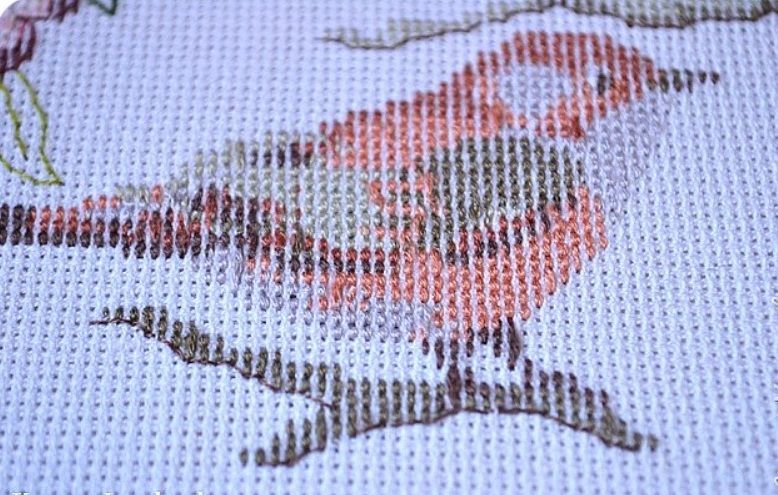
The first thing you need to understand is that to achieve a perfect back, you have to stitch in blocks of a single color. It's best to plan your path in advance to avoid traveling threads. In this sense, cross-stitching becomes like a quest or navigating a maze: you work your way in one direction with half cross-stitches, then work your way back as cleanly as possible to complete full cross-stitches. On the back, this should produce strictly vertical bars without any deviations. Carrying the thread across more than 2 squares is acceptable, provided it doesn't break up the overall "picket fence" pattern.
Illustration 6
Illustration 7
Step 8
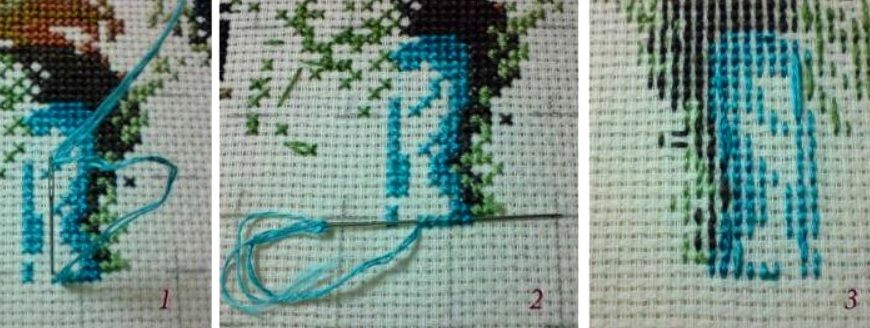
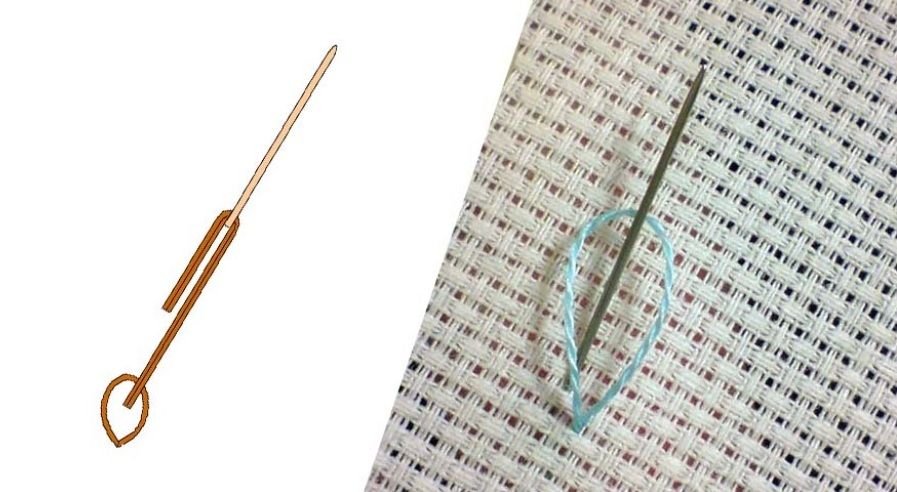
In the early stages, I recommend stitching while simply watching how the pattern develops on the back. Before long, planning your stitching path will become second nature. Aside from traveling threads, 2 other things can ruin the back: securing the thread at the start and finishing off thread tails at the end. You can anchor the thread neatly and easily with a standard loop start. For evenweave, it's best to secure the floss under a single fabric thread—that way, the anchor point of the new embroidery thread will look like a tiny dot.
Illustration 9
Step 10
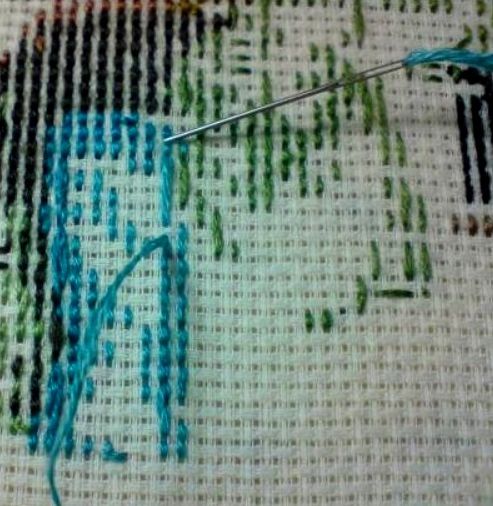
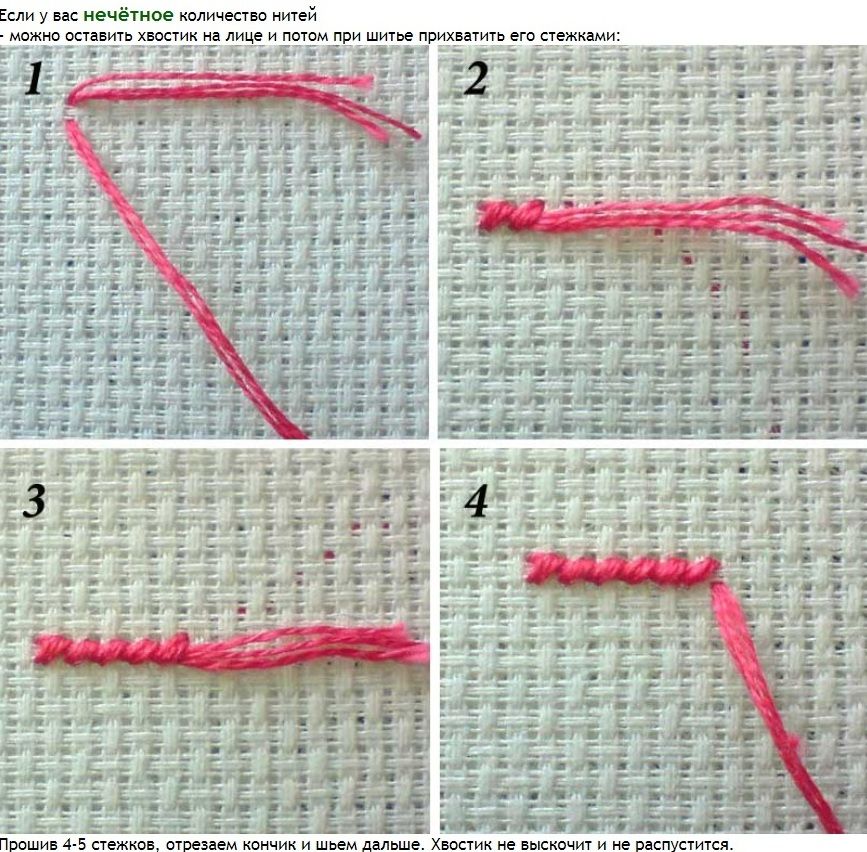
When you need to finish off a strand, bring the thread tail to the front (!) under a half cross-stitch so that it will later be completely concealed by the finished cross-stitch. Naturally, for maximum concealment, this should only be done with thread of the same color: you won't be able to hide a black thread under red half cross-stitches, for example, due to the color contrast.
Illustration 11
Step 12
All in all, it takes some extra effort, but it isn't as difficult as it might seem at first glance. And the sight of a perfect back more than makes up for the hassle :)

 BeginnerFree