Seed Bead Review: Japanese, Chinese, and Czech Beads
Seed Bead Review: Japanese, Chinese, and Czech Beads
BeginnerFree
Translated
Seed Bead Review: Japanese, Chinese, and Czech Beads
Today I will review seed beads and compare Japanese, Chinese, and Czech beads. But I should warn you that I will cover only the basic, general information.
To begin with, all beads come in different sizes and colors. Each has its own effect and finish. There are both calibrated and uncalibrated beads. For example, when all the beads are even and identical, that is calibrated seed bead. Bead size is usually given as 10, 11, 12, and so on. Round beads with the same number can vary in size. The most popular type of seed bead is round.
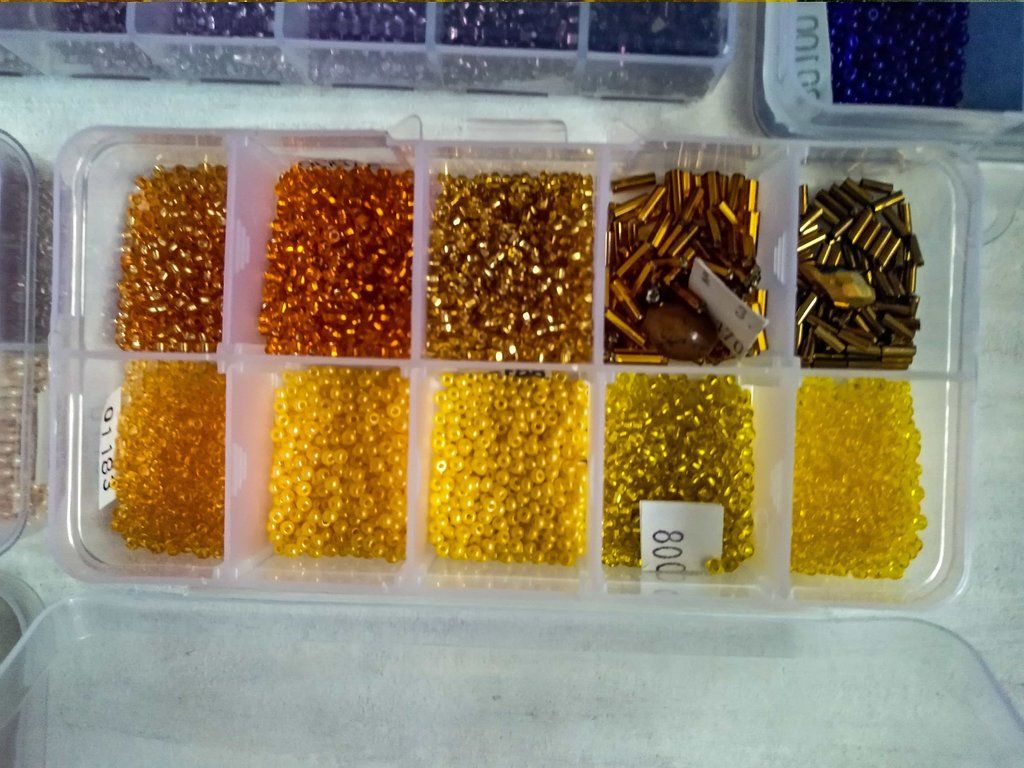
Bugle beads and cut beads are the cheapest types, made in China or Taiwan, and are known for poor quality. In a package of these beads, you are unlikely to find two of the same size—up to 50 percent may be defective; many are misshapen beads with holes of different diameters or no holes at all.
The beads do not stick together, have an unstable finish, and have many other defects. Honestly, I have not seen Chinese seed beads of good quality, but despite this, the price appeals to many people, and overall they really do suit different projects, such as children's school crafts or pieces where a curved bead shape does not affect the overall look, proportions, and form. If you are a beginner, Chinese seed beads are a good option for getting practice, learning techniques, and building skills.
Czech seed beads, especially Preciosa, are incomparably better and very popular with crafters. I use them too. Their quality is excellent. In addition to round beads and bugle beads, there are many other interesting shapes. You can create many different patterns with them. Preciosa is sold in packets of five and ten grams.
I use Czech seed beads in my work. I was always surprised by the bead sizes in other makers' pieces. The beads were strikingly tiny or very large. In my city, only one shopkeeper agreed with me that there are different types of Czech seed beads, but size eleven or size six cannot be found in my city.
Online stores helped me with this: there you can find large beads, embroidery supplies, jewelry findings, and craft materials.
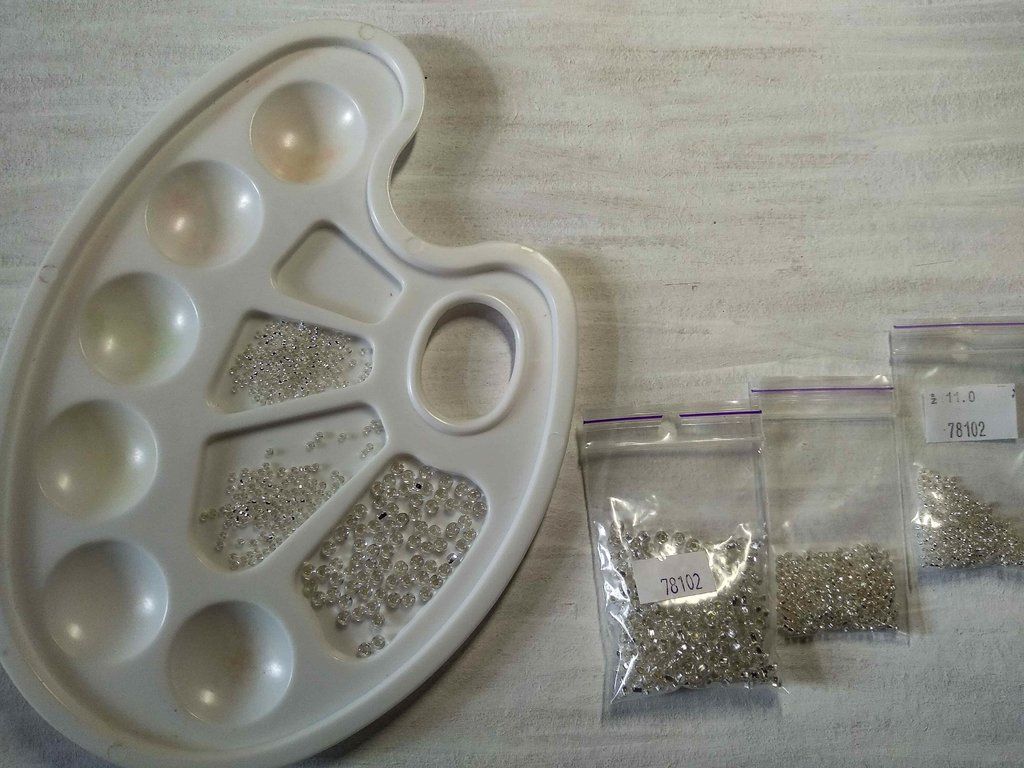
To show that I am telling the truth, I took a photo comparing the sizes of silver-colored Preciosa seed beads (78102) in sizes six, ten, and eleven. Do not be afraid to experiment with materials.
Japanese seed beads, especially Miyuki, are the highest quality and the most expensive, but they are worth it. They are pleasant to work with; there are no competitors to Japanese seed beads in the world. But for various reasons, I do not switch to Japanese seed beads. I love Czech ones.
That is all the brief information about these three types of seed beads. I hope it was useful. See you soon.

 BeginnerFree