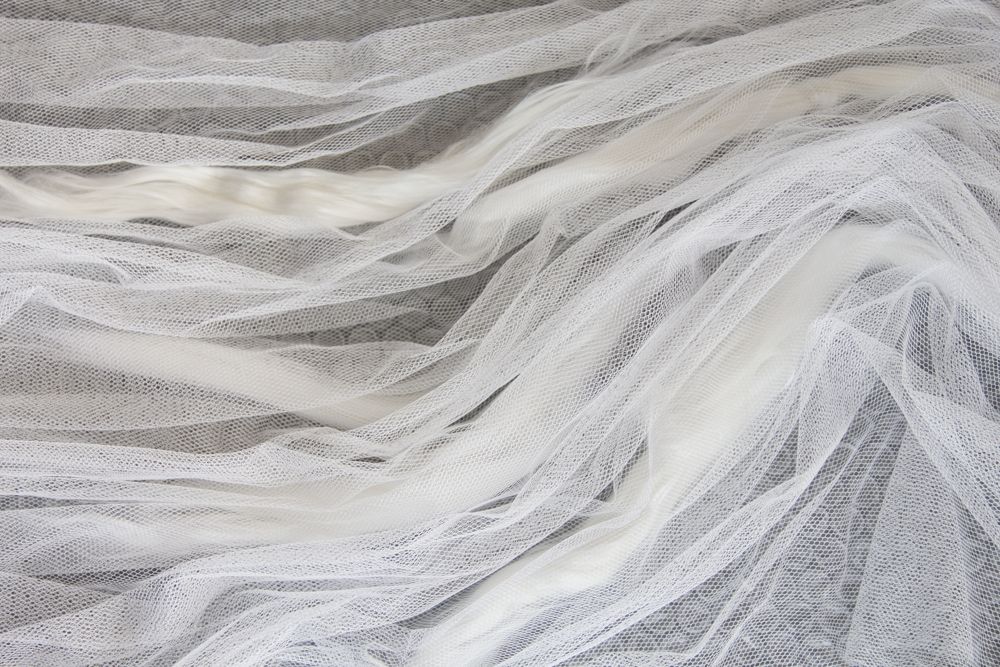
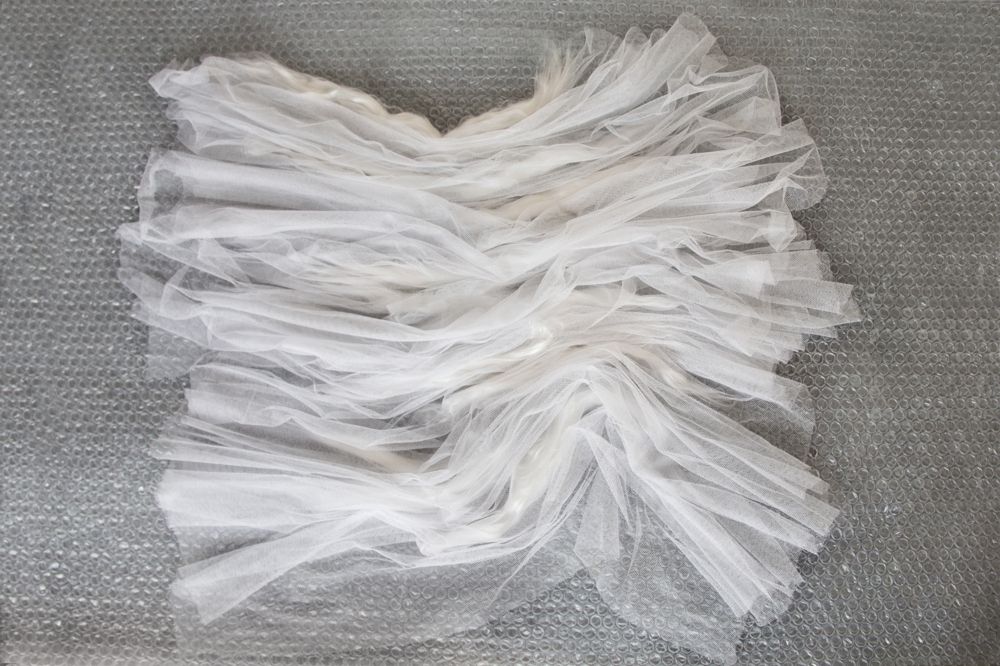
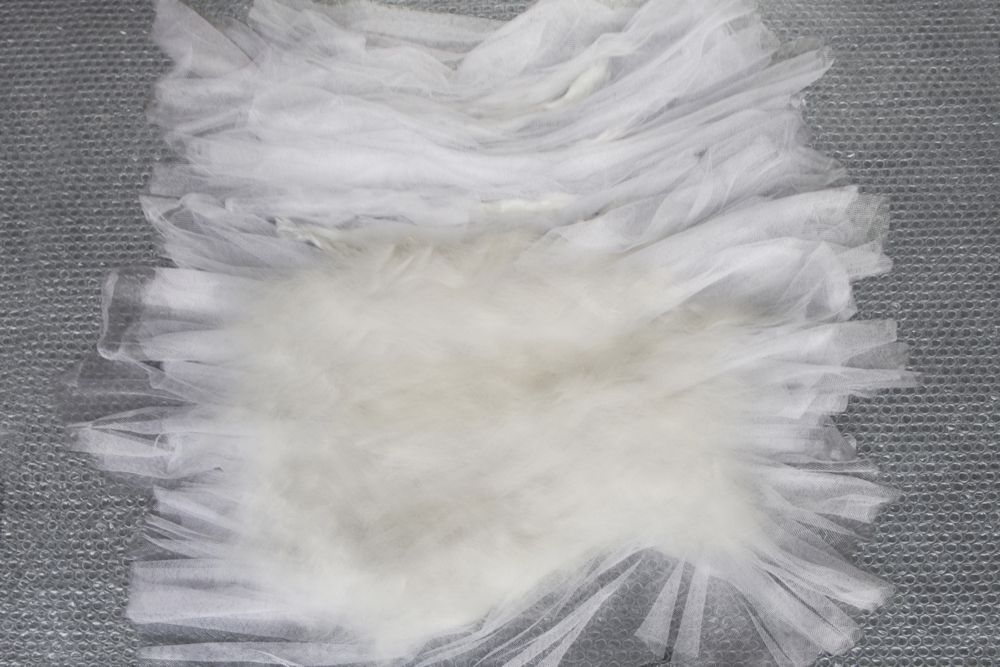
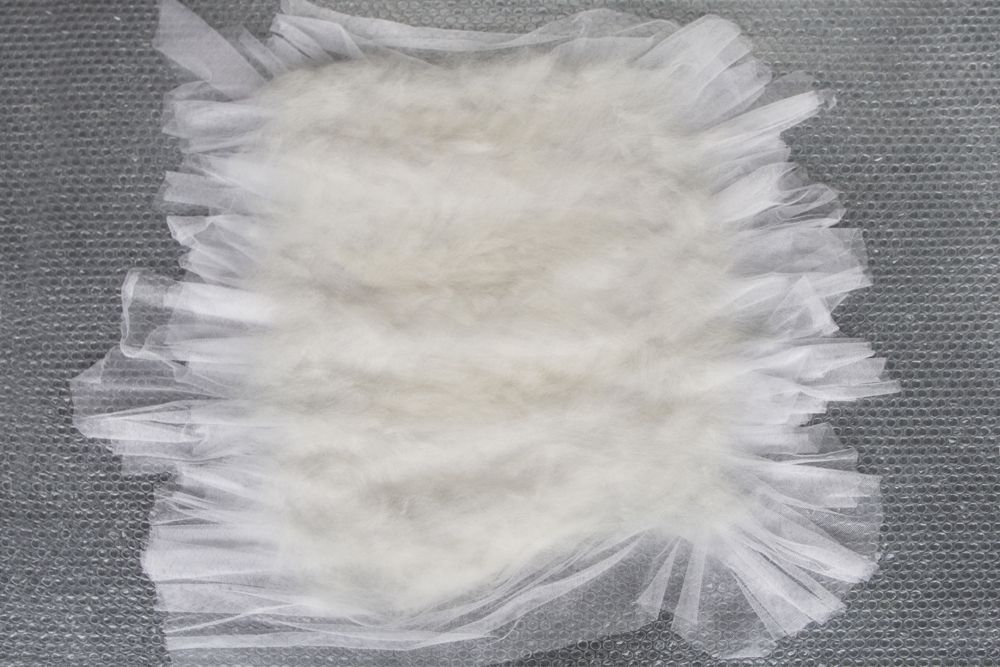
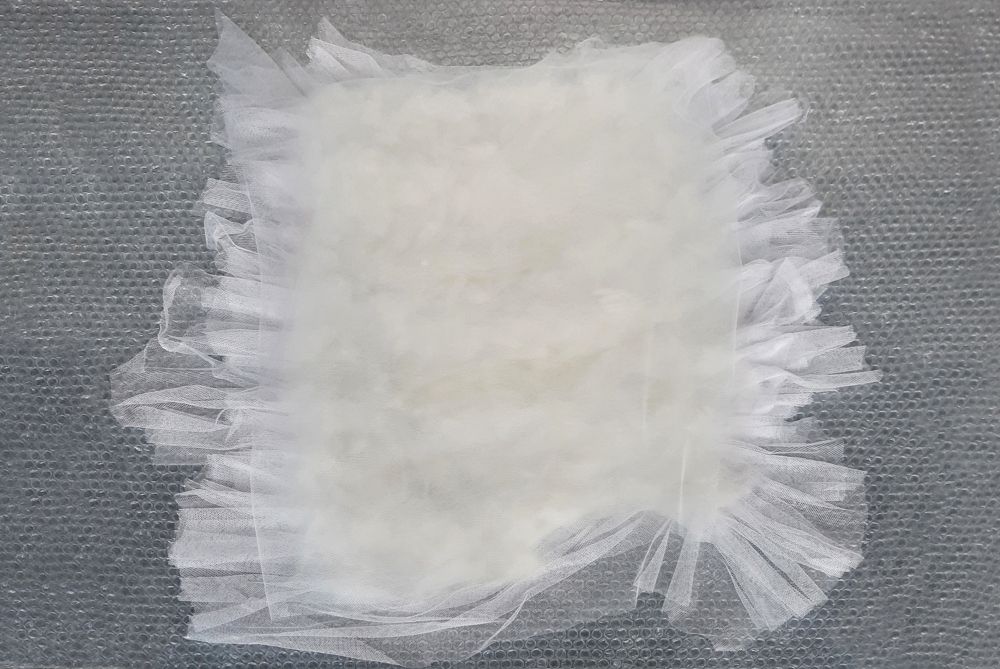
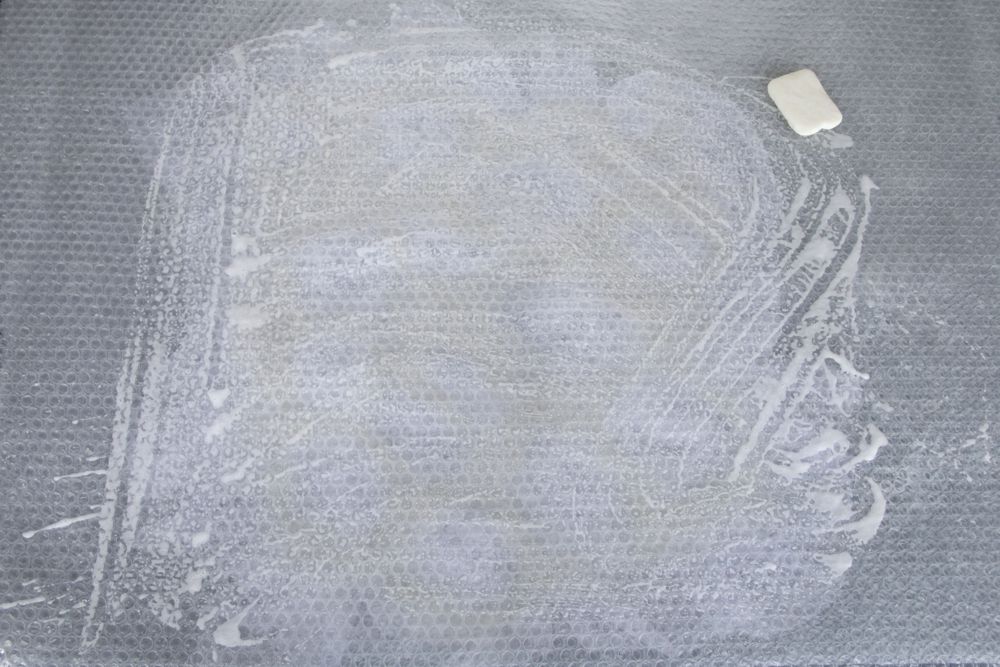
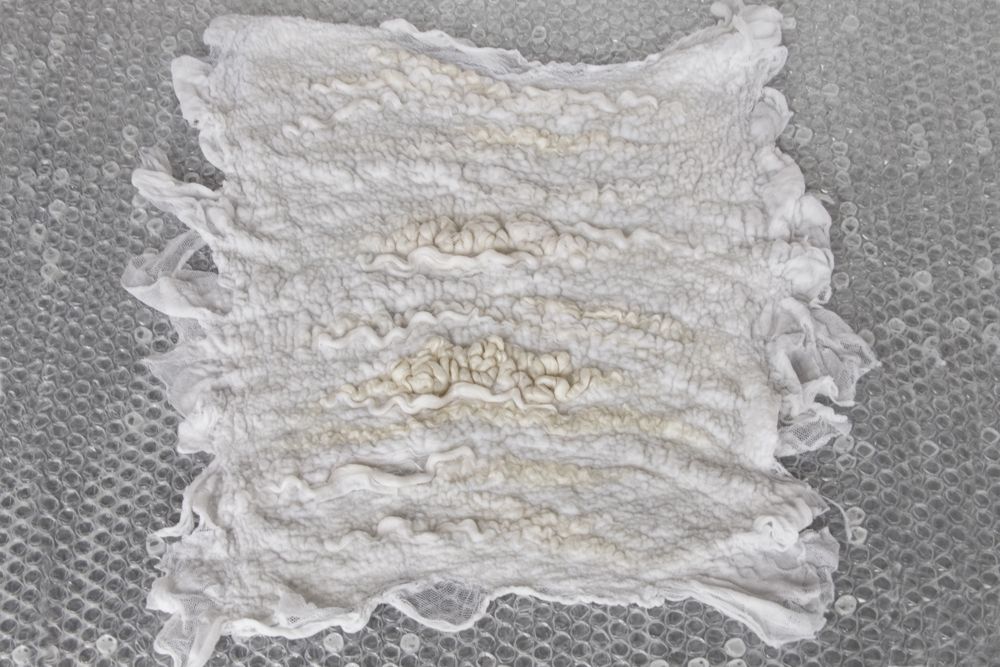
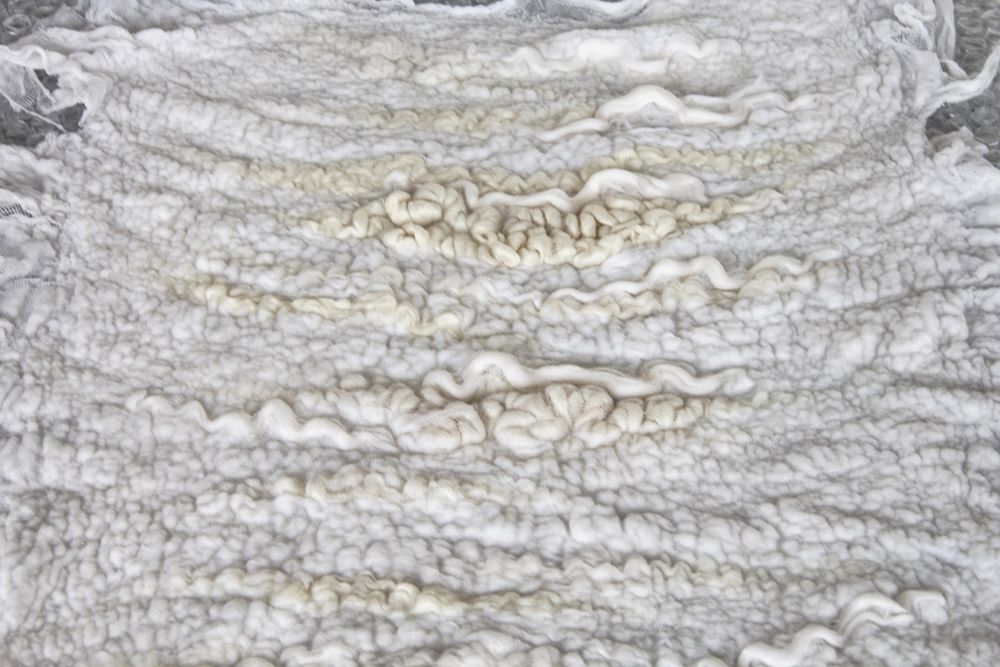
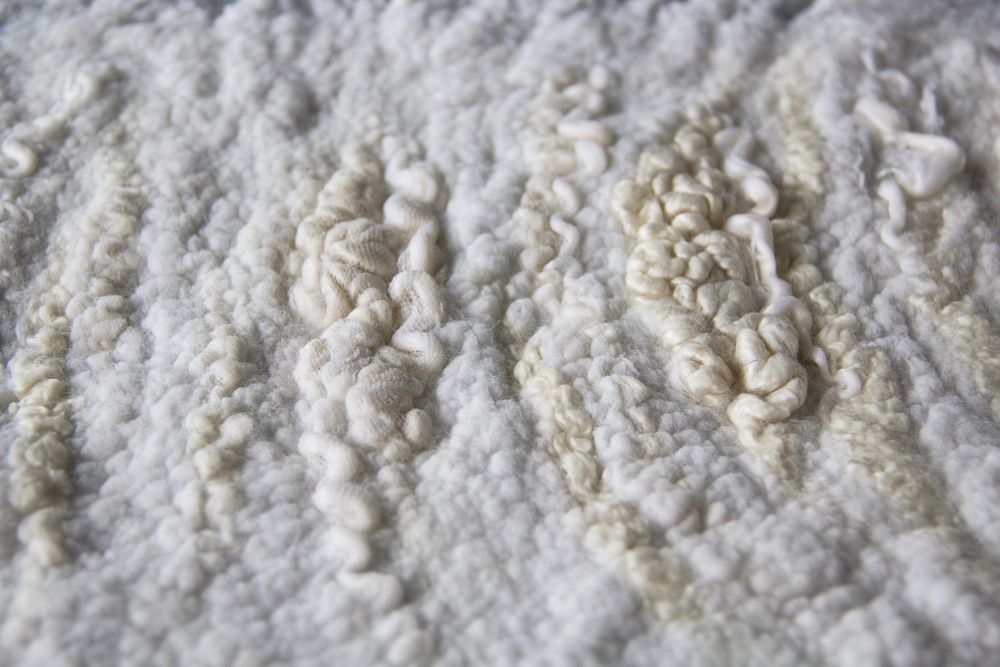
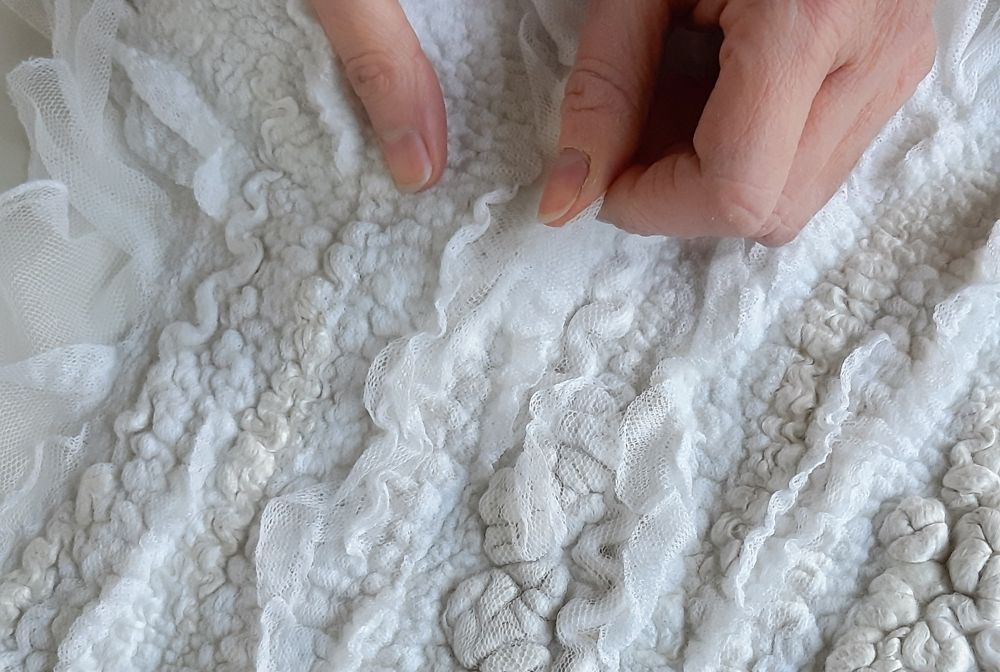
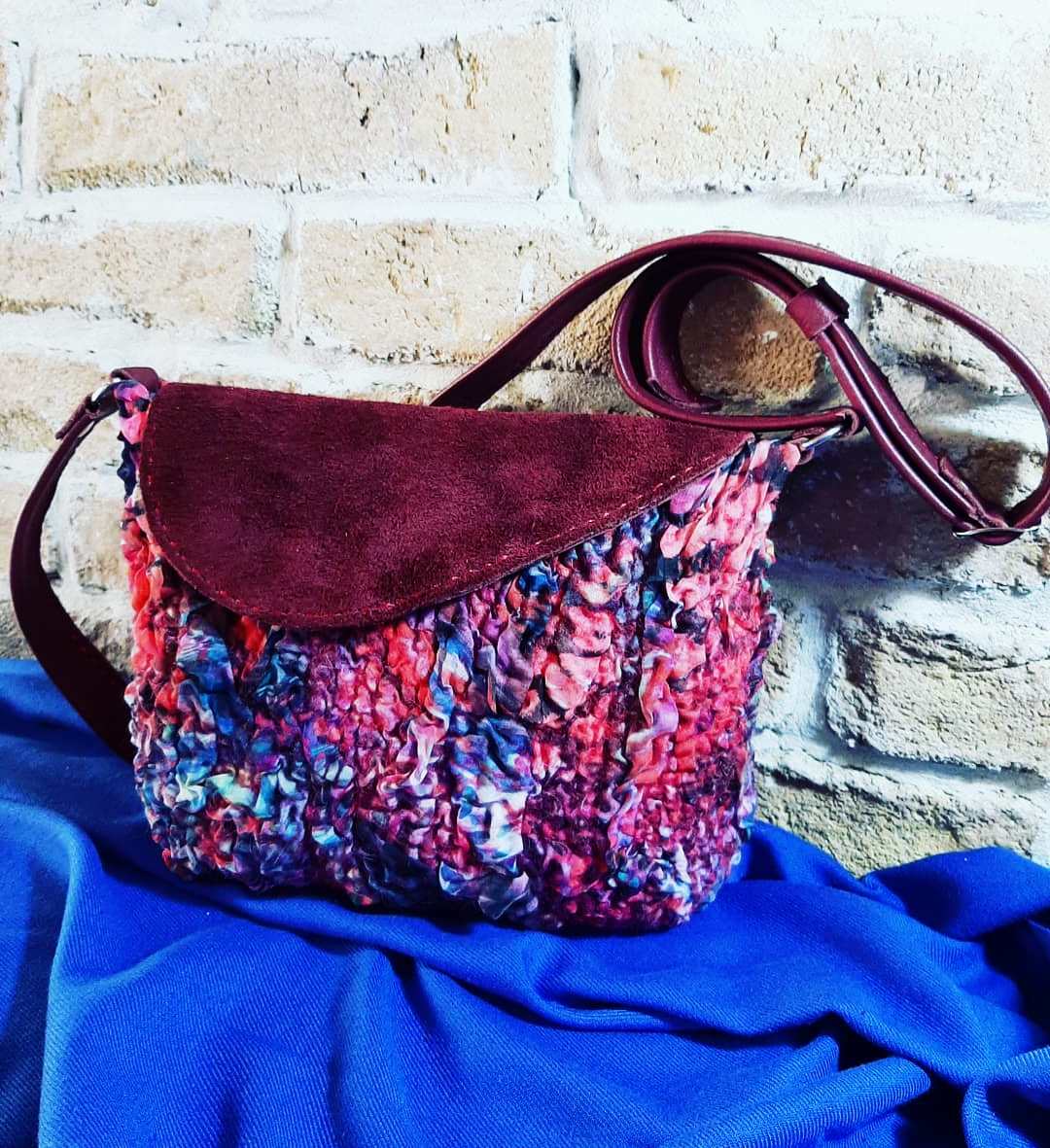
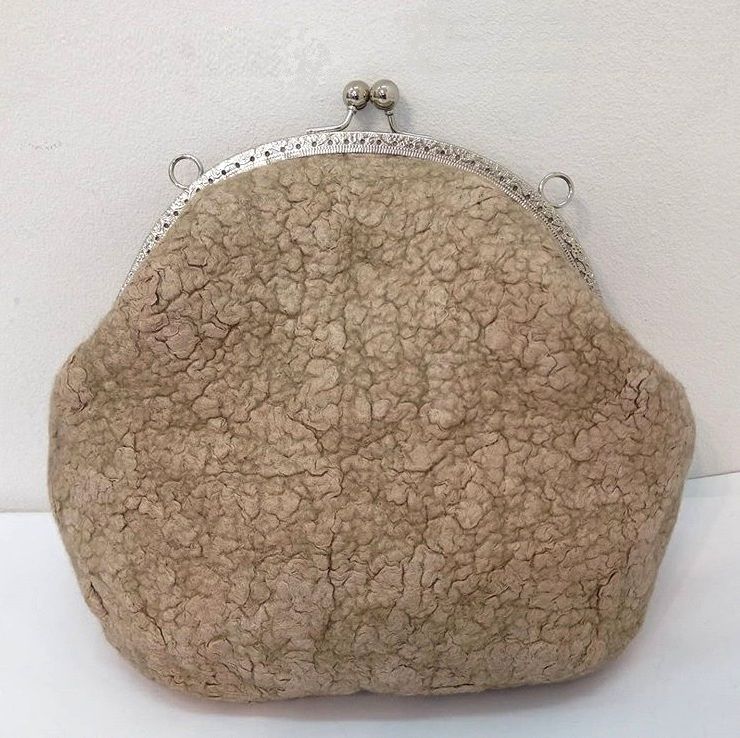
This master class shows how to make nuno felt by wet-felting wool onto tulle mesh. You need bubble wrap, felting wool, tulle mesh, natural soap, and a spray bottle. Lay the tulle and wool fibers on the bubble wrap in a loose arrangement, then crumple the mesh into folds to create organic curves: some wool sits inside the mesh and some on top of it. If the tulle is not enough, add more pieces and continue building folds vertically. Once the base area is set, cover the folds with a thin continuous layer of wool, leaving 4–5 cm free around the edges. Spray the piece with warm water, cover it with a second piece of bubble wrap with bubbles facing inward, and massage with soapy water. Knead and roll until the wool firmly felts into the tulle. After rinsing and drying, the material shrinks by at least 33–35%. The bouclé folds can be left as they are, or you can gently pull the mesh in selected areas for more volume and texture.
BeginnerFree
Translated
Things you will learn
Nuno felt is made by wet-felting wool onto tulle mesh.
The mesh folds define the future texture and volume.
Leave 4–5 cm around the edges free of wool.
After rinsing and drying, expect at least 33–35% shrinkage.
The material works for bags, wraps, and clothing; for clothing, make the texture finer.
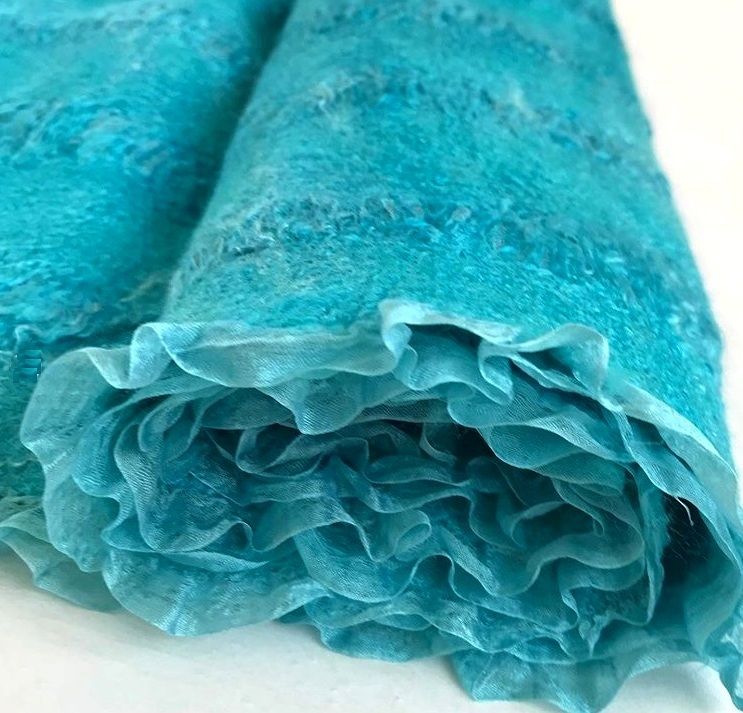
Textured nuno felt on mesh
The result is a bouclé-like textile with wool felted into a mesh base, suitable for accessories, wraps, and decorative clothing.
Materials and tools
Materials
Felting wool, Laid in thin fibers over the mesh.
Tulle mesh, The base for folds and texture.
Natural soap, For the soapy solution used in wet felting.
Warm water, For wetting the workpiece.
Bubble wrap, Used under and over the workpiece.
Tools
Spray bottle, For evenly wetting the wool with warm water.
Hands, The main tool: the piece is massaged, kneaded, and rolled.
Towel or drying area, For drying after rinsing.
Preparation
Plan for shrinkage
Make the starting piece larger than the target size: finished nuno felt shrinks by at least 33–35%.
Prepare the wet-felting area
Wet felting uses water and soap, so protect the surface and keep a towel nearby.
Laying out mesh and wool
This stage defines the size, fold direction, and future texture.
Lay out the base
Place tulle mesh and wool fibers on bubble wrap in a loose arrangement.
Form folds
Crumple the tulle mesh into folds to create organic curves. Some wool will sit inside the mesh, and some will stay on top.
Cover the folds with wool
Once the base area is set, cover the fold surface with a thin continuous layer of wool. Leave 4–5 cm free around the edges.
Wet felting
The wool must bond firmly to the tulle, so the process needs water, soap, and steady mechanical work.
Wet the piece
Spray the piece with warm water, cover it with a second piece of bubble wrap with bubbles facing inward, and add soapy solution.
Knead and roll
Massage, knead, and roll the piece until the wool firmly felts into the tulle. You can open the wrap during the process and adjust layers if needed.
Check the bond
The wool should hold onto the mesh, not slide freely over the surface.
Rinse and dry
After felting, rinse the material and let it dry. Expect at least 33–35% shrinkage after drying.
Adjust the texture
Leave the bouclé folds as they are, or gently pull the mesh in selected areas to add volume and relief.
Where to use nuno felt
This textured textile is especially effective in accessories and wraps.
Bags
Nuno felt can be used for expressive bags with a raised, textured surface.
Wraps
Wraps and scarves get a rich texture, especially along the edge.
Clothing
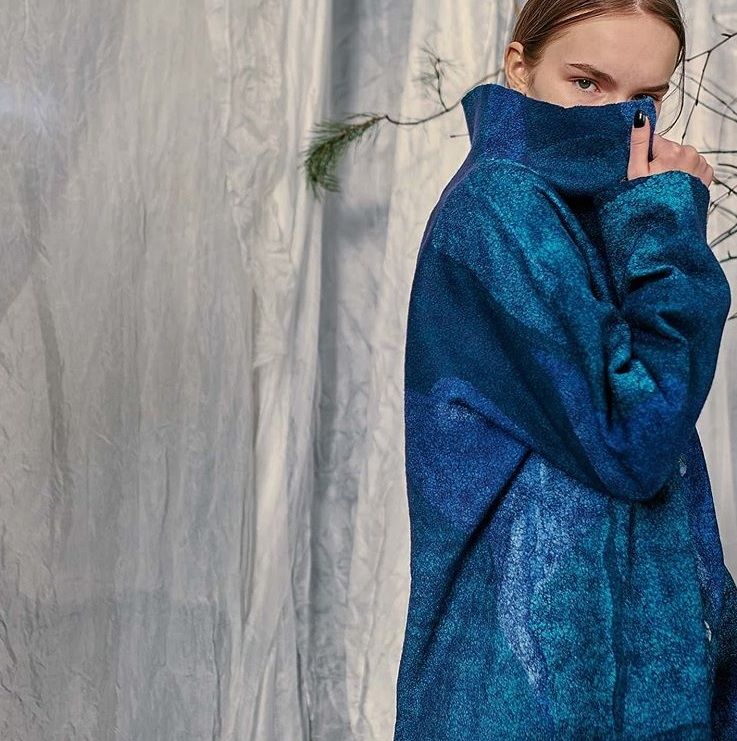
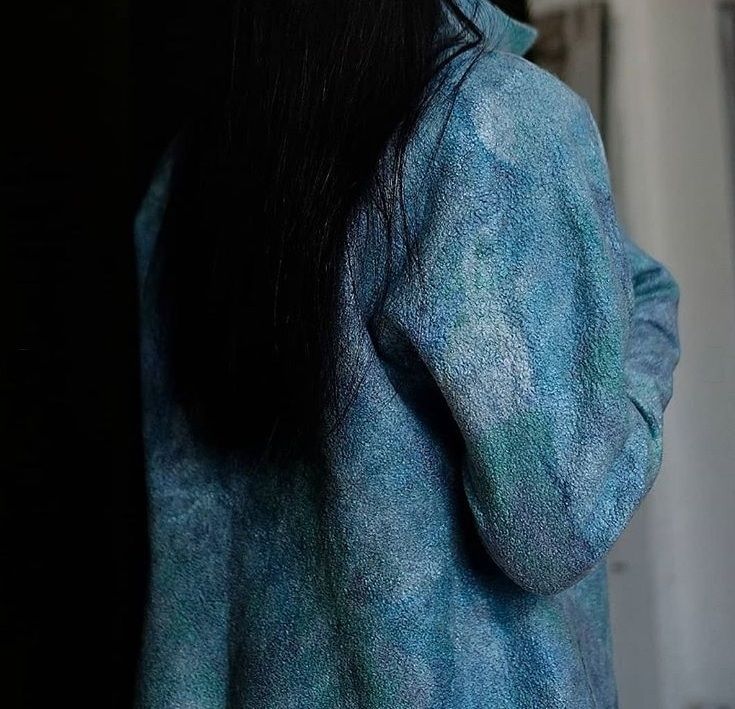
For clothing, make the texture smaller and more even. Silk works especially well for this purpose.
Finish and variations
Finish
Final check
Check that the wool is bonded to the mesh, the texture is even enough, no soap remains, and the material is fully dry.
Variations
Nuno felt bag
Use a stronger, more expressive texture for accessories.
Wrap or clothing
For wraps and clothing, make the texture finer and allow for significant shrinkage.

 BeginnerFree