A step-by-step tutorial for sewing summer skirt-pants without a pattern: fold two identical fabric panels, mark the line using your own well-fitting jeans, shape the lower edge into a curve, sew the pieces together, finish the raw edge, sew darts at the waist, and attach long waistband ties — the finished skirt-pants are two separate panels that wrap around the body and tie in front and back.
Beginner1 hrFree
Translated
Things you will learn
These skirt-pants are sewn without a pattern and suit even beginner seamstresses — the whole project takes about an hour; the size is 44-48, and you can adjust the length and fit using your own favorite jeans.
The best fabric is a lightweight, flowing one, such as viscose; knit fabric also works, but it's trickier to sew with. You'll need two panels measuring 1 by 2 m.
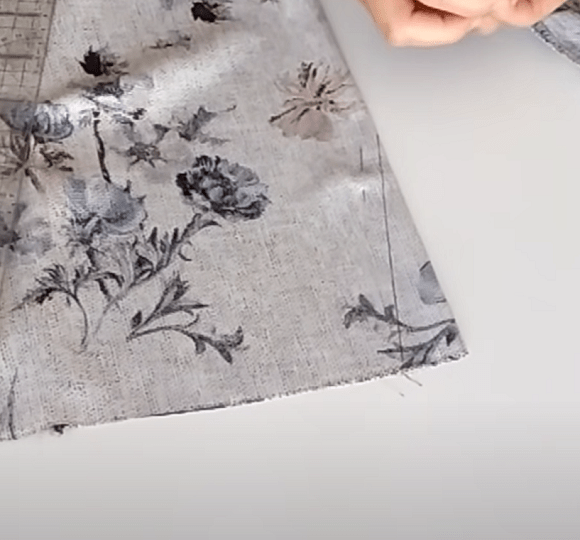
Fold both panels in half lengthwise (50 cm wide) and crosswise (1 m long); starting from the fold line, mark a 10 by 30 cm shape with a smooth curve, checking it against jeans or pants that fit you well, then shape the lower edge into a curve.
Sew the pieces together right sides facing, finish the raw edge with a serger or a zigzag stitch, hem it, and press; then sew darts at the waist: measure 15 cm out from the center, with each dart 13 cm long and 3 cm deep.
For the waistband, you'll need two fabric strips measuring 150 by 10 cm — sew them onto both panels so the free ends stay the same length, fold them over to the right side, and stitch again to create a tie waistband; wear the finished skirt-pants by wrapping both panels around the body and tying the waistband in front and back.
What you'll get
You'll get summer skirt-pants made from two wrap-around panels with tie waistbands — loose-fitting legs and an adjustable waist fit, all without using a pattern.
Materials and tools
Materials
Lightweight, flowing fabric (such as viscose), 2 panels, 1×2 m, knit fabric also works, but it's trickier to sew with
Well-fitting jeans or pants, used as a reference when marking the line and length
Tools
Pins, for pinning the pieces together before sewing
Sewing machine, for sewing the pieces, finishing the edge, and sewing the darts
Serger or a sewing machine with a zigzag stitch, for finishing the raw edge
Iron, for pressing the finished edge
Scissors, for cutting the fabric
Preparation
Choose your fabric
The best fabric for this project is a lightweight, flowing one, such as viscose. Knit fabric also works, but it's trickier to sew with. You'll need 2 panels measuring 1 by 2 m.
Mark and cut the pieces
Both panels are folded and marked at the fold line, using well-fitting jeans or pants as a reference.
Fold the panels and mark the line
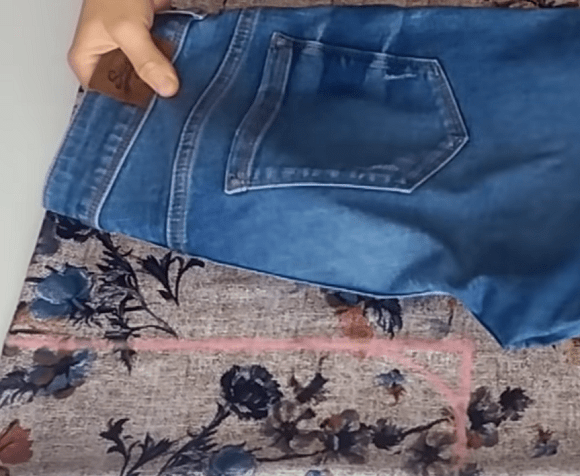
Fold both panels in half lengthwise (50 cm wide) and crosswise (1 m long). Starting from the fold line, mark out a 10 by 30 cm shape and draw a smooth curve. Check it against jeans or pants that fit you well!
Marking the fabric against jeans
Shape the lower edge into a curve
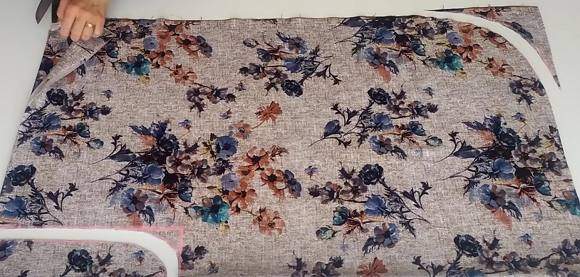
Shape the lower edge into a curve.
The folded fabric
Cut the waistband strips
For the waistband, you'll need 2 fabric strips measuring 150 by 10 cm.
Sew the pieces
Both pieces are sewn together right sides facing, and the raw edge is finished and hemmed.
Sew the pieces right sides together
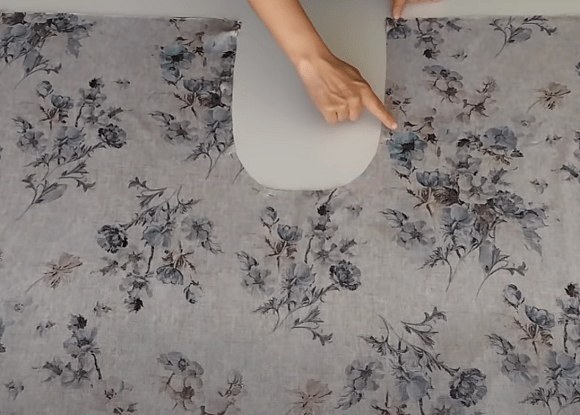
Place both pieces right sides together, pin, and sew.
Marking the curved piece
Finish and hem the raw edge
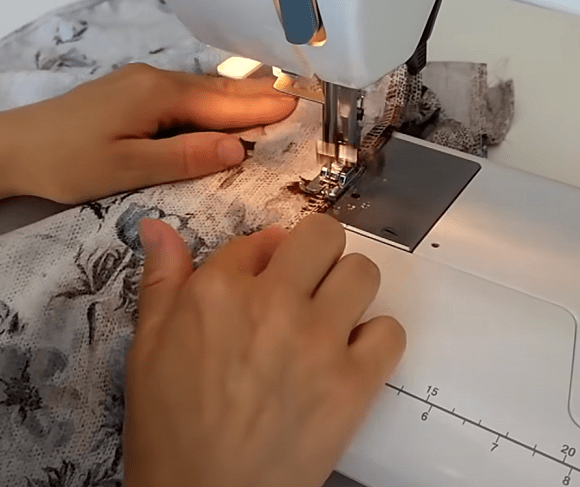
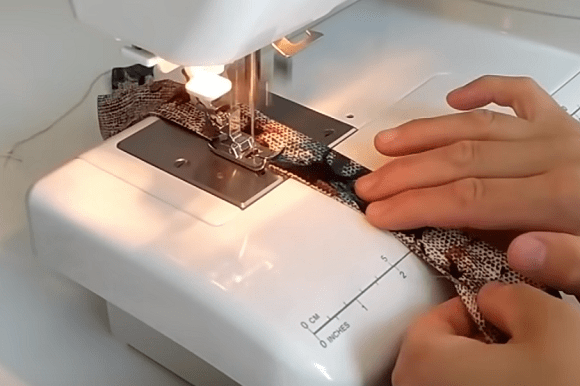
Finish the raw edge with a serger or a zigzag stitch and hem it, then press it if you can.
Sewing the piece on a machine
Sew the darts
Darts at the waist help the skirt-pants hold their shape.
Sew the darts
Measure 15 cm out from the center along the waist; each dart should be 13 cm long and 3 cm deep. Pin them and sew.
The finished edge
Make the tie waistband
The pants are done — now it's time to put together the waistband from two long fabric strips.
Attach the waistband strips
The pants are done — now let's move on to the waistband. Sew the 150 cm fabric strips onto both panels so the free ends stay the same length.
Stitching the waistband
Fold and stitch the waistband
Fold the strips over to the right side and sew another line of stitching to create a tie waistband.
Wear your skirt-pants
The finished piece is two panels that wrap around the body and tie in front and back.
Put on the first panel
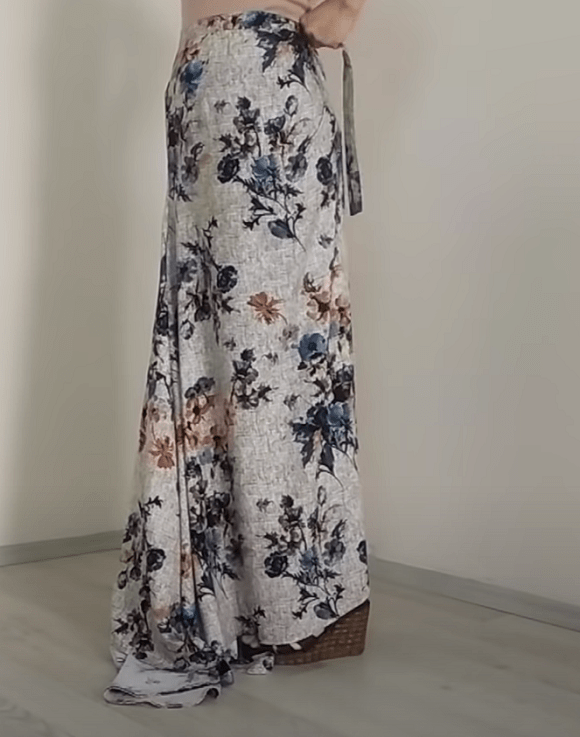
This design is made up of 2 panels. Put one panel on and tie the waistband in back.
The skirt-pants worn on a model
Wrap the second panel around
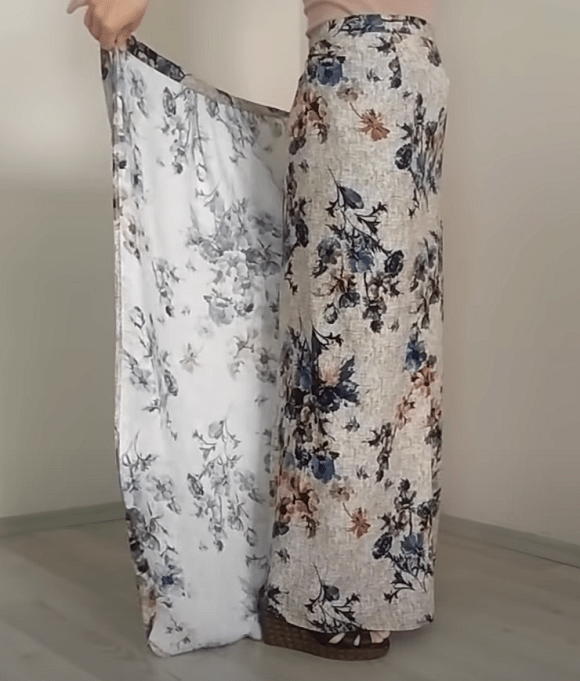
Unfold the second panel in front of you, wrong side facing out, pull it through between your legs, and tie the waistband in front. This gives you loose-fitting legs and lets you adjust the waist fit.
The skirt-pants worn, second position
Finish and variations
Finish
Adjust the fit to your figure
This gives you loose-fitting legs and lets you adjust the waist fit — your skirt-pants are ready for the beach season.
Variations
Sew a version from knit fabric
You can use knit fabric instead of viscose, but it's trickier to sew with.
The curved shape or leg line doesn't suit your figure
Problem
After marking, the fold line or the curved lower edge doesn't match the fit or length you wanted.
Likely cause
The marking was done without checking it against jeans or pants that already fit well.
How to fix it
Before drawing the smooth curve, always check your marking against jeans or pants that fit you well.
The raw edge frays or puckers after wearing
Problem
After sewing, the unfinished raw edge starts fraying or puckering despite being hemmed.
Likely cause
The edge was hemmed without being finished with a serger or zigzag stitch first.
How to fix it
Always finish the raw edge with a serger or a zigzag stitch before hemming it, then press it.
The waistband ties end up different lengths
Problem
After attaching the waistband strips, the free ends for tying end up different lengths on the two panels.
Likely cause
The fabric strips were attached without first evening up the ends.
How to fix it
Attach the fabric strips so the free ends stay the same length on both panels — this matters for tying the waistband evenly.
?FAQ
Do I need a pattern for these skirt-pants?
No, this design is sewn without a pattern — it's enough to use well-fitting jeans or pants as a reference.
How much fabric do I need for the skirt-pants?
Two panels of lightweight, flowing fabric measuring 1 by 2 m, such as viscose.
What size should the darts be?
Start 15 cm from the center along the waist; each dart should be 13 cm long and 3 cm deep.
How long should the waistband strips be?
Two fabric strips measuring 150 by 10 cm.
How do you wear the finished skirt-pants?
The design is two panels: put one on and tie the waistband in back, then wrap the second one around the front, wrong side out, pulling it through between your legs, and tie the waistband in front.
Your project
Log in to track your project, attach photos, and publish your result into the shared feed.

 Beginner1 hrFree