The source shows how to sew a petticoat for a dressy child’s dress or a flared skirt. The top cotton tier serves as a yoke, with two tiers of stiff tulle sewn below it. It gives materials, formulas for strip lengths, elastic width, and the assembly sequence, but the author intentionally does not specify the heights of the pieces or the elastic length; determine these for the particular garment.
BeginnerFree
Translated
Things you will learn
The petticoat has three tiers: a cotton yoke and two tulle tiers.
The cotton strip length equals the hip circumference plus 5 cm; allow 2 cm for seam allowances when cutting.
Gather the first tulle tier into 1 cm-wide pleats with no spaces between them, and make the lower tier three times as long as the preceding one.
Full Three-Tier Petticoat
A white petticoat for a flared child’s skirt or dress: a soft cotton yoke, two gathered tulle tiers, a bias-bound edge, and an elastic casing.
Materials and tools
Materials
White cotton fabric, Calico, cotton sateen, or chintz for the upper yoke tier.
Stiff white tulle netting, For the two lower tiers.
White elastic, 2.5 cm wide; the length is not given in the source.
White satin bias tape, For finishing the lower edge.
Thread
Tools
Basic sewing supplies, The source does not specify the contents of the kit.
Sewing machine, Needed for seaming, attaching tiers, and stitching the elastic casing.
Serger, For finishing raw edges; the source specifically instructs you to serge the seams.
Preparation
Determine the tier dimensions
The petticoat has three tiers. Make the upper tier from fabric and use it as a waist-fitting yoke; make the two lower tiers from tulle. Make the two upper tiers the same height and the lower tier slightly longer. The author leaves the exact heights for you to choose for your garment.
Cutting and preparing the tiers
First prepare the cotton yoke and tulle strips, using the dimensions of the particular dress or skirt as your guide.
Calculate and cut the yoke
Calculate the cotton strip length as the hip circumference plus 5 cm. When cutting, also allow 2 cm for seam allowances. The upper fabric tier will fit at the waist.
Prepare the tulle strips
You can cut the tulle to the full fabric width, which is usually 150 cm. If the second tier needs several strips for the desired fullness, sew them into one piece and press the seam allowances open. Following the author’s rule, make the second tier three times as long as the first.
Form the casing on the yoke
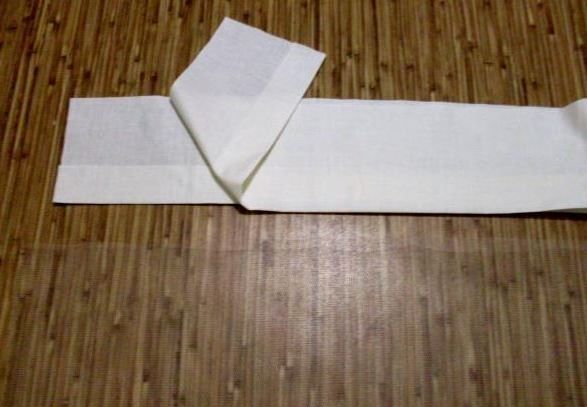
Press under 4 cm along the upper edge of the fabric strip to form the elastic casing.
Assembling the tulle tiers
Gather the tulle into pleats and join the tiers to the cotton yoke.
Attach the first tulle tier
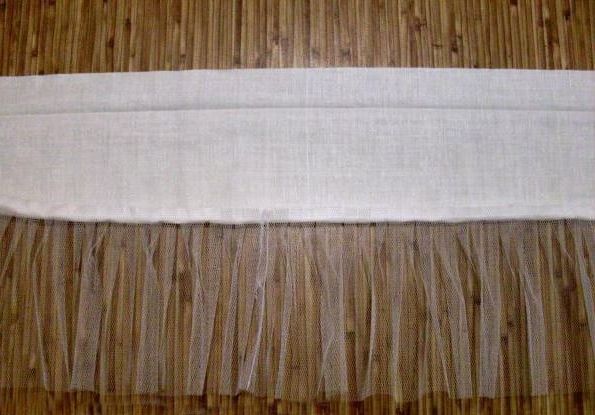
Sew the first strip of tulle to the upper fabric tier, forming 1 cm-wide pleats. Leave no spaces between the pleats.
Attach the lower tulle tier
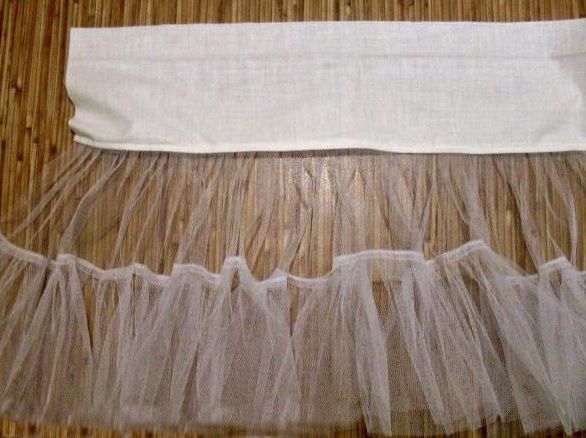
Sew on the third tier in the same way. The author specifies that its length is three times the length of the second tier.
Finish the seams and edge
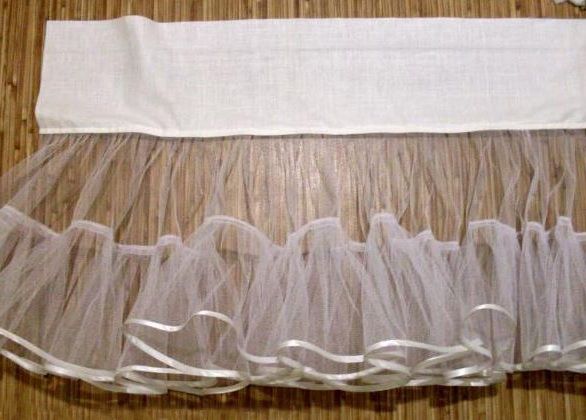
Serge the seam allowances and topstitch them. Finish the lower edge of the second tier with bias tape so the stiff netting will not catch on tights or scratch the legs; then press the tape.
Check the tier numbering
The source names the tiers inconsistently: it first counts the fabric yoke as the upper tier, then refers to the “second tier” when finishing the edge. Before sewing on the bias tape, compare this step with the length and placement of the pieces in your petticoat.
Sewing the tube and elastic casing
After assembling the tiers, close the vertical seam and finish the elastic casing.
Sew the petticoat into a tube
Sew the vertical seam to join the petticoat into a tube. Serge the raw edges and press them.
Stitch the elastic casing
Serge the upper waist edge, turn under the casing, and stitch it. Sew the first row of stitching 2 mm from the fold and the second 3 cm away; leave an opening in the second row for the elastic.
Finish and variations
Finish
Leave an opening for the elastic
Leave an opening for the elastic in the second row of casing stitching. The source does not give the elastic length, so fit it to the waist of the particular child.

 BeginnerFree