How to Repair a Hole in a Jacket: Seam, Patch, and Disguise
This guide explains how to repair a hole in a jacket: restore a torn seam, apply an adhesive patch to raincoat fabric, close a small burn hole in leather, disguise a visible tear with a zipper or reflective tape, and glue an inner patch on coated nylon or a down jacket.
BeginnerFree
Translated
Things you will learn
First identify the fabric and the location of the damage: a seam, raincoat fabric, membrane fabric, coated nylon, leather, and a visible fold all call for different repair methods.
A tear along a seam can be repaired through the lining: sew the outer fabric with about 2 cm of overlap above and below the tear, then close the lining with an invisible hand stitch.
For small fabric tears, the source suggests fusible interfacing, fusible web, or a temporary polyethylene option, but you must check the care label and test an inconspicuous area before using an iron.
On a visible spot, it is often better not to force an invisible repair. Cover the flaw with a decorative detail: a zipper, reflective tape, trim, patch, or faux pocket.
How to choose the repair method
If the hole is on a seam, the goal is to restore the factory stitching. If the tear is small and the fabric can tolerate heat, you can apply an inner adhesive patch. For leather and faux leather, avoid adding too many extra needle holes. For visible areas, the source suggests not hiding the repair at any cost, but turning it into an intentional-looking decorative detail.
Materials and tools
Materials
Strong thread matching the jacket color, polyester or nylon thread is best
Fusible interfacing, 1-2 pieces, for small tears; denser and stronger than nonwoven interfacing
Scrap cloth, 1 piece, used as a pressing cloth over the adhesive patch
Polyethylene film, backup option if no fusible materials are available
Textile glue, for unstable thin raincoat fabric that frays under the needle
Superglue, 1 drop, the source uses it to secure the thread when repairing a small burn hole in leather
Decorative patch, a piece of leather, faux leather, textile patch, trim, or emblem
Non-working zipper, 1 piece, for disguising a tear if it matches the color and design
Reflective tape, 1 strip, for sportswear and cycling clothing
Tools
Long thin needle, for repairing fabric without obvious holes
Needle with a large eye, for repairing a small burn hole in leather using the source method
Iron, only if the care label allows heat; test an inconspicuous area first
Sewing machine, optional; a torn seam can be repaired by machine or by hand
Pins or basting thread, to hold a zipper or decorative detail before sewing
Small weight, for a glued inner patch on coated nylon or a down jacket
The source lists raincoat fabric, nylon-based blends, polyester, polyamide, faux and genuine leather, suede, membrane fabric, dewspo, coated nylon, and taslan. Choose the repair method after that: seams, adhesive patches, and decorative disguises work differently.
Check whether you can use an iron
For an adhesive patch, read the care label first. If the label is missing, test an inconspicuous area: some materials cannot be ironed or even pressed briefly with a hot iron.
Remove fraying and broken threads
Before sewing or gluing, remove loose threads and frayed fibers. On thin raincoat fabric, you can treat the edges with textile glue first so the fabric does not fray under the needle.
Tear along a seam
This is the easiest case: restore the seam and close access through the lining.
Open the lining near the damage
Open the lining close to the tear so you can reach the wrong side of the main seam. This makes the repair closer to the factory construction and less visible from the outside.
Sew the tear with extra overlap
Sew the hole by machine or by hand, catching the fabric about 2 cm above and below the tear line. Use strong thread matching the jacket color; the source specifically recommends polyester or nylon thread.
Seam damage is easier to repair through the lining or with a neat hand stitch.
Close the lining with an invisible stitch
After repairing the outer fabric, sew the lining closed by hand with an invisible stitch. If the tear is in a hard-to-reach area and opening the lining is inconvenient, you can sew from the outside.
If sewing from the outside, pull the edges together alternately
Lay the jacket flat, remove broken threads and fraying. Make a strong knot and insert the needle so the knot stays on the wrong side. Sew alternating stitches from right to left and back again, then pull the thread tight and secure it well.
Thin raincoat fabric may fray
If the material is unstable and spreads under the needle, secure the edges with textile glue before sewing.
Small tear and adhesive patch
An adhesive patch works for small fabric tears if the material can tolerate heat.
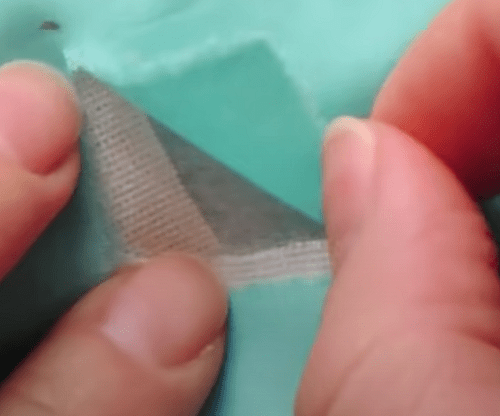
Use fusible interfacing
To hold the edges, you will need one or two pieces of fusible interfacing. The source notes that it is denser and stronger than nonwoven interfacing, and such a patch should not come off in the wash.
Before adding an adhesive patch, assess the fabric and remove loose threads.
Place the interfacing glue side up
Trim loose threads if there are any. Slide the interfacing under the tear so the adhesive side faces up and catches both edges of the damage.
Place the interfacing glue side up so it catches both edges.
Press through a scrap cloth
Press the repaired area with an iron through a scrap cloth. Before doing this, always check the care label and test an inconspicuous area: for some fabrics, contact with an iron is undesirable or forbidden.
Do not overheat the fabric
If you use polyethylene instead of a fusible material, place it under the tear, cover with cloth, and press for a few seconds with a not-too-hot iron.
Reinforce the cut if the repair is temporary
For a small cut, you can use fusible web, but the source treats this as a cosmetic or temporary repair. To keep the cut from opening after washing and wear, add a decorative stitch or zigzag stitching on top.
Small burn hole in leather
The source shows a way to pull a burned area closed with thread. For decorative fixes on leather and faux leather, keep the discussion warning in mind.
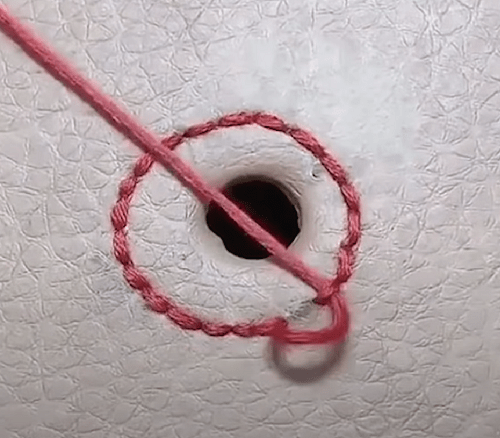
Sew around the damage with backstitch
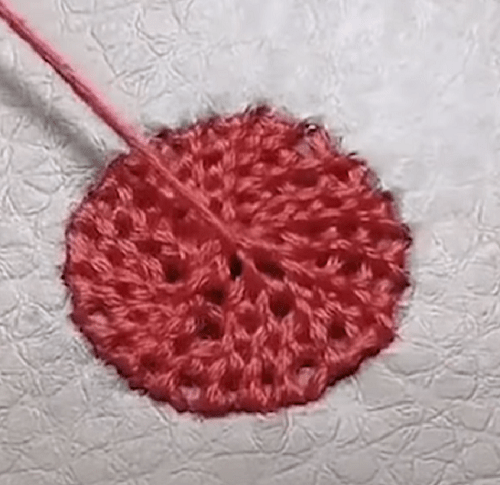
Take thread in a similar color and a needle with a large eye. Sew around the burned area in a circle using backstitch.
The first circle of stitches defines the repair outline.
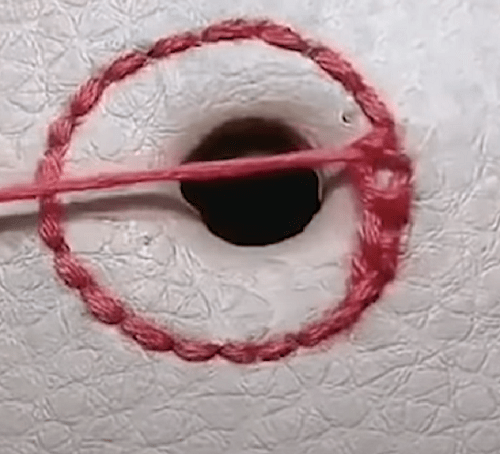
Overcast the circle, reducing the perimeter
Catching the thread, work an overcast stitch around the circle and gradually reduce the perimeter of the hole.
The overcasting gradually reduces the perimeter of the hole.
Pull the thread tight and secure it
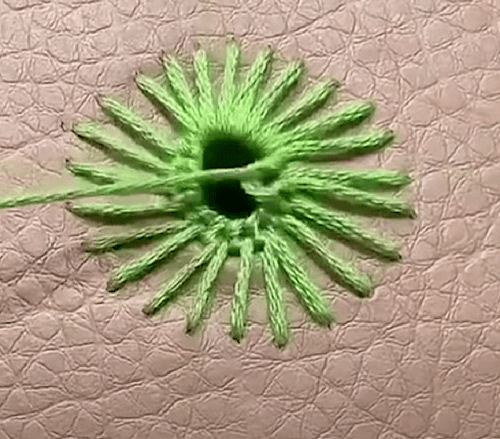
Pull the thread tight, secure it, and add a small drop of superglue. The source also shows another option: first cover the hole with long stitches, then overcast it using the same principle.
After tightening, secure the thread and fix it with a drop of superglue.Alternative method: long stitches followed by overcasting.
Warning from the discussion
Covering damage with embroidery on leather or faux leather is risky: new holes can weaken the material. For decorative coverage, an adhesive applique is safer.
Disguising a tear in a visible place
If a seam or hidden patch will still be obvious, make the repair part of the design.
Choose a decorative detail
For a tear on a sleeve fold, near a pocket, or in another visible place, use a piece of leather or faux leather, a textile patch, a ready-made patch, or whatever suitable material you have on hand.
Tip from the discussion
If you decorate one side, such as a sleeve or front panel, decorate the mirrored side in a similar way so the repair looks intentional.
Cover the tear with a zipper
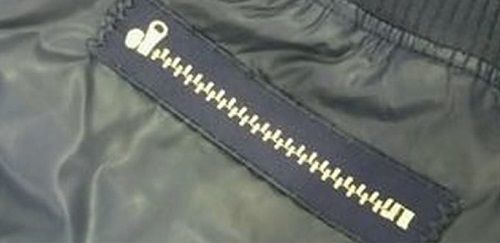
You can use a non-working zipper if it matches the color and design. Bring the fabric edges together at the tear, pin or baste the zipper in place, and sew it by hand with backstitches. The detail can run in any direction, especially on sports and men's jackets.
A non-working zipper can become a decorative disguise for a tear.
Hide the hole under reflective tape
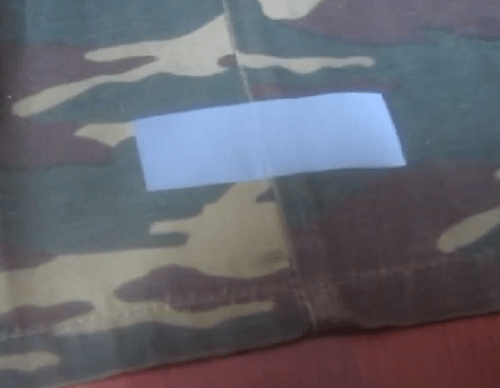
For sportswear and cycling clothing, a small strip of reflective tape sewn on by hand works well. For children's clothing you can choose a bright option; otherwise the source recommends calmer shades, such as silver gray.
Reflective tape works well on sportswear and cycling clothing.
Other options
Instead of tape, you can use trim or emblems, especially if they match the knit cuffs.
Coated nylon jacket and down jacket
Nylon-based shell fabrics can be hard to sew, so the source suggests gluing an inner patch.
Prepare an inner patch
If you do not have matching fabric, you can cut a small piece from a pocket, then shorten the pocket slightly and sew it closed securely.
Hide the fabric piece under the tear
Apply a small amount of glue to the patch. Hide the piece under the torn area, carefully bring the edges together, place a small weight on top, and leave it until completely dry.
Check the glue composition
For polyester and coated nylon, the source suggests looking for adhesives that contain rubber, polyurethane, neoprene, or polyvinyl chloride. For durability, you can also cover the area with a decorative patch.
Use a faux pocket as a design detail
A faux pocket can cover the flaw and change the look of the jacket at the same time. The source includes a link to a detailed video master class; this repair can be done at home on a regular sewing machine.
Finish and variations
Finish
Check the repaired area
After sewing or gluing, gently stretch the fabric around the repair with your hands: the edges should not open and the decoration should not lift. If you used glue, wait until it is fully dry under the weight.
Variations
Invisible seam repair
Best for a tear along factory stitching: open the lining, restore the seam with a 2 cm overlap above and below, then close the lining.
Inner adhesive patch
Works for small tears on fabrics that can tolerate heat or allow glue repair.
Decorative disguise
A zipper, reflective tape, emblem, trim, or faux pocket helps cover a flaw in a visible place.
The adhesive patch needs an iron, but the material may be damaged by heat.
Likely cause
Some jacket fabrics, membranes, and coatings cannot tolerate direct contact with an iron.
How to fix it
Check the care label first and test an inconspicuous area. If heat is forbidden, choose sewing, a glue repair without an iron, or a decorative overlay.
Raincoat fabric frays under the needle
Problem
The edges of thin fabric turn into fraying while you try to sew the hole closed.
Likely cause
The material is unstable and does not hold punctures well.
How to fix it
Before sewing, treat the edges with textile glue to stabilize the fibers. If the spot is visible, you can use a faux seam or an overlay detail.
Fusible web does not hold reliably
Problem
A small cut may open again after washing or wear.
Likely cause
Fusible web gives more of a cosmetic or temporary repair.
How to fix it
Use fusible interfacing, and add a decorative stitch or zigzag stitching over the small cut.
Leather or faux leather tears along new holes
Problem
After decorative embroidery, the material weakens around the repair.
Likely cause
Many punctures create a new tear line.
How to fix it
Follow the discussion advice: for decorative coverage on leather and faux leather, use an adhesive applique instead of embroidery with many punctures.
The decorative patch looks accidental
Problem
A single patch or zipper in a visible place looks like a forced repair.
Likely cause
The decoration is not supported by the garment design.
How to fix it
From the discussion: if you cover one side of a sleeve or front panel, decorate the mirrored side too. Then the repair reads as a design detail.
?FAQ
How do I repair a torn seam on a jacket?
Open the lining near the damage, sew the outer fabric by machine or by hand with about 2 cm of overlap above and below the tear line, then close the lining with an invisible stitch.
Can I sew a hole from the outside without opening the lining?
Yes, if the area is hard to reach. Lay the jacket flat, remove fraying, hide the knot on the wrong side, sew alternating stitches from right to left and back again, then pull the thread tight and secure it.
Can I iron an adhesive patch onto any jacket?
No. First check the care label and test an inconspicuous area. For some materials, contact with an iron is undesirable or forbidden.
What glue works for polyester and coated nylon?
The source suggests looking for adhesives that contain rubber, polyurethane, neoprene, or polyvinyl chloride.
Can I cover a hole in leather with embroidery?
The discussion warns that on leather and faux leather, embroidery adds many new holes and the garment may tear along the new seam. An adhesive applique is better for decorative coverage.
Your project
Log in to track your project, attach photos, and publish your result into the shared feed.
From my experience, covering faux leather or leather with embroidery is not a good option. You add a lot of new holes, and in the end the garment will tear along the new seam. On these materials it is better to use an adhesive applique. If the hole is in a relatively thin fabric, such as raincoat fabric or something similar, you can make a faux seam or topstitch an overlay piece. If you decorate one side this way, such as a sleeve or front panel, the mirrored side should be decorated similarly too.

 BeginnerFree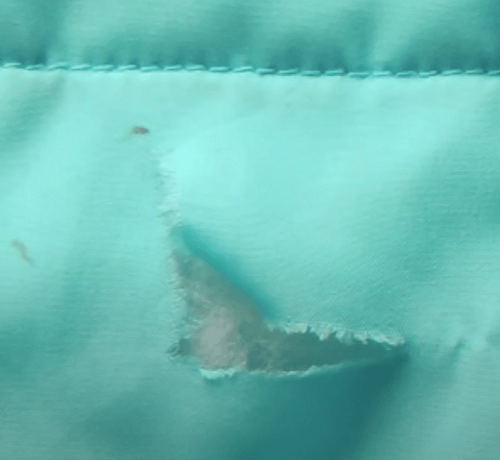


From my experience, covering faux leather or leather with embroidery is not a good option. You add a lot of new holes, and in the end the garment will tear along the new seam. On these materials it is better to use an adhesive applique. If the hole is in a relatively thin fabric, such as raincoat fabric or something similar, you can make a faux seam or topstitch an overlay piece. If you decorate one side this way, such as a sleeve or front panel, the mirrored side should be decorated similarly too.