This master class shows how to shorten jeans without ruining their look: try them on and mark the length, align both legs, calculate a double-fold hem, trim the excess, reduce seam bulk, stitch the hem, then imitate worn edges with textile acrylic paint, water, a brush, and temporary hand basting.
BeginnerFree
Translated
Things you will learn
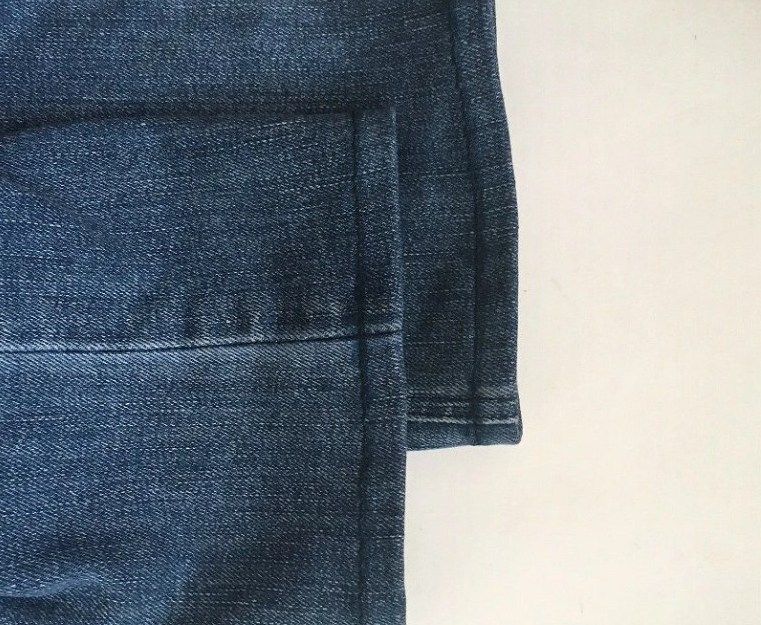
A plain double-fold hem can make altered jeans look too new at the bottom.
In the example, the finished hem width is 1.3 cm, so the double-fold allowance is 2.6 cm.
Tap thick seam areas with a hammer so the sewing machine can pass over them more easily.
Test the textile acrylic paint on a cut-off denim scrap before applying it to the jeans.
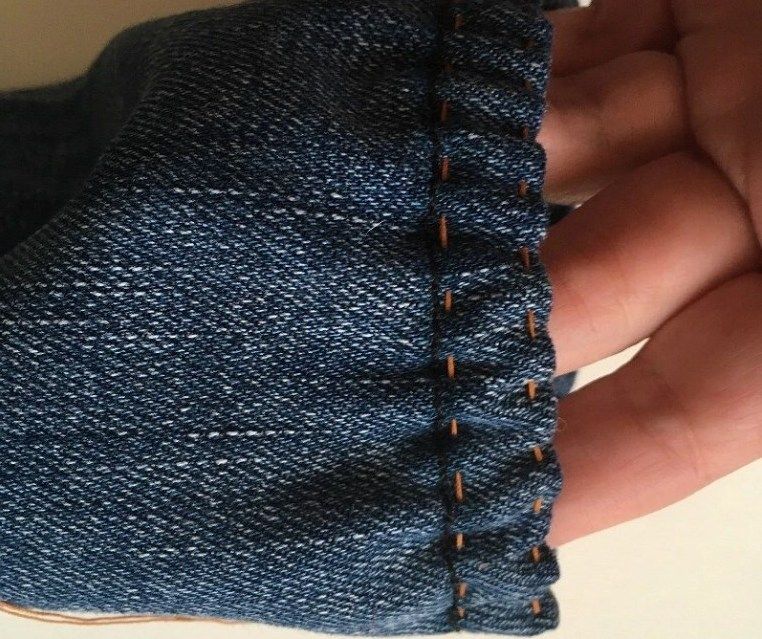
To imitate wear, gather the hem temporarily with strong thread, highlight the raised areas with white paint, let everything dry, and remove the basting.
Shortened jeans with a natural-looking hem
After the repair, the jeans are the right length and the lower edge looks not merely hemmed, but finished with decorative wear marks.
Materials and tools
Materials
Textile acrylic paint, For imitating distressing; dark shades and white paint are used.
Thread matching the jeans topstitching, For machine stitching the hem.
Strong thick thread, For temporary hand basting and gathering the hem.
Water, For the spray bottle and for thinning paint.
Jeans to be hemmed, 1 pair, Try them on and mark the new length before cutting.
Tools
Sewing machine, For hemming the jeans.
Denim needle, Suitable for thick denim.
Chalk, For marking the new length and cutting line.
Scissors, For trimming the excess length and seam allowances.
Darning needle, For hand basting beside the stitch line and along the lower edge.
Pins, For holding the legs in place before marking.
Hammer, For flattening thick seam areas before machine stitching.
Flat brush, For applying diluted paint to raised areas.
Spray bottle, For lightly dampening the lower edge of the jeans.
Preparation
Try on the jeans
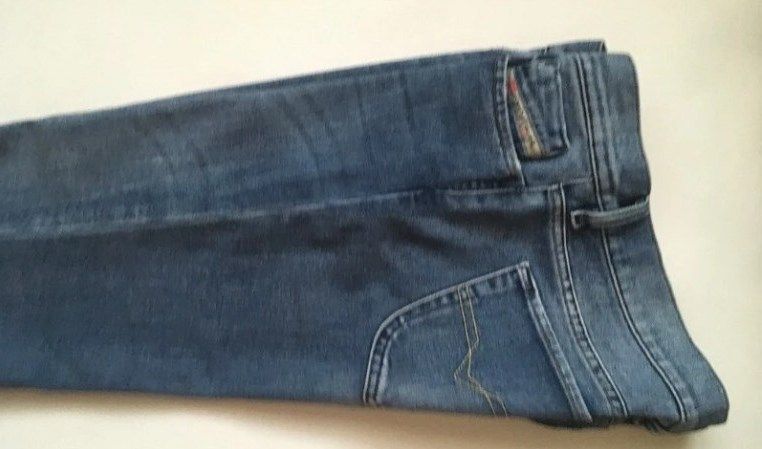
Put the jeans on and mark the ideal leg length with chalk.
Save a test scrap
Do not throw away the cut-off denim; use it to test the acrylic paint shade and intensity.
Marking and shortening the jeans
The key here is to align both legs and calculate enough fabric for a double-fold hem.
Fold the jeans
Fold the legs lengthwise, straighten the jeans carefully, align the waistband edges, and pin them together.
Align the seams
Smooth the legs, align the inseams and side seams, then pin the legs slightly above the chalk mark.
Draw the marking lines
Draw a line through the mark perpendicular to the side seam. Below it, add the allowance for a double-fold hem: multiply the finished hem width by two. In the example, 1.3 cm × 2 = 2.6 cm.
Account for the double fold
If the finished hem is 1.3 cm, mark the cutting line 2.6 cm below the new hem line.
Cut off the excess length
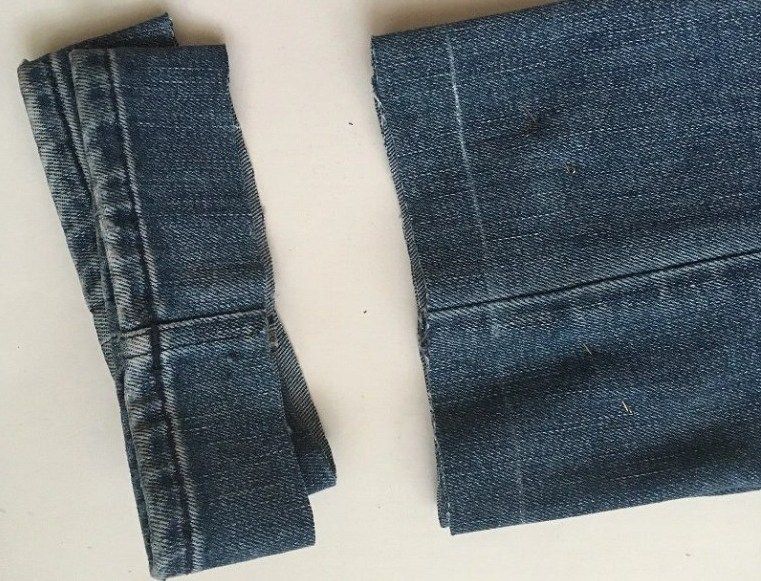
Cut the legs along the lower horizontal line and remove the pins.
Trim bulky seam allowances
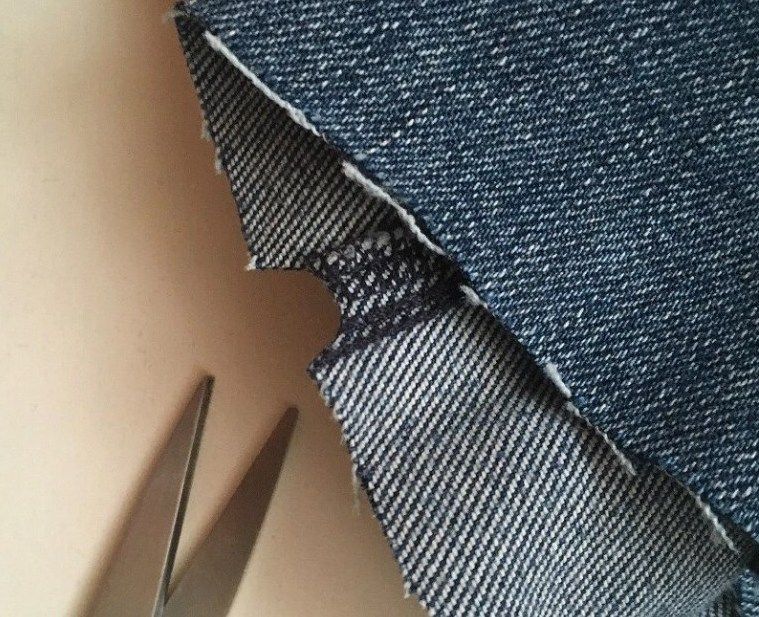
Cut the seam allowances at an angle and trim the thick parts of the seams. These areas will later be hidden inside the hem.
Sewing the hem
Do not press the bottom edge before stitching if you plan to imitate wear marks afterward.
Baste the double fold
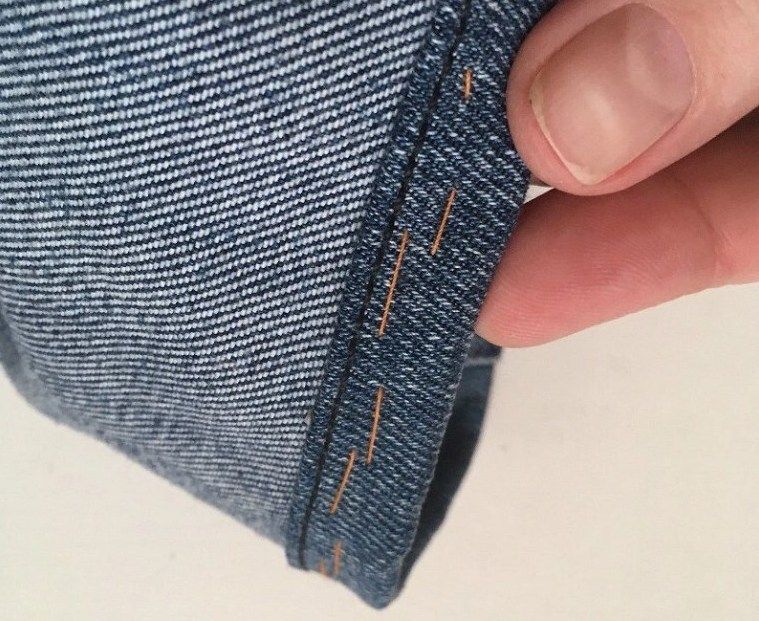
Without pressing the leg, fold the lower edge up 1.3 cm, then fold it up another 1.3 cm and baste.
Flatten thick areas
Gently tap the thick seam areas with a hammer so the sewing machine can sew over them more easily.
Stitch the hem
Stitch the hem 1–2 mm from the fold.
Imitating decorative distressing
The worn effect is built in layers: first darker tinting, then gathering and light highlighting on the raised areas.
Mix the color
Mist the lower edge with water. Mix several textile acrylic shades, for example blue, purple, and black diluted with water. Test the color on a cut-off denim scrap.
Apply the dark tint
Brush the paint onto the lower edge and repeat on the wrong side of the fold. Let it dry completely, or dry it with a hair dryer.
Gather the hem temporarily
Use strong thread to hand-baste beside the hem stitch line. Make stitches about 5–7 mm long; they do not need to be identical. Then sew the same kind of stitches along the very bottom edge.
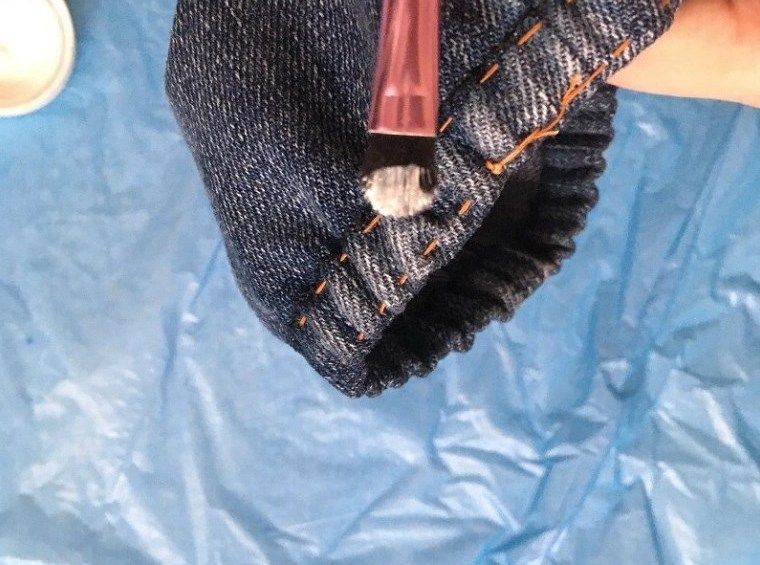
Highlight the raised areas
Mist the fold again. Dilute white paint with water, load the brush, remove the excess, and lightly brush only the raised areas. Repeat on the wrong side.
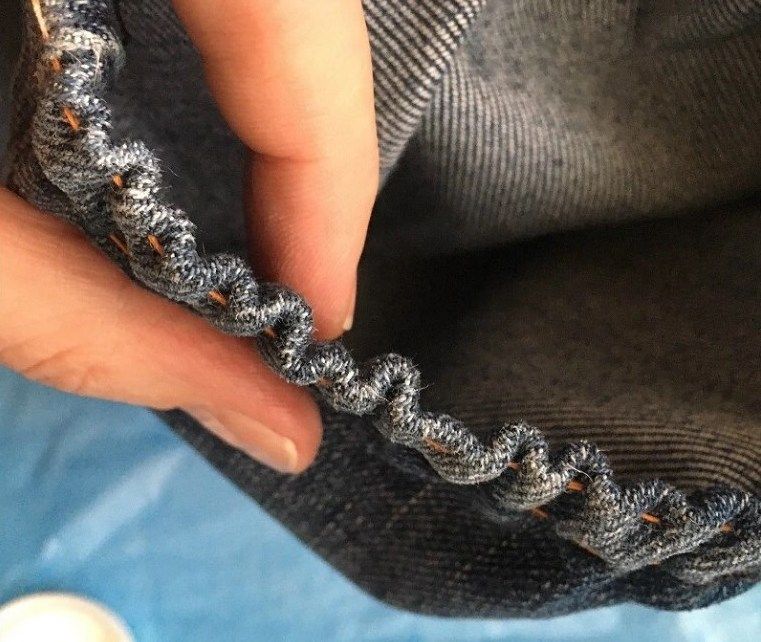
Paint the edge and fold
Tint the very bottom edge the same way. Then bend the fold slightly inward and brush along the crease.
Dry and remove the basting
Leave the jeans until completely dry, remove the basting thread, and check the result. If needed, adjust the color by wetting, adding paint, and drying again.
Finish and variations
Finish
Final check
Check that both legs are the same length, the stitching is even, the paint is dry, and the worn effect along the hem looks natural.
Variations
Softer distressing
For a subtle effect, use less white paint and wipe most of it off the brush first.
Adjust after drying
If the color is too weak or uneven, repeat the cycle suggested by the author: dampen, add paint, and dry.
 BeginnerFree