Duplicate Stitch: Embroidering Over Knit Stitches on Stockinette Fabric
A guide to the duplicate stitch technique for knit fabric: use any cross-stitch chart, matching one knit stitch to one chart square, work with a tapestry needle on the right side of stockinette fabric, start embroidering from the center of the motif, and progress from simple motifs to multicolor charts.
Beginner45 minFree
Translated
Things you will learn
Duplicate stitch lets you work any motif on a solid-colored knit fabric without having to carry extra yarn colors while knitting.
You can use any cross-stitch chart for the motif, matching one knit stitch on the fabric to one square on the chart.
Four basic rules apply: work the motif only on the right side of stockinette fabric, use a large blunt-tipped tapestry needle, always test all yarns for colorfastness before embroidering, and choose yarn for the motif the same weight as the yarn in the main fabric (not thinner).
To avoid misjudging the motif's placement, first sketch it on paper so you can hold the template up to the piece ahead of time, and start embroidering the motif or scene from the center so it doesn't drift off to one side.
The right half of a stitch is covered first, and the left half the same way but mirrored; for a diagonal move, bring the yarn out at the bottom of the stitch diagonally above; for a vertical row, simply move up one stitch each time; and if your stockinette fabric is fine-gauge and you need to work quickly, you can cover two original stitches with a single duplicate stitch.
What you'll get
You'll get a knit piece with an embroidered motif or scene worked directly over the stockinette stitches, indistinguishable in pattern from cross-stitch but worked right on the knit fabric.
Materials and tools
Materials
Yarn for the motif, should be the same weight as the yarn used in the main fabric (not thinner), and must be tested for colorfastness before embroidering
Cross-stitch chart, any chart works — one chart square corresponds to one knit stitch on the fabric
Tools
Large tapestry needle, should have a blunt tip so it doesn't split the fabric's yarn
Paper for sketching, used to sketch the motif and hold the template up to the piece before embroidering
Preparation
Test your yarn and prepare the motif
Before embroidering, always test all yarns for colorfastness. Choose yarn for the motif the same weight as the yarn in the main fabric (not thinner).
Plan the motif's placement
To avoid misjudging the motif's placement, sketch it on paper first so you can hold the template up to the piece ahead of time and check the spacing.
Learn the basic rules of the technique
Before you start embroidering, it's worth remembering four basic rules of this technique.
Remember the four rules
Work the motif only on the right side of stockinette fabric. Use a large tapestry needle (it has a blunt tip). Before embroidering, always test all yarns for colorfastness. Choose yarn for the motif the same weight as the yarn in the main fabric (not thinner).
Duplicate stitch chart alongside knit fabric
Start embroidering from the center of the motif
Start embroidering the motif or scene from the center — that way it definitely won't drift off to one side.
Work the duplicate stitch itself
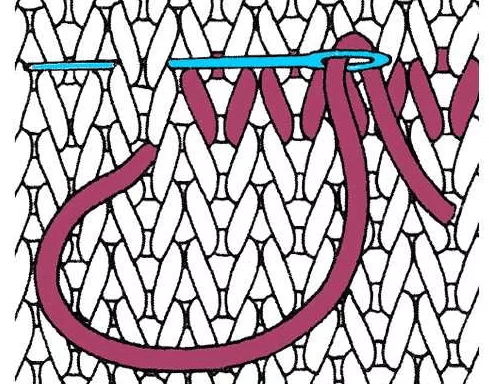
Each knit stitch on the fabric is covered with a stitch that mirrors its shape — first the right half, then the left, worked the same way but mirrored.
Cover the right half of the stitch
This is how the right half of the stitch is covered (the left half is worked the same way, but mirrored).
How to work the duplicate stitch
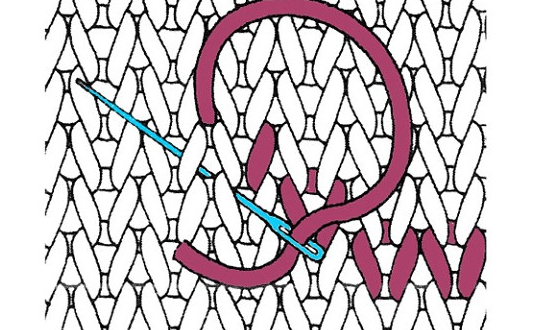
Make a diagonal move
For a diagonal move, bring the yarn out at the bottom of the stitch diagonally above.
Diagonal move between stitches
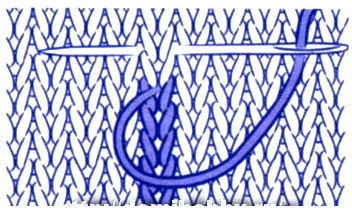
Work up a vertical row
To work up a vertical row, simply move up one stitch each time.
Working up a vertical row
Adapt the technique to your fabric
You can adjust the technique slightly depending on the size of the stitches in your knit fabric.
Working with fine-gauge stockinette
If your stockinette fabric is fine-gauge and you need to work quickly, you can simply cover two original stitches with a single duplicate stitch.
Move from simple motifs to more complex ones
Beginners should practice on small motifs first, gradually moving on to bigger and more complex multicolor charts.
Start with small, simple motifs
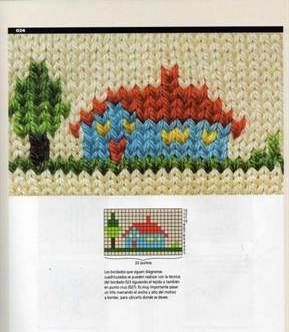
Start with small, simple motifs — just to get the hang of it.
House motif chart
Move on to multicolor charts
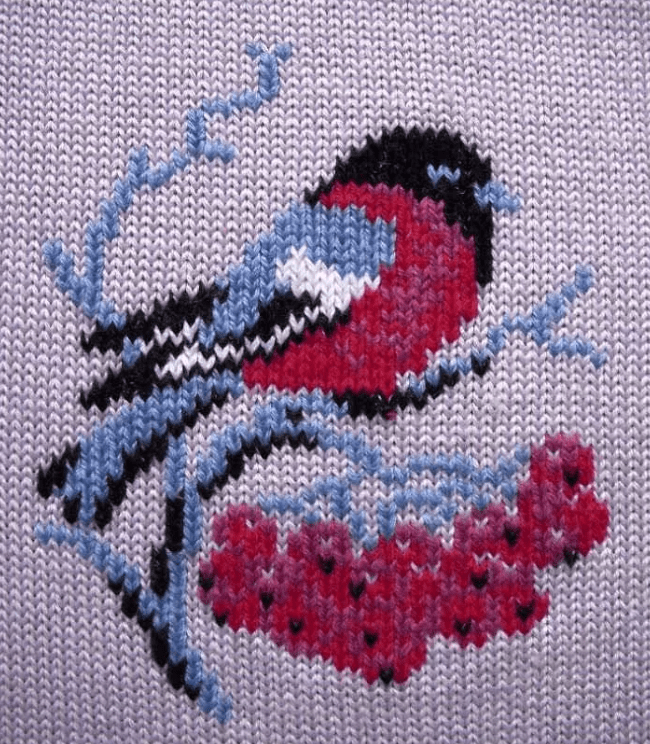
Then learn to work a bigger scene, and gradually move on to multicolor charts.
Embroidered bullfinch motif
Apply the technique to finished pieces
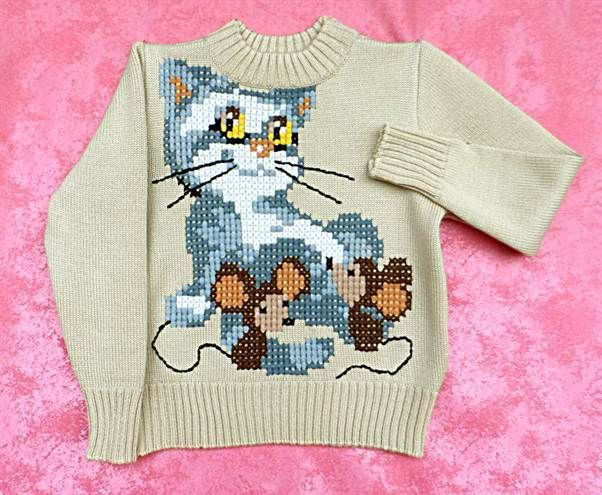
This technique works well on ready-made knit items, turning them into one-of-a-kind pieces.
Decorate a finished garment
Even a perfectly ordinary child's sweater can be turned into a unique, colorful piece.
Child's sweater with duplicate stitch embroidery
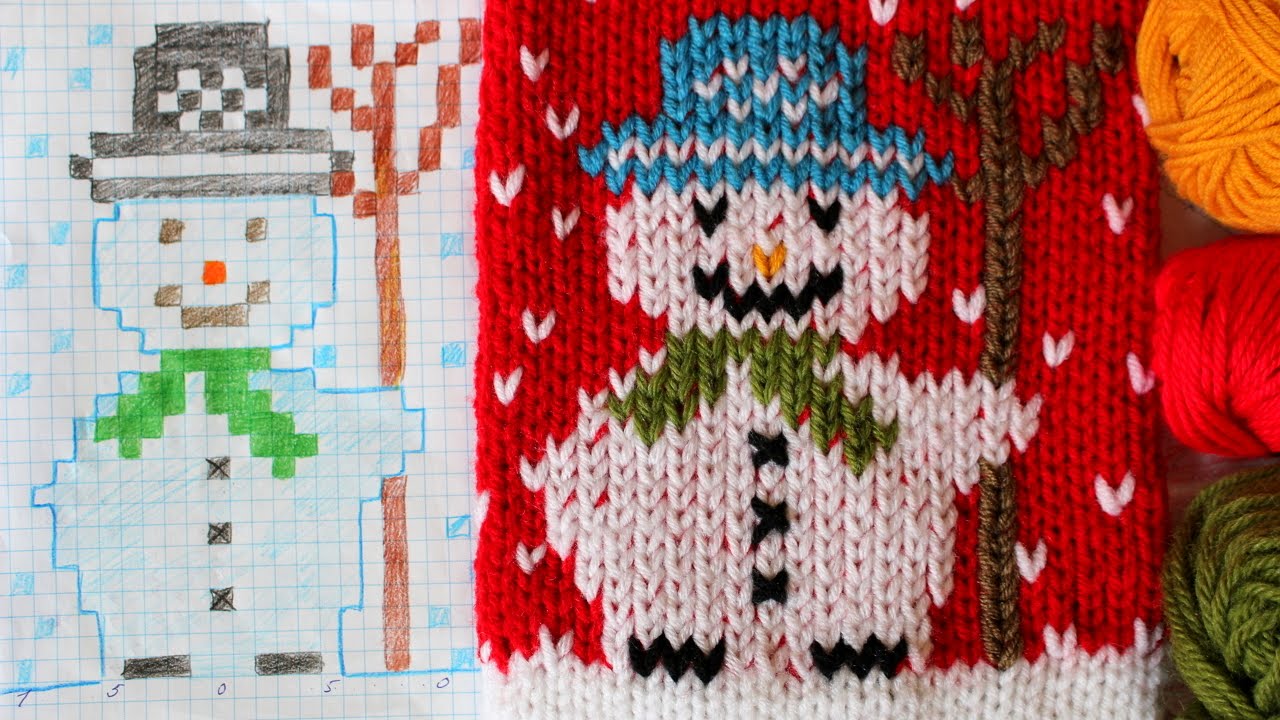
Embroider your child's own drawing
You can even embroider your own scene based on your child's drawing — something they'll definitely appreciate.
Snowman chart and knit swatch
Finish and variations
Finish
Enjoy a one-of-a-kind piece
The result is a special piece you definitely won't find in a store — for instance, a perfectly ordinary child's sweater turns into a unique, colorful item.
Variations
Embroider a motif for your child
You can embroider your own scene based on your child's drawing instead of a ready-made cross-stitch chart.

 Beginner45 minFree