
How to choose a crochet hook
A properly chosen crochet hook directly affects comfort while crocheting. Today I want to explain what to pay attention to when choosing this crochet tool.
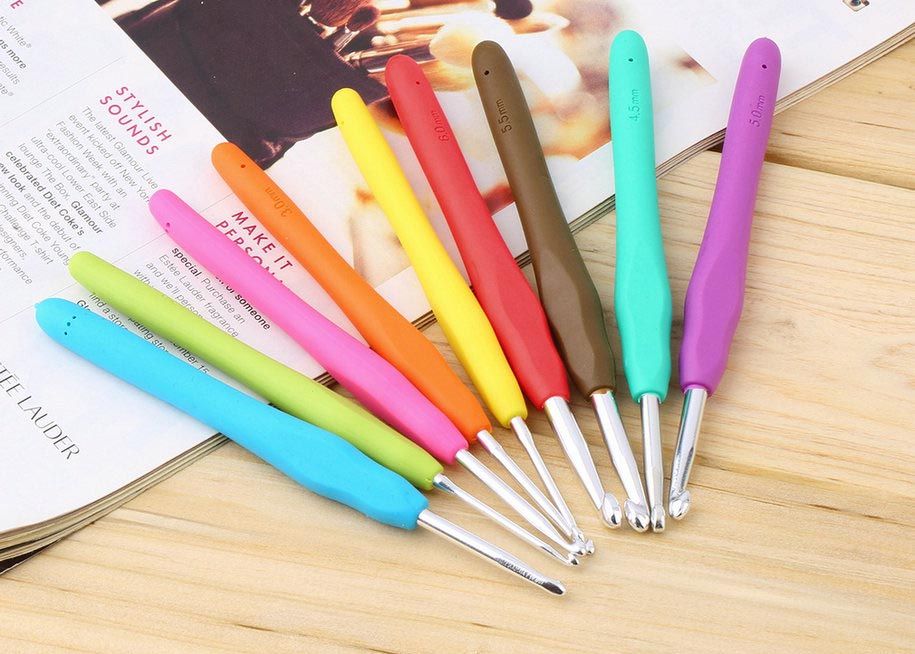
As a rule, stores offer hooks with a 'head' from 1 to 15 millimeters. The hook size equals the thickness of the head, for example, No. 3 – 3 mm.
Most often crafters use hooks from 2 to 3.5 mm. The hook thickness directly affects yarn selection and gauge, so follow the yarn manufacturer's recommendations – the packaging always includes information on the recommended needle and hook diameters.
Thick hooks are used for bulky yarn and warm garments, while thin ones are used for crocheting with fine threads (doilies, tablecloths, scarves, web-like shawls). The principle is simple: thick hook + thin yarn = huge holes and no texture, thin hook + thick yarn = too coarse, overly dense fabric.
A hook can be jointed or made entirely from a single material. Thin hooks are best chosen from metal or bone, thick ones — from plastic or bamboo (they must be perfectly smooth!). Hold the tool in your hand, and if it feels comfortable, go ahead and buy it! 😉


Agreed, you need to know how to choose a hook properly, otherwise the finished piece can end up too tight or, on the contrary, wavy😞
Beginners can pick hooks using the old-school method (but this rule only applies for the very first hook, to learn to crochet): hook a strand of yarn and look at the groove on the hook's head — if it sticks out a lot, the hook is thick; if you can't see the groove at all, it's too thin.