
How to Sew a Fabric Mouse from Scraps
Turn leftover fabric scraps into a small fabric mouse. This archived sewing project uses cotton or linen pieces and a cord tail.
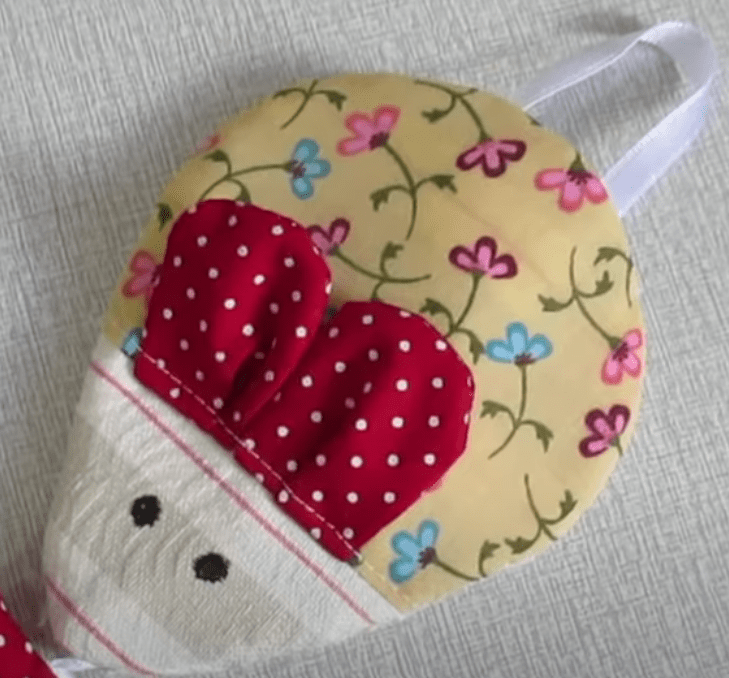
Materials
- Four 13 × 13 cm cotton or linen squares for the mouse body.
- One 13 × 8 cm fabric scrap for the top panel.
- Four 5 × 5 cm bright-fabric squares for the ears.
- Ribbon or cord for the tail.
Sew the Mouse
Fold the 13 × 13 cm squares in pairs and cut out ovals. Trim them so they match.
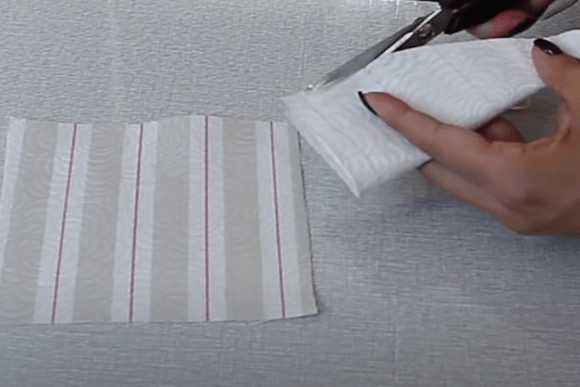
Cut four semicircles for the ears, stitch them in pairs with the lower edge open, turn them right side out, and pin them to one top oval. Point the ears toward the snout and make a small fold at each base for volume.
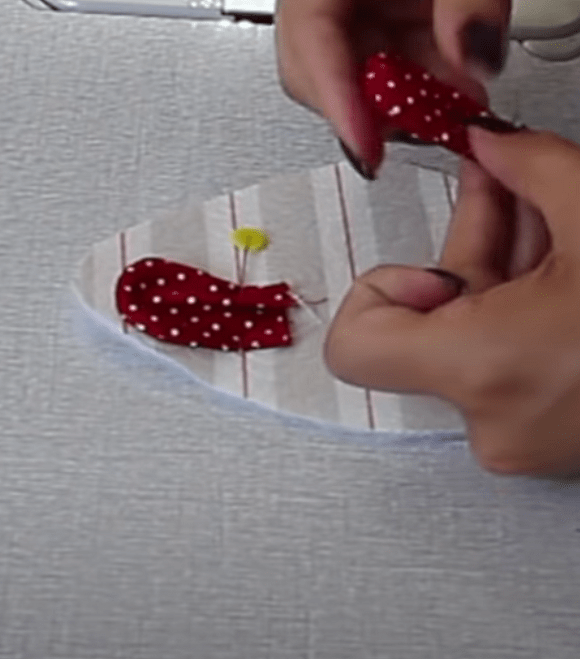
Place the 8 × 13 cm panel over the main piece along the ear-attachment line. Stitch it, then turn it to the right side.
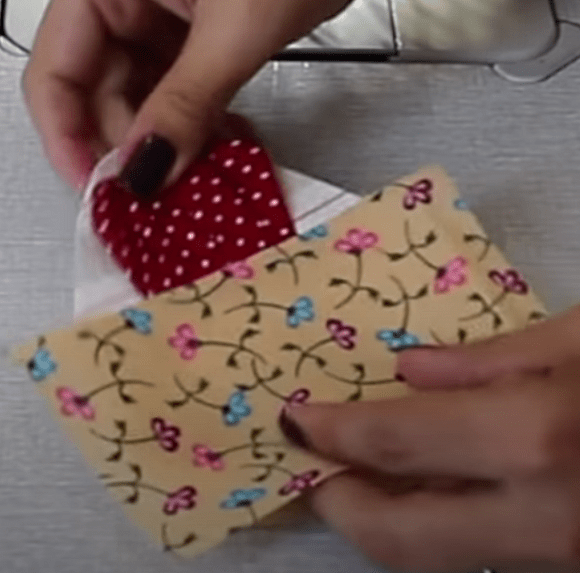
Fold the ears back and sew a finishing seam to secure all the layers. Trim away excess fabric.
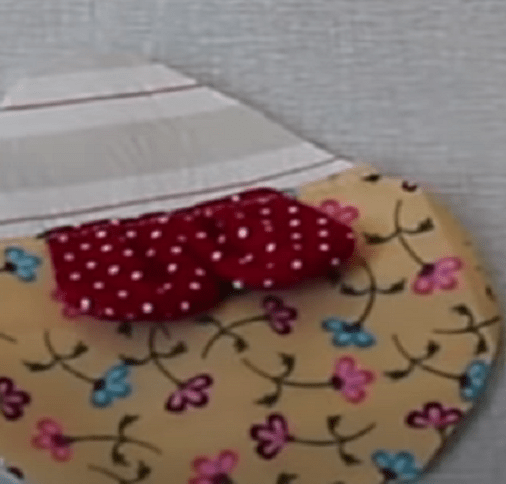
Pin the top section to the lower section and stitch around the edge. Do not leave an opening in this seam.
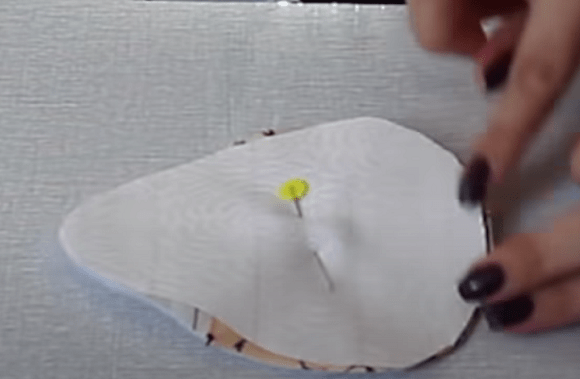
Clip small notches around the curve, cut a small opening near the bottom on the wrong side, and turn the section right side out. Close the opening by hand. Repeat for the other two ovals.
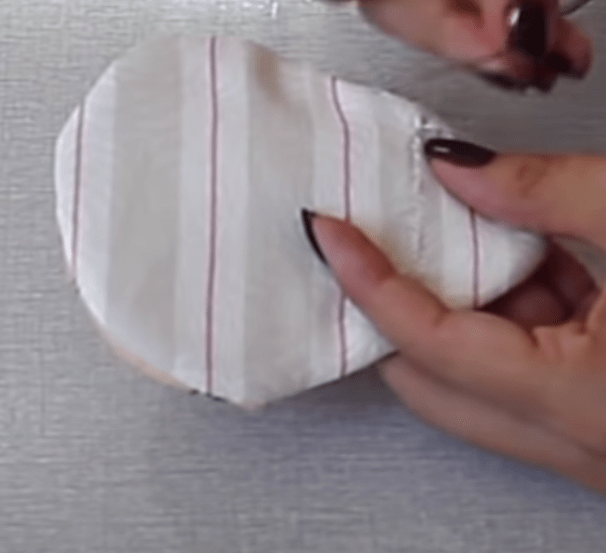
Assemble and Finish
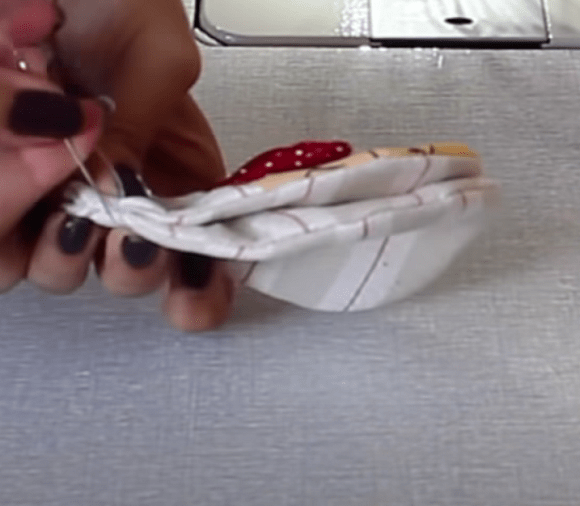
Join the upper and lower mouse sections with an invisible hand stitch, securing the tail at the same time. For a fuller version, the top section can be lightly stuffed through its opening before it is closed.
Child-Safety Note
This is an archived craft project, not a safety-tested toy pattern. A cord tail, accessible stuffing, and loose or detachable pieces can be hazardous for babies and young children. Do not give this version to a child under three; for any child, remove the cord tail, use securely enclosed toy-grade filling only, and check seams and parts before each use.

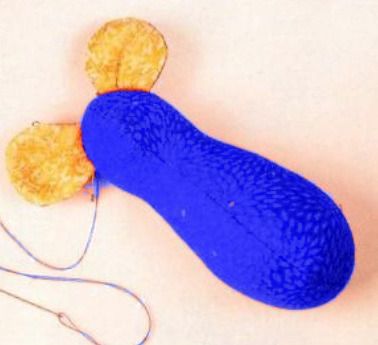


It turned out cute! If I were making it as a sensory toy, I would use a textured filling such as dried peas, buckwheat, or lentils. It can help develop a child's fine motor skills. [Editor's safety note: This is an archived suggestion, not current safety advice. Do not use loose food as filling for a child's toy: a damaged seam can expose a choking hazard. Keep any toy for a child under three free of cords, loose filling, and small or detachable parts, and inspect it regularly.]