This master class shows how to knit baby socks for 3–6 months: cast on 36 stitches, divide them across 4 needles, knit 1×1 ribbing, work the basketweave-style pattern, shape the heel in garter stitch, knit the lower foot, and close the toe with decreases.
BeginnerFree
Translated
Things you will learn
The model is sized for a 3–6-month-old baby; for a newborn, the source suggests casting on 4 fewer stitches.
Cast on 36 stitches and divide them across 4 needles, 9 stitches on each needle.
The 1×1 ribbing is worked for 18 rows and can be folded down or worn straight.
The patterned leg in the example is 5–6 cm high.
The heel is worked for 12 rows in garter stitch and divided into 5+8+5 stitches.
Patterned baby socks
The result is a pair of soft baby socks with ribbing, a basketweave-style pattern on the upper part, and a neat heel. The model works for a boy or a girl: choose the yarn color you like.
Materials and tools
Materials
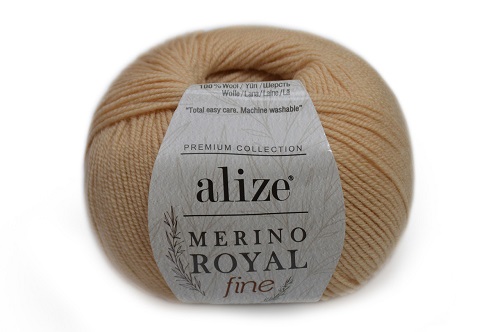
Soft wool yarn, The source gives Alize Merino Royal Fine as an example: soft yarn for baby items that is not scratchy and holds its shape well.
Tools
Double-pointed needles, For knitting the baby socks in the round.
Yarn needle, For securing the yarn on the wrong side.
Preparation
Choose soft yarn
For baby socks, choose soft yarn that does not feel scratchy. The source names Alize Merino Royal Fine as an example.
Check the size
The instructions are written for a 3–6-month-old. If you need socks for a newborn, the author suggests casting on 4 fewer stitches.
Knit the ribbing and leg
The sock starts at the top and is knitted in the round on four needles.
Cast on
Cast on 36 stitches and divide them evenly across 4 double-pointed needles, 9 stitches on each needle.
Knit the ribbing
Work 18 rows in 1×1 ribbing. On the finished sock, the ribbing can be folded down or left straight.
Switch to the pattern
Move the stitches from needles 1 and 2 onto one needle and work the basketweave-style pattern on that section, following the chart. The leg height is 5–6 cm.
Shape the heel
The heel is worked separately on part of the stitches.
Set up the heel stitches
Leave the stitches on needle 1 aside, and work the stitches from needles 2 and 3 for 12 rows in garter stitch.
Divide the heel
Divide the heel stitches into 3 parts: 5+8+5. Work the middle 8 stitches: knit the first stitch together with the neighboring stitch, knit 7 stitches, and turn. Work the wrong-side row the same way.
Finish the heel
Continue until 8 stitches remain on the needle. Then pick up 5 stitches on each side of the heel and place the work back onto 3 needles.
Knit the foot and toe
After the heel, the sock is worked in the round again.
Knit the lower foot
On needle 1, continue the basketweave-style pattern. On needles 2 and 3, knit stockinette in the round. Continue until the foot length reaches 8 cm.
Start the toe decreases
For the decreases, knit 2 stitches together at the beginning and end of the row on needle 1, at the beginning of the row on needle 2, and at the end of the row on needle 3.
Secure the yarn
When 3 stitches remain, knit them together, bring the yarn to the wrong side, and secure it.
Add a tie if you like
The decoration is optional, but it can help the sock stay in place and gives it a neat finish.
Make a cord
If desired, twist a small cord from several strands, thread it through the ribbing, and finish the ends with tassels or pompoms.
Finish and variations
Finish
Final check
Check that the second sock follows the same pattern, the toe stitches are closed firmly, and the yarn is secured on the wrong side.
Variations
For a newborn
To knit a newborn size, cast on 4 fewer stitches.
With ties and pompoms
You can thread a twisted cord through the ribbing and finish the ends with tassels or pompoms.

 BeginnerFree


