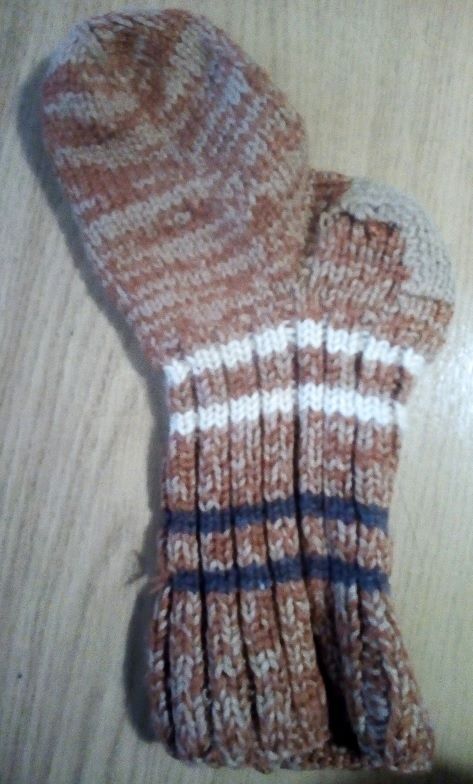
How to Quickly Darn a Worn-Through Heel on a Knitted Sock
A quick way to mend a worn-through sock heel: pick up stitches through the front loops 3-4 rows back from the worn spot, knit a patch that overlaps it by 1 cm on each side, bind off, and sew the patch down on three sides with the same yarn.
BeginnerFree
Translated
Things you will learn
Even a reinforced heel usually wears through first — you don't always need to reknit the whole sock over one small worn spot.
The slow option is to unravel the sock down to the ribbing and reknit just the foot; the quick option in this tutorial is to knit a patch right over the worn spot.
The patch is knit by picking up stitches through the front loops 3-4 rows back from the worn area, overlapping it by 1 cm on each side.
If you knit the patch carefully, its stitches will line up vertically with the stitches in the sock's main fabric.
The patch is already attached on one side, from picking up the stitches, so you only need to sew down the remaining three sides.
What you'll get
The worn heel gets covered with a neat knitted-in patch, held in place by three sewn-down sides. At first, the patch might look a little stiff and rough, but after a bit of wear, it flattens out and sits more evenly.
Materials and tools
Materials
Yarn, ideally the same yarn the sock was knit from; the source photos use a contrasting color yarn just to make the patch easier to see.
Tools
Double-pointed needles, needed to pick up the stitches and knit the patch
A knitting needle, crochet hook, or a needle with a large eye, for sewing down the patch's edges; the author uses a knitting needle, but a crochet hook or needle also works
Preparation
Choose your repair method
If you have time, you can unravel the sock down to the ribbing and reknit just the foot. If you're short on time, a knitted-in patch will cover the worn spot faster.
Choose your yarn
It's best to use the same yarn the sock was knit from. A contrasting color, like in the source photos, is only used to make the patch easier to see.
Pick Up Stitches Around the Worn Spot
The patch starts by picking up stitches from an undamaged section of the sock.
Work back 3-4 rows from the worn spot
Work back three to four rows from the worn area and pick up stitches onto the needle through the front loops.
Check the width of your picked-up stitches
The patch needs to overlap the worn area by 1 cm on each side.
Check the overlap
If the patch is sized exactly to the worn spot with no extra margin, the edges of the worn area may start to fray again.
Knit the Patch
The patch is knit on the picked-up stitches so that it fully covers the damage.
Secure the yarn and knit the patch to the size you need
Secure the yarn and knit the patch to the size you need — it should fully cover the worn spot.
Matching up the stitches
If you knit the patch carefully, its stitches will line up vertically with the stitches in the sock's main fabric.
Bind off
Once the patch is knit to the size you need, bind off the stitches.
Sew Down the Patch's Edges
One side of the patch is already attached, from picking up the stitches. All that's left is to secure the remaining three sides.
Sew down the patch on three sides
Sew down each side of the patch, threading the yarn through the sock's stitches and the patch's edge. The author sews the patch down with a knitting needle; if that feels awkward, use a crochet hook or a needle with a large eye instead.
Weave in the yarn tails
Weave the yarn tails in inside the sock.
Finish and variations
Finish
Check the result
Make sure the patch fully covers the worn spot, is sewn down on three sides, and the yarn tails are woven in inside the sock.
Variations
Fully reknitting the foot
If you have time, you can unravel the sock down to the ribbing and reknit just the foot — a more time-consuming, but thorough repair.
A patch in a contrasting color
You can knit the patch in a different color yarn: the source does this deliberately, so the patch shows up more clearly in the photos.
After sewing, the patch doesn't sit snugly on the sock.
Likely cause
The patch was picked up without the 1 cm margin, or wasn't sewn down on all three remaining sides.
How to fix it
Check that the patch overlaps the worn area by 1 cm on each side, and sew it down on all three sides, threading the yarn through the sock's stitches and the patch's edge.
The patch looks stiff and rough
Problem
Right after the repair, the patch stands out noticeably on the sock.
Likely cause
This is the expected result right after knitting and sewing on the patch.
How to fix it
Put the sock on and wear it for a bit: the source notes that after a short period of wear, the knitted-in piece flattens out and looks neater.
The patch's stitches don't line up with the sock's
Problem
The patch stands out visually because its stitches run in the wrong direction.
Likely cause
The stitches weren't picked up strictly through the front loops, or the patch was knit unevenly.
How to fix it
Pick up the stitches specifically through the front loops and knit the patch carefully — then the stitches will line up vertically with the main fabric.
?FAQ
Why does the heel wear through first, even if it was reinforced while knitting?
The author notes that no matter how much you reinforce the heel, it still tends to wear through first — that's just a normal part of wearing socks.
What do I need to repair a sock with a patch?
You'll need yarn (ideally the same yarn the sock was knit from) and double-pointed needles.
How much should the patch overlap the worn spot?
By 1 cm on each side of the worn area.
What should I use to sew down the patch?
The author sews the patch down with a knitting needle. If that's awkward, you can use a crochet hook or a needle with a large eye instead.
Why does the patch look rough right away?
A freshly sewn-on patch looks a bit stiff and rough at first, but it flattens out after a short period of wear.
Your project
Log in to track your project, attach photos, and publish your result into the shared feed.

 BeginnerFree