How to Knit Slipper Socks: Measurements, Yarn, and a Simple Example
A breakdown of knitting slipper socks on two needles: how to take measurements, choose yarn and a stitch pattern, calculate yarn amounts, and knit a simple example in size 36-38.
BeginnerFree
Translated
Things you will learn
First you choose the slipper sock type: simple, patterned, multicolor, open-toe, or ones that look like cropped socks.
Foot length can be measured from an insole or a traced footprint; for the size 38 example, the calculation gives about 24 cm once you account for the fabric's stretch.
Yarn amount depends on size, yarn thickness, and stitch pattern: cables and aran patterns require roughly 20-50 g more.
Anna Kurbatova's simple example uses 28 stitches, 12 cm of garter stitch, a stockinette-stitch toe, and decreases down to gathering the last 8 stitches.
What You'll Make
This tutorial helps you prepare to knit home slipper socks: choosing a design, taking measurements, calculating yarn amounts, and making a simple pair on two needles. In the example, the slipper socks are knitted in bulky yarn for size 36-38, and the heel back is closed with a loop-to-loop seam, so this isn't a fully seamless technique — it's a version without a rough, noticeable seam.
Materials and tools
Materials
Bulky yarn for the simple design, 1 skein, In the example: 40% wool, 60% acrylic; 100 g = 100 m; the design is sized for 36-38.
Yarn by size and thickness, 50-170 g, Guidelines from the source: children's slipper socks — 50 g; women's 36-39 — 100 g of thin yarn or 120 g of bulky yarn; men's 40-44 — 150 g of thin yarn or 150-170 g of bulky yarn.
Tools
Size 4.5 mm knitting needles, For the simple design in bulky yarn.
Circular needles or 4 double-pointed needles, Needed for the toe; stitches can be split 7 per needle across the 4 needles.
Yarn needle, For gathering the last stitches and for the loop-to-loop seam at the heel back.
An insole, paper, a pencil, and a tape measure, For measuring foot length, instep, and a prominent bunion, if they affect the fit.
Before casting on, decide where the slipper socks will be worn: at home instead of slippers, or inside boots or shoes as warm liners. This determines the yarn thickness, the stitch pattern, and the gauge.
Choose a Slipper Sock Design
Slipper socks can be simple, patterned, multicolor, styled like cropped socks, or open-toe. The most accessible option from the source is slipper socks on two needles: they knit up quickly and don't leave a rough seam.
Simple slipper socks
For your first slipper socks, choose a plain shape and a basic stitch. This makes it easier to check the size, fit, and yarn amount before moving on to more complex patterns.
An example of a simple slipper sock design without a complex pattern.
Patterned slipper socks
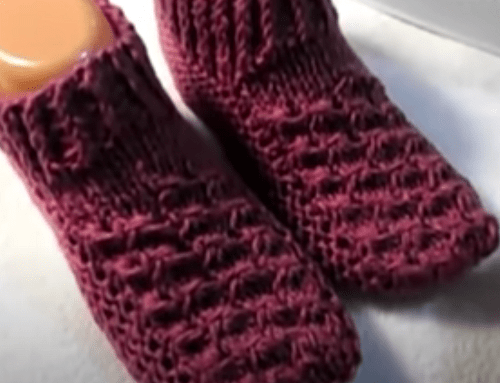
A stitch pattern makes the top of the slipper sock more striking, but it complicates the calculation. If the pattern pulls the fabric in, be sure to knit a swatch and check your gauge.
A slipper sock version with a pattern on the upper part.
Multicolor slipper socks
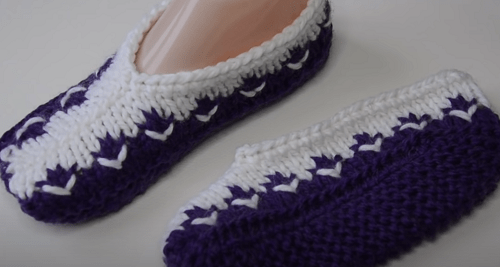
Multicolor designs look great as home footwear, but dense color patterns can make the fabric less stretchy.
A multicolor slipper sock design.
Check the wrong side
Don't choose a pattern with long floats on the wrong side: they can catch on things when you put the slipper socks on and wear through faster.
Take Measurements and Determine Your Size
Measure your foot length
Take an insole from shoes that fit you well, and measure the distance from the tip of the longest toe to the heel. If you don't have an insole, stand on a sheet of paper, trace your foot, and measure the same length along the outline.
Adjust for stretch
If the description only gives a shoe size, use it as a guideline. The source gives an example for size 38: 38 : 3 × 2 = 25 cm. Since knitted fabric stretches, 1 cm is subtracted from that figure, giving a working length of about 24 cm.
High instep and bunion
If you have a high instep, also take a diagonal measurement from the heel across the most prominent part of the foot. If you have a prominent bunion, measure the circumference across it.
Check children's sizes by foot length
Guidelines from the source: up to 3 months — 5-6 cm; 3-6 months — 7 cm; 6 months-1 year — 8-10 cm; 1-2 years, size 10 — 10-11 cm; 3-4 years, size 11-13 — 11-13 cm; 4-5 years, size 16-17 — 16-17 cm; 5-7 years, size 18-19 — 19 cm; 7-9 years, size 20-21 — 21 cm; 9-11 years, size 22-23 — 22-23 cm.
Calculate Yarn Amount
Base it on size, thickness, and pattern
Simple slipper socks use less yarn than designs with arans, cables, and complex patterns. Patterned slipper socks may need roughly 20-50 g more yarn.
Use the gram guidelines
The source gives these guidelines: children's slipper socks in thin or bulky yarn — about 50 g; women's size 36-39 — 100 g of thin yarn or 120 g of bulky yarn; men's size 40-44 — 150 g of thin yarn or 150-170 g of bulky yarn. A woman's pair usually needs just one skein, while a man's pair often needs at least two.
Choose the Yarn
Choose yarn for the season and how you'll wear them
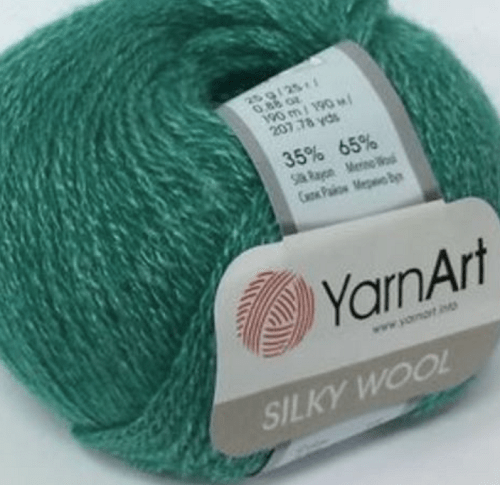
For thin, warm liners to wear inside boots or shoes, the source recommends merino wool: it doesn't scratch, doesn't shrink from moisture, and wears well. Soft, hypoallergenic alpaca works well for children and sensitive skin. For home slipper socks, you can use leftover wool-and-angora yarn, or soft acrylic if your home is warm.
Yarn is chosen based on the season, softness, and thickness.
Choose the Stitch Pattern
For simple slipper liners, garter stitch or stockinette stitch is enough. Regular or English ribbing, and 1x1 or 2x2 moss stitch, also work well.
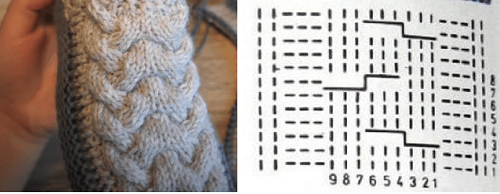
Cables and arans
Cables hug the foot closely, but they pull the fabric in a lot. To calculate the stitch count, knit a swatch, wash it, stretch it slightly, and only then take your measurement. Budget roughly 20-30 g more yarn for these patterns.
Cables hug the foot nicely, but pull the fabric in.
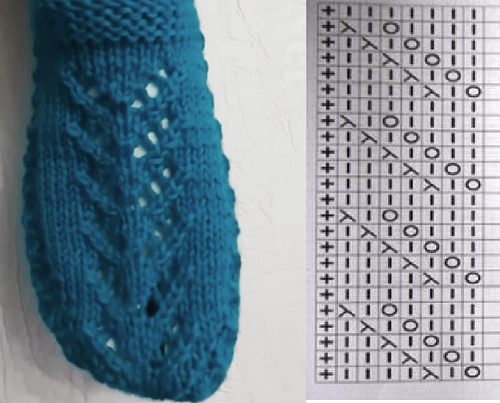
Lace
Lace slipper socks turn out dressy and lighter. You can choose patterns with yarn overs, but not too openwork, so the slipper socks stay durable enough to wear.
Lace makes the slipper socks lighter and dressier.
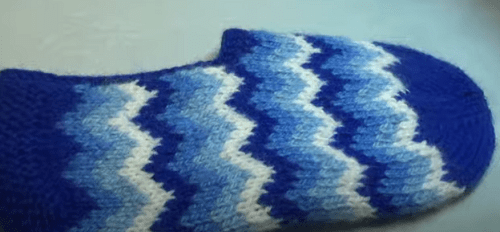
Stripes, zigzags, and motifs
Stripes and zigzags let you use several colors. With dense multicolor motifs, keep in mind that the fabric becomes less stretchy, and long floats on the wrong side aren't a good idea.
Stripes and zigzags work well for multicolor slipper socks.
Knit the Simple Design in Size 36-38
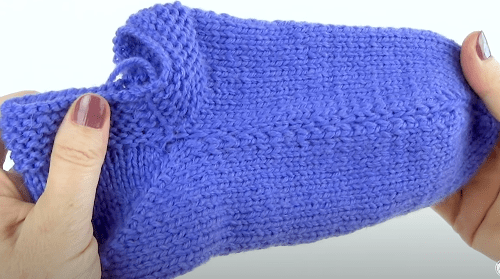
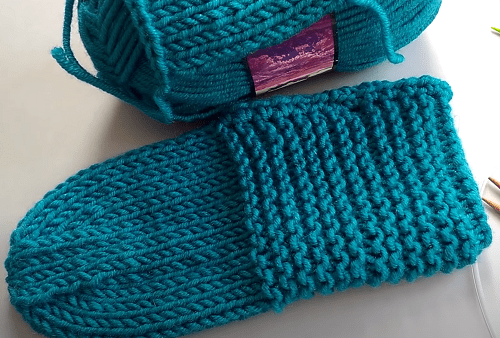
The source's example is Anna Kurbatova's design. It uses bulky yarn that's 40% wool and 60% acrylic, 100 g = 100 m; the gauge is 2.1 stitches per cm.
Knit the upper part
Cast on 28 stitches on size 4.5 mm needles and knit 12 cm in garter stitch. Slip the first stitch of every row without knitting it, and purl the last stitch.
Anna Kurbatova's simple design in size 36-38.
Move on to the toe
Slip all the stitches onto circular needles. You can also knit on 4 double-pointed needles, splitting the stitches 7 per needle. Knit 14 rows in stockinette stitch.
Work the decreases
First decrease row: 1 knit, k2tog, 8 knit, k2tog, 1 knit; repeat twice. After that, keep decreasing after the first stitch and before the last stitch on both sides of the slipper sock.
Gather the toe and sew the heel back
Slip the last 8 stitches onto a length of yarn, thread it onto a needle, and gather them, tucking the tail to the wrong side. Sew the heel back of the slipper sock with a loop-to-loop seam.
Finish and variations
Finish
Finished Slipper Socks
Once the toe is gathered and the heel back is seamed, the slipper socks are ready to wear at home. Tuck the yarn tails to the wrong side so they don't get in the way when you put them on.
Variations
Slipper Socks from Leftover Yarn
The source specifically notes that the simple design can be knitted from leftovers, using different colored balls of yarn.
A More Advanced Design from the Video
For more experienced knitters, the source includes a detailed video tutorial. Use it as a follow-up after the basic calculations and the simple pair.
The size doesn't match the actual foot, or the piece slips off after fitting.
Likely cause
The measurement was taken only from the shoe size without accounting for the fabric's stretch, the instep, or a bunion.
How to fix it
Take the length from an insole or a traced foot. For knitted fabric, factor in a stretch adjustment: in the example for size 38, the 25 cm figure gives a working length of about 24 cm. For a high instep or a prominent bunion, take additional circumference measurements.
The pattern pulls the fabric in a lot
Problem
Slipper socks with cables or arans come out narrower than expected.
Likely cause
Cables and dense patterns reduce the width and change the gauge.
How to fix it
Before calculating the stitch count, knit a swatch, wash it, stretch it slightly, and take your measurement after finishing it. For these designs, budget extra yarn.
The multicolor pattern catches when putting them on
Problem
The floats on the wrong side catch on toes or wear through quickly.
Likely cause
Long floats formed on the wrong side.
How to fix it
Choose stripes, zigzags, or a motif without long floats. Keep in mind that dense multicolor designs make the slipper sock less stretchy.
?FAQ
How do I correctly measure for slipper socks?
Measure an insole from comfortable shoes from the longest toe to the heel. If you don't have an insole, trace your foot on paper and measure the length along the outline. For knitted fabric, account for the stretch.
How much yarn do I need for a pair of slipper socks?
For children's slipper socks, the source gives a guideline of about 50 g. For women's size 36-39 — about 100 g of thin yarn or 120 g of bulky yarn. For men's size 40-44 — 150 g of thin yarn or 150-170 g of bulky yarn.
What yarn should I choose for warm slipper socks?
Merino yarn works well for thin, warm liners. For children and sensitive skin, the source recommends soft alpaca. For home slipper socks, you can use leftover wool-and-angora yarn or soft acrylic.
What needles do I need for the simple design?
In the simple example, 28 stitches are cast on with size 4.5 mm needles. For the toe, the stitches are moved to circular needles or split 7 per needle across 4 double-pointed needles.
Is this design completely seamless?
In the source, slipper socks on two needles are described as seamless or nearly seamless designs. In the simple example, the heel back is still sewn with a loop-to-loop seam, so it's more accurate to call it a version without a rough, noticeable seam.
Your project
Log in to track your project, attach photos, and publish your result into the shared feed.

 BeginnerFree