A step-by-step guide to hand-knitting a blanket: Alize Puffy plush yarn and its properties, using 5-6 skeins for a baby blanket and 9-10 for an adult one, knitting stockinette stitch and a braid pattern, an alternative method with chunky jersey yarn on 20 stitches, and how to care for the finished blanket.
BeginnerFree
Translated
Things you will learn
The blanket is hand-knit from special plush yarn that already comes with matching pre-made loops — you don't need a hook or knitting needles, except maybe to add a fringed edge.
A 1 m by 85 cm baby blanket takes 5-6 skeins of Alize Puffy; a large throw takes 9-10 skeins; the whole project takes just 4-5 days.
Beginners find stockinette stitch easiest; the braid pattern is trickier and needs the stitch count to divide by 2, plus 2 edge stitches.
An alternative method uses chunky jersey yarn, where you shape the loops yourself — 20 stitches for a single-bed blanket, with no pre-made loops involved.
Wash the finished blanket on a delicate cycle at 30°C, dry it laid flat, and never bleach or iron it.
What you'll get
A soft, plump blanket made from plush yarn, with a neat surface in stockinette stitch or a braid pattern, or an even bigger blanket made from chunky jersey yarn, hand-knit with no tools at all.
Materials and tools
Materials
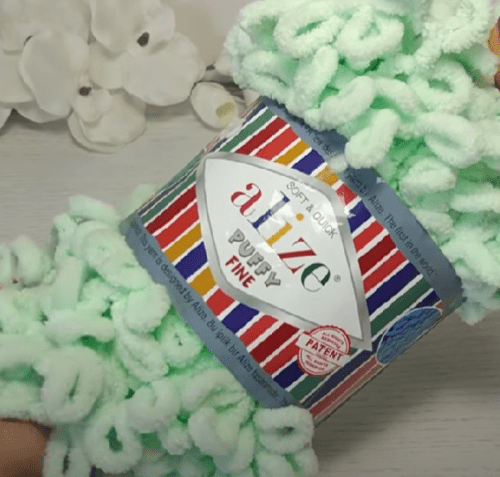
Alize Puffy plush yarn, 100% microfiber polyester; hypoallergenic, doesn't build up static or collect dust; the strand already comes with matching pre-made loops; skeins are 100 g with 9 m of yardage, including variegated color options.
Chunky jersey yarn, for the alternative method, where you shape the loops yourself; a single-bed blanket needs 2 kg, a double-bed one needs 3 kg.
Tools
A crochet hook and knitting needles (optional), not needed for the main body of the blanket, but handy if you want to edge the finished blanket with a fringe.
Photo credit for the blanketThe author notes that the blanket photo comes from the Vereteno39 yarn shop's website.
Preparation
Choose your type of yarn
For a neat fabric with pre-made loops, use Alize Puffy plush yarn. If you want a bigger, plumper texture and don't mind shaping the loops yourself, use chunky jersey yarn instead.
Work out how many skeins you need
A 1 m by 85 cm baby blanket needs 5-6 skeins of Alize Puffy; a large throw needs 9-10 skeins. For a chunky jersey yarn blanket, you'll need 2 kg for a single bed and 3 kg for a double bed.
Yarn With Pre-Made Loops
This hand-knitting method is sometimes called "weaving": you pull the pre-made loops through each other by hand.
Learn the properties of Alize Puffy yarn
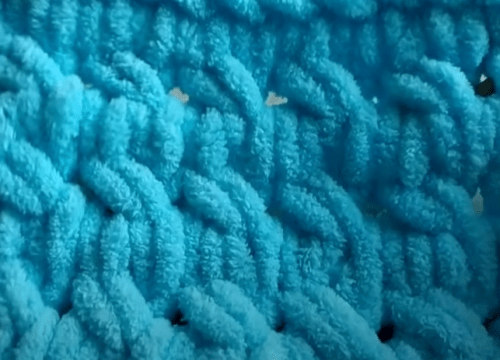
The yarn is 100% microfiber polyester: hypoallergenic, doesn't collect dust, and doesn't build up static. Its texture is soft and fluffy, similar to velour. The manufacturing process already forms the strand into matching pre-made loops.
Check the skein's yardage and color
Alize Puffy Color yarn comes in 100 g skeins with 9 m of yardage. It's sold in a wide range of colors, including variegated options.
Work out how many skeins you need
A crib blanket for a baby (1 m by 85 cm) takes 5-6 skeins of Alize Puffy. A large throw needs 9-10 skeins.
Saves you time
While a knitting-needle or crochet blanket takes a long time to make, you can finish the whole project with loop yarn in just 4-5 days.
Stockinette Stitch for Beginners
This is the simplest pattern for your first plush-yarn blanket.
Leave a strand on the left and start the row
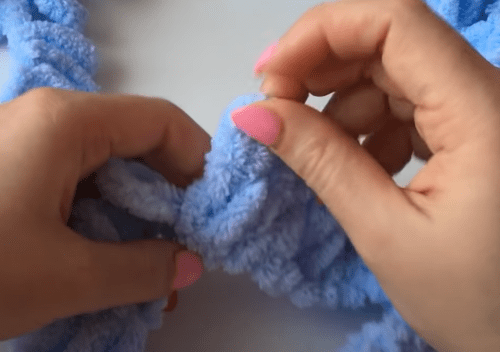
Leave a strand on the left with any number of loops. Fold over the strand from the skein and lay it right to left against the base strand. Start the first row: catch the top loop and pull it through the loop below it.
Gently snug the open loop
Leaving the loop open, gently pull it snug.
Repeat across the row and keep going
Work every loop the same way to the end of the row. Turn the strand and lay it left to right. Keep knitting without turning the fabric itself, until the blanket reaches the size you want.
Close off the last row
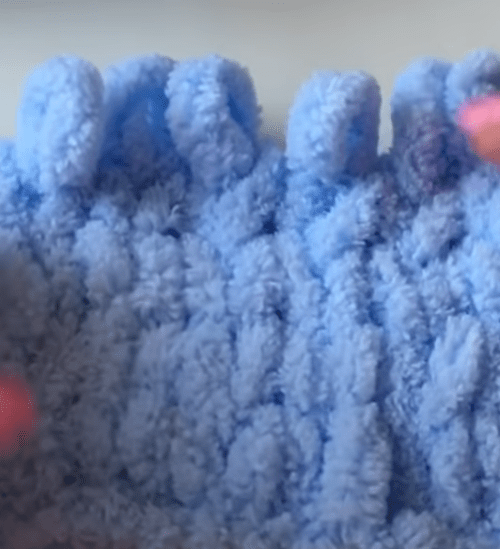
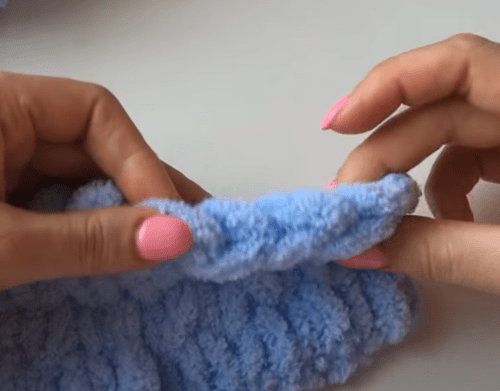
To close the last row, cut the strand from the skein. Pull the second loop in the row through the first, then the third through the second, and so on to the end of the row. This leaves a neat, full braid along the edge.
The Braid Pattern
You can also knit the blanket in a braid pattern: it's not much harder than stockinette stitch, but it has its own quirks.
Work out your stitch count
The number of loops needs to divide by 2, plus 2 edge stitches.
Work the pattern only on odd rows
The pattern is worked only on odd-numbered rows (right to left); on the return (even) row, work stockinette stitch as usual.
Swap the 2nd and 3rd loops
Work the first loop as usual, then swap the 2nd and 3rd loops. Whichever loop ends up in front determines whether the braid leans left or right. Pull the loops of the row above through the swapped loops, and repeat to the end of the row.
See the video for details
The braid pattern in Alize Puffy yarn is shown in more detail in the video tutorial.
An Alternative Method With Chunky Jersey Yarn
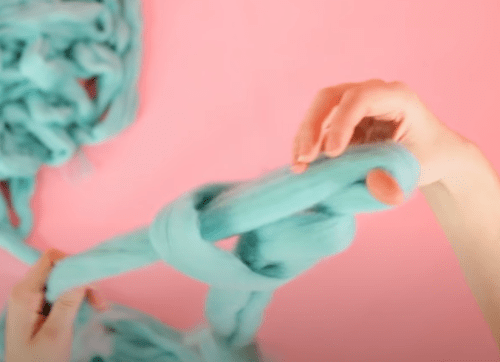
Chunky jersey yarn gives you an even plumper blanket, but here you shape the loops yourself.
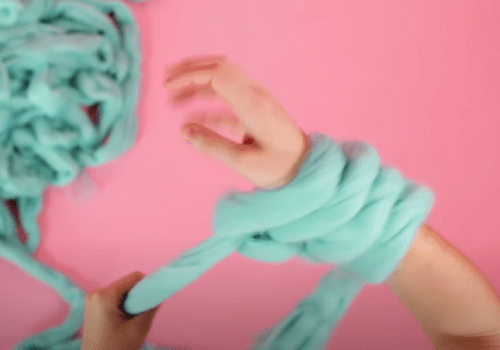
Make your first loop and slip it onto your hand
Make a loop from the yarn and slip it onto your right hand. For a single-bed blanket, 20 stitches is enough.
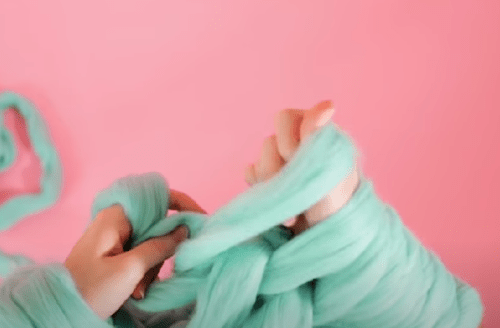
Pull the strand through the edge loop
Bring your hand through one loop (the leftmost one), catch the strand from the skein, and pull it through to form a loop, which you slip onto your left hand. Repeat the same motion, but working left to right, until you reach the height you want.
How much chunky yarn you'll need
A single-bed blanket needs 2 kg of chunky plush jersey yarn; a double-bed one needs 3 kg.
Caring for an Alize Puffy Blanket
A lot of people wonder whether plush-yarn fabric will stretch out after washing — it won't, as long as you follow a few rules.
Wash on a delicate cycle at 30°C
Use only a delicate wash cycle at 30°C. You can spin it, but dry it laid flat. Dry cleaning is fine too.
Don't bleach or iron it
The one thing you should never do with this yarn is bleach or iron it. That matters especially if you're knitting a crib blanket for a newborn or infant.
See how the fabric looks after washing
After washing, the fabric doesn't shrink, but it does become denser, and the loops even out to a matching size.
Finish and variations
Finish
Add an edging if you like
A hook and knitting needles aren't needed for the main fabric, but you can use them to edge the finished blanket and get a nice loop fringe.
Remember the care rules
Wash the blanket at 30°C on a delicate cycle, dry it laid flat, and don't use bleach or an iron.
Variations
The braid pattern instead of stockinette stitch
Instead of plain stockinette stitch, you can knit the blanket in a braid pattern: the stitch count divides by 2 plus 2 edge stitches, and the pattern is worked only on odd rows.
A blanket from chunky jersey yarn
A plumper version comes from chunky jersey yarn, where you shape the loops yourself: 20 stitches for a single-bed blanket, 2 kg of yarn for that size, and 3 kg for a double-bed version.
A fringe along the edge
Edging the finished blanket with a crochet hook or knitting needles gives you a nice loop fringe.
The fabric looks messy because the loops are different sizes.
Likely cause
The pre-made loop yarn wasn't pulled through evenly, or, with the alternative method, the loops were shaped with uneven tension.
How to fix it
Watch that you pull each loop snug evenly. The source notes that after the first wash, Alize Puffy loops even out to a matching size on their own.
The braid doesn't come out even
Problem
The braid pattern goes off, or the lean doesn't come out right.
Likely cause
The stitch count doesn't divide by 2 plus 2 edge stitches, or the order of swapping the 2nd and 3rd loops got mixed up.
How to fix it
Recount your loops so you have an even number plus 2 edge stitches, and pay attention to which loop — the 2nd or the 3rd — ends up in front: that's what determines whether the braid leans left or right.
The blanket shrank or stretched after washing
Problem
The blanket changed size or shape after being cared for.
Likely cause
It wasn't washed on a delicate cycle at 30°C, or it wasn't dried laid flat.
How to fix it
Only wash it on a delicate cycle at 30°C, spin it gently, and dry it laid flat. Never bleach or iron the blanket.
There wasn't enough yarn for the size you wanted
Problem
You ended up with fewer skeins than you needed for the blanket you had in mind.
Likely cause
The amount was estimated without accounting for the finished blanket's size.
How to fix it
For a 1 m by 85 cm baby blanket, get 5-6 skeins of Alize Puffy; for a large throw, get 9-10 skeins. For chunky jersey yarn, plan on 2 kg for a single bed and 3 kg for a double bed.
?FAQ
What yarn do I need for a hand-knit blanket?
The source uses Alize Puffy plush yarn: 100% microfiber polyester with pre-made, matching-size loops, in 100 g skeins with 9 m of yardage.
How many skeins do I need for a blanket?
A 1 m by 85 cm baby blanket takes 5-6 skeins; a large throw takes 9-10 skeins. For chunky jersey yarn, the amount is measured in kilograms: 2 kg for a single bed, 3 kg for a double bed.
How long does knitting a blanket like this take?
The source notes that you can finish the whole project in 4-5 days, unlike the much longer process of knitting or crocheting one.
Which pattern is easier for beginners?
Beginners should start with stockinette stitch. The braid pattern is a bit trickier and needs a specific stitch count.
How do I care for the finished blanket?
Wash it on a delicate cycle at 30°C, spin it, and dry it laid flat. Don't bleach or iron it.
Your project
Log in to track your project, attach photos, and publish your result into the shared feed.

 BeginnerFree