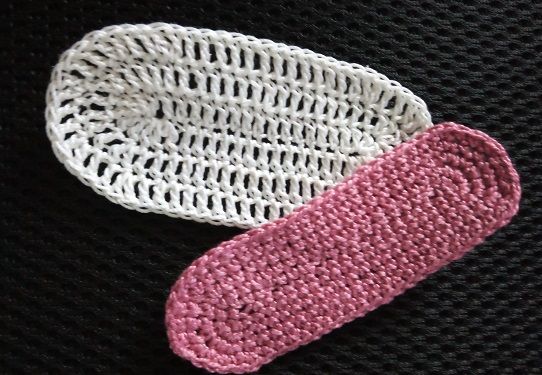
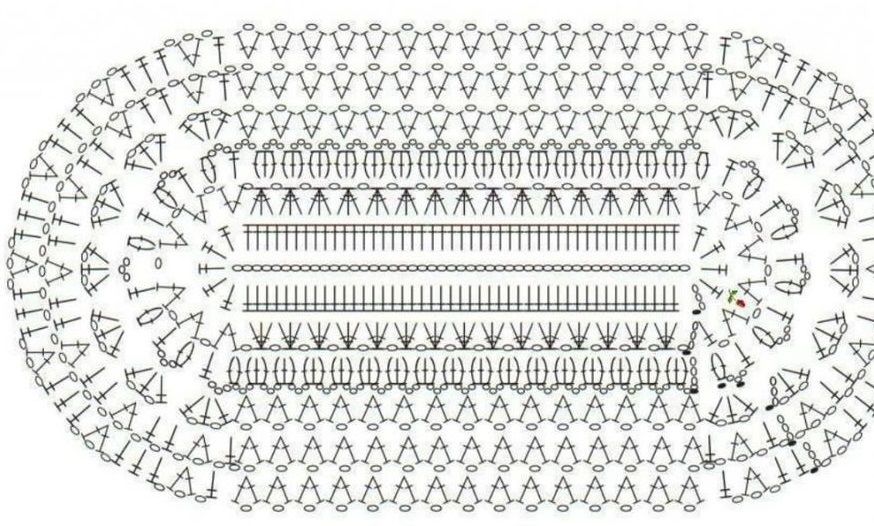
Detailed instructions and charts for crocheting an oval base three ways: a dense base in single crochet for bags and baskets that need a narrow base that holds its shape well, a base in double crochet for airier, lacier bags with a wider, smoother curve, and an openwork base with a dense center and airy edges.
IntermediateFree
Translated
Things you will learn
An oval base works for classic women's bags made from jute, ribbon yarn, or leftover yarn scraps — in other words, any material.
The dense base is worked in single crochet and suits bags and baskets where the base needs to be narrow and hold its shape well.
The double-crochet base is less dense and suits lacier bags; for extra sturdiness, you can back it with leather or a heavy fabric on the inside.
The openwork base has a dense center and airier edges, which you can thread ribbon or trim through for both looks and extra sturdiness.
Beginners should place a stitch marker at the start and end of each round to avoid mistakes when working in the round.
What you'll get
You'll get an oval base for a bag or basket — dense, medium-weight, or openwork, depending on which method you choose.
Materials and tools
Materials
Yarn (jute, ribbon yarn, or leftover yarn scraps), any material works — the base comes out well with any yarn
A crochet hook in the right size, choose the size based on your yarn's thickness
Tools
Stitch marker, recommended for beginners — place one at the start and end of each round to avoid mistakes when working in the round
Preparation
Choose your base type
Decide which base you need: a dense one (single crochet) for bags and baskets with a narrow base, a medium one (double crochet) for lacier bags, or an openwork one following chart #3.
Chain and place a stitch marker
For the sample, chain 10. Beginners should place a stitch marker at the start and end of each round to avoid mistakes.
Crochet the dense oval base (method 1)
This method suits bags and baskets where the base needs to be fairly narrow and hold its shape well. It's worked in single crochet (sc).
Single crochet around the chain
For the sample, chain 10 and single crochet around it in the round.
Work round 1
Round 1: 9 sc, 2 sc in one stitch (repeat 3 times), 9 sc, 3 sc increases.
Work round 2
Round 2: 10 sc, 1 sc in one foundation stitch, 1 sc, 2 sc in one stitch, 1 sc, 2 sc in one stitch, 9 sc.
Work round 3
Round 3: 10 sc, an sc increase, 1 sc, an sc increase, 1 sc, an sc increase, 10 sc.
Work round 4
Round 4: 12 sc, an sc increase, 2 sc, an sc increase, 1 sc, an sc increase, 12 sc.
Work round 5
Round 5: 12 sc, an sc increase, 4 sc, an sc increase, 4 sc, an sc increase, 12 sc.
Work round 6
Round 6: 16 sc, then stagger the 2 increases relative to the previous round, working 4 sc between the increases, then 12 sc.
Staggering the increases
The increases in this round are deliberately staggered relative to the previous round so the base stays flat and doesn't ripple.
Work round 7 and finish chart #1
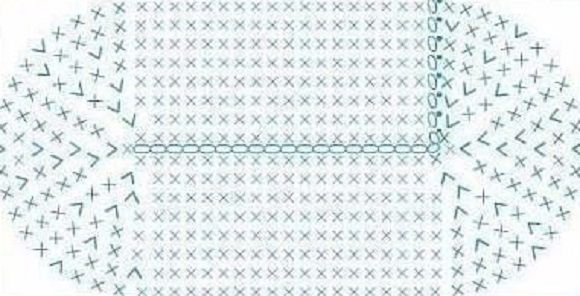
Round 7: 16 sc, an sc increase, 5 sc, an sc increase, 5 sc, an sc increase, 20 sc. See the dense base pattern chart #1.
Crochet a base in double crochet (method 2)
This piece is less dense than the previous one and works well for lacy bags and airy accessories. For extra sturdiness, you can back the base with leather or heavy fabric on the inside. The base also comes out wider, with very smooth curves, and is easy to edge with any crochet stitch pattern.
Chain your foundation
For the sample, chain 10.
Work round 1, worked in the round
Round 1: 9 dc, work 5 dc from the last stitch, then work the same pattern along the other side of the chain.
Work round 2
Round 2: 9 dc, work 5 dc increases from the five end stitches, then work the same along the other side of the piece.
Work round 3
Round 3: 10 dc, 2 dc in one stitch, 1 dc (repeat 6 times), 9 dc, 2 dc in one stitch, 1 dc (repeat 6 times).
Work round 4
Round 4: 10 dc, 1 dc in one stitch, 2 dc, 1 dc in one stitch, 3 dc, 1 dc in one stitch, 2 dc, 1 dc in one stitch, 3 dc, 1 dc in one stitch, 10 dc.
Work round 5 and finish chart #2
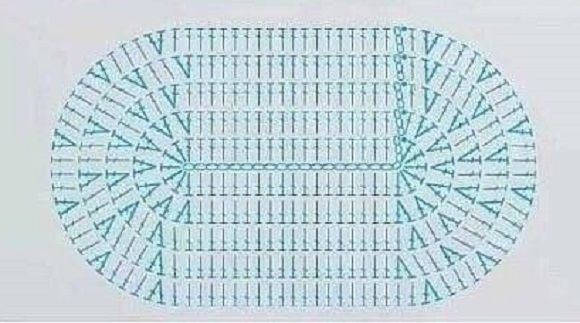
Round 5: 12 dc, alternating 3 and 4 dc between the increases. See base pattern chart #2.
Crochet an openwork base (method 3)
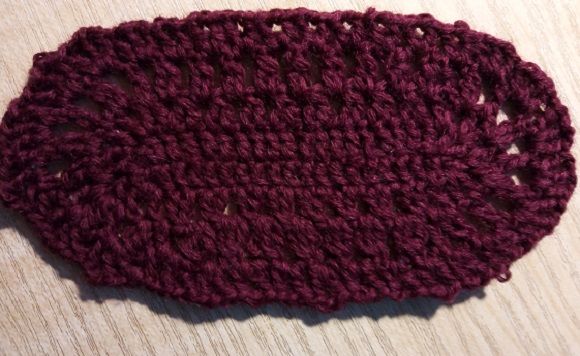
This chart is often used not just for basket and bag bases, but also for clutch flaps, mail-bag flaps, and similar pieces. The pattern is simple enough for even a fairly new crocheter.
Crochet the base following chart #3
This base has a dense center and airier edges, which you can thread ribbon or trim through for both looks and extra sturdiness. Follow chart #3.
Finish and variations
Finish
Use your base for a bag or basket
Edge your finished oval base with a side panel of whatever height you need, and turn it into a bag or basket in any yarn.
Variations
Reinforcing the double-crochet base
If the double-crochet base comes out too airy for your project, back it on the inside with leather or heavy fabric.
Ribbon or trim through the openwork edge
You can thread ribbon or trim through the openwork base's airy edges — it adds both looks and extra sturdiness.
You lose track of your stitch count while working in the round
Problem
While crocheting, it's hard to tell where the current round started and ended.
Likely cause
A stitch marker wasn't placed at the start of the round, or it got knocked off by accident.
How to fix it
Place a stitch marker at the start and end of every round, especially at first — this rules out miscounting.
?FAQ
Which base should I choose for my bag?
A dense single-crochet base for bags and baskets that need a narrow base that holds its shape well; a double-crochet base for lacier, airier pieces; an openwork base for clutch flaps, mail-bag flaps, and similar pieces.
What yarn works for the base?
Any material works — jute, ribbon yarn, or leftover yarn scraps.
Why do you need a stitch marker?
To avoid miscounting rounds and stitches while working in the round, especially as a beginner.
How do you make the double-crochet base sturdier?
Back it on the inside with leather or heavy fabric.
Where else can you use the openwork base pattern?
Besides basket and bag bases, this same chart is often used for clutch flaps, mail-bag flaps, and similar pieces.
Your project
Log in to track your project, attach photos, and publish your result into the shared feed.

 IntermediateFree