Crochet Shower Scrubber: Yarn, a Long Style, and a Round Sponge
We cover which yarn to choose for a crocheted scrubber, how to crochet the long style on a 36-chain foundation with puff stitches, how to make sturdy handles, and how to work a round scrubber with loop stitches.
BeginnerFree
Translated
Things you will learn
Polypropylene, polyester, jute, or hemp fiber work well for a stiff, fast-drying scrubber; for sensitive skin, the source material points toward viscose, linen, bamboo, and soft blended yarns.
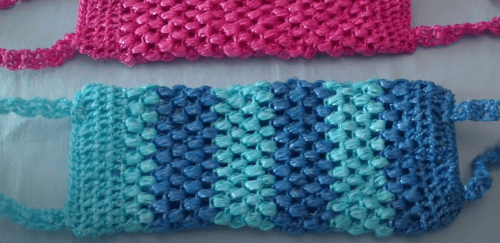
The long scrubber from the source starts with a 36-chain foundation, is crocheted with polyester yarn held double on a size 5 (5 mm) hook, and filled in with puff stitches in a staggered pattern.
You can crochet the handles straight from the edge or work them separately in turned rows; the discussion adds a tip to reinforce the handles with sturdy cotton tape or crochet them held double.
The round scrubber starts with a ring of 4 chain stitches and 6 single crochets, then widens with loop stitches.
What you'll get
The source material shows two scrubber styles: a long bath scrubber with two loop handles, and a round sponge with loop stitches. Before you start, it's worth choosing your yarn based on the stiffness, lather, and drying speed you want. For the shower, you can make a stiffer massaging version or a soft sponge for sensitive skin.
Materials and tools
Materials
Polyester or polypropylene yarn, for the long style, the source uses polyester yarn held double; polypropylene yarn dries quickly and goes a long way
Jute twine, 2 mm, a natural option for an eco-friendly scrubber; the source specifies 2 mm twine with up to 50 m per skein
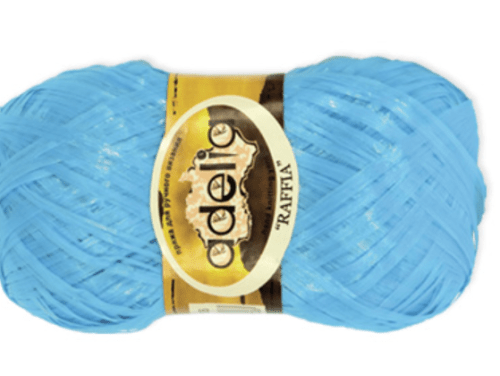
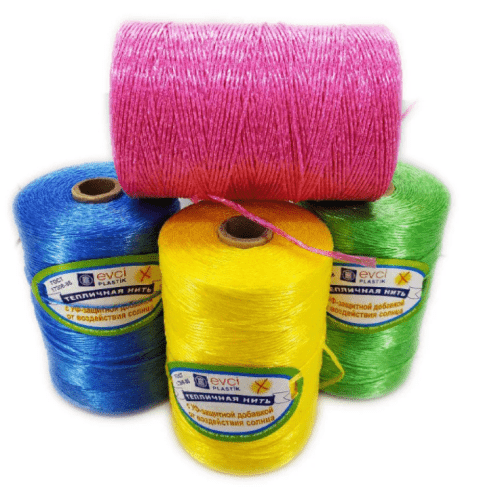
Viscose yarn, options from the source: Ispie Rafia, 100% cellulose; colored twine for rugs and scrubbers; plant-tying twine
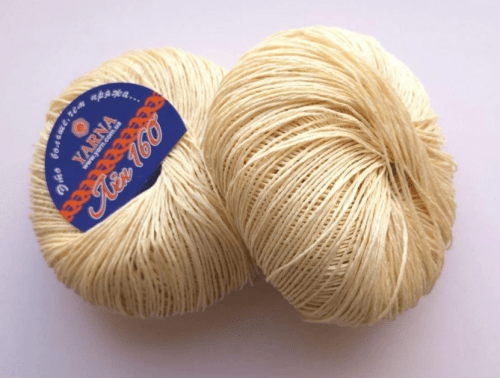
Linen, bamboo, or soft blended yarn, for soft scrubbers and sensitive skin; the source lists Yarna, 100% linen; Bambu; and Drops Belle
Sturdy cotton tape, not required; a tip from the discussion for handles that shouldn't stretch out or dig into your hand
A regular sponge, 1 pc., not required; only needed if you're making a double scrubber with a pocket for better lather
Tools
Size 5 (5 mm) crochet hook, specified in the source for the long scrubber made with polyester yarn held double
Sewing needle for attaching the handles, needed if the handles are crocheted separately or replaced with sturdy tape
Files and resources
Video tutorial: a stiff and a soft shower scrubberThe source material suggests using the video as a guide for scrubber options made with the right yarn.Video tutorial: a stiff and a soft shower scrubber
Preparation
Decide how stiff you want it
For a massaging scrubber, choose a stiffer yarn. For sensitive skin, a scrubber for kids, or a soft shower option, choose viscose, linen, bamboo, or a soft blended yarn.
Decide on your handles ahead of time
If the handles need to hold up to strong pulling, don't make them too narrow. The discussion confirms sturdy cotton tape works well; another option is to crochet the handles held double.
Plan to replace natural-fiber scrubbers more often
Viscose, linen, cotton, and bamboo scrubbers are softer, but the source warns they don't last as long as polypropylene ones and need to be replaced more often.
How to Choose Yarn for a Scrubber
Your choice of yarn affects how much you use, the color, the softness, hygiene, and how quickly the scrubber dries after a shower.
Compare yarn use, color, and softness
The most economical option in the source is polypropylene: a single scrubber might use about half a skein. Synthetic yarn holds its color and isn't bothered by water or soap. For softness, look at the fiber content: cotton, viscose, linen, and bamboo are gentler on sensitive skin, but they don't last as long.
What to check before buying
The yarn should suit your skin's sensitivity, dry quickly, and not hold onto soap or gel smells.
Jute and other natural fibers
Jute is used for eco-friendly scrubbers and a stronger massaging effect. For scrubbers, the source recommends 2 mm jute twine: it isn't too rough, comes in different colors, and can run up to 50 m per skein. Hemp fiber is also listed among the fast-drying natural options.
Jute works well for a stiffer, massaging scrubber.
Polypropylene, polyester, and raffia
Adelia Raffia is 100% polypropylene, 50 g and 200 m per skein, medium stiffness, up to 3 mm thick. Arachna Fibra is 100% polyester, 50 g and 200 m; the source describes it as similar to polypropylene yarn, but stronger and softer. These yarns dry quickly and work for both massaging and lathering shower scrubbers.
Synthetic yarn dries quickly and holds its color well.
Viscose, linen, and soft blends
The source names viscose as one of the best materials for scrubbers: it absorbs water well, doesn't build up static, is hypoallergenic, and holds up well. For linen and blended options, it lists Yarna 100% linen, Bambu with bamboo/viscose/linen, and Drops Belle with cotton, viscose, and linen — the softest yarns for kids' scrubbers and sensitive skin.
Viscose and similar yarns are used for softer versions.Linen and blended natural yarns work well for soft sponges.
A Long Scrubber with Two Loop Handles
This style is crocheted as a tube, filled in with puff stitches, then folded in half and closed on both sides.
Start the foundation
Take polyester yarn held double and a size 5 (5 mm) hook. Chain 36 and join into a ring. Work the first round in single crochet, and rounds 2-4 in double crochet.
The shape of the long scrubber, crocheted as a tube and folded in half.
Crochet the main length in puff stitches
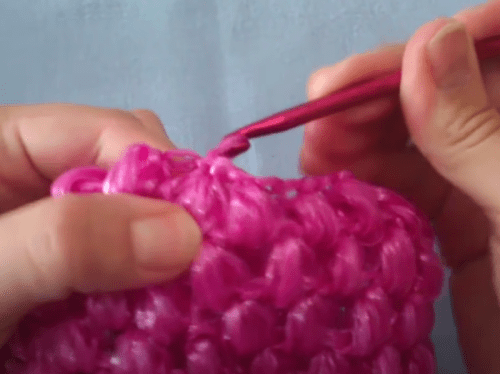
Next, crochet the rest of the scrubber's length in puff stitches, staggered from round to round. For one puff stitch, insert the hook into a stitch from the previous round, yarn over, repeat this 3 times, then pull the yarn through all the loops on the hook.
Puff stitches create a full, textured surface.
Check your texture
The puff stitches should sit loosely and full, but without large gaps between them.
Close the ends of the scrubber
Once you're happy with the length, switch to double crochet for 3 rounds, and work the last round in single crochet. Fold the scrubber in half and slip-stitch the stitches of the last round together. Do the same on the other end.
Make the loop handles
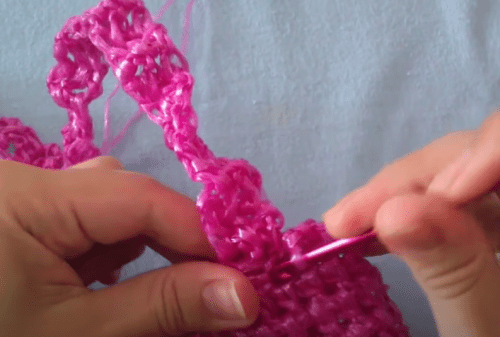
First method: at the last round, don't cut the yarn — chain a length, work double crochet along the chain, and fasten it off on the opposite side. Second method: chain 3 and work double crochet on it in turned rows until you reach the length you need, then sew both finished loops onto the scrubber.
The handle loop can be crocheted right from the edge or sewn on separately.
Tip from the discussion
If the handles stretch out, get thin, and dig into your hand, you can sew on sturdy cotton tape instead, or crochet the handles with a heavier polyester yarn held double.
A Round Scrubber with Loop Stitches
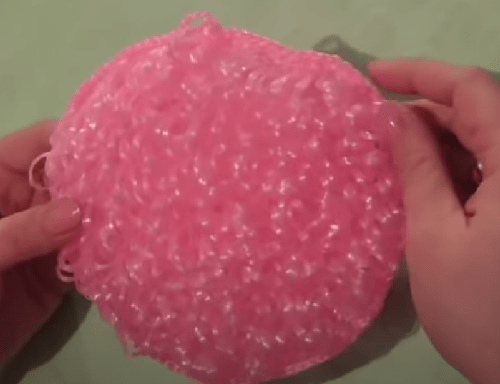
This round sponge is crocheted from the center out: a small ring first, then an even increase using loop stitches.
Start the circle
Chain 4 and join into a ring. Work 6 single crochets into the ring for the first round.
Increase the circle and add loop stitches
In the second round, gradually widen the circle: work 2 stitches into each single crochet from the previous round. Make one a regular single crochet, and the other a loop stitch: wrap the yarn around the index finger of your left hand, catch it, pull it through the stitch from the previous round, and secure it with a single crochet.
The round scrubber is crocheted from the center with an even increase.
Work up to the size you want
From the third round on, keep working in loop stitches with a steady, even increase. Once the round scrubber reaches the size you want, work the last round in single crochet.
Video for other options
For a stiff or soft scrubber made with the right yarn, the source also includes a detailed video tutorial.
How to Make Your Scrubber Last Longer
Care matters most for natural fibers and for scrubbers that stay damp for a while after a shower.
Soften polyester before first use
If a polyester scrubber feels too stiff, soak it for 10 minutes in very hot water before using it for the first time — but not boiling water.
Don't boil it
The source specifically notes: use very hot water, not boiling water.
Add a sponge pocket if you want more lather
To help the scrubber lather gel or soap better and keep it from rinsing away too fast, you can crochet a double-layered version with a pocket and slip a regular sponge inside. After bathing, take the sponge out and dry it separately.
Wring it out and dry it after every shower
Any shower scrubber needs to be wrung out well and hung up to dry, or dried on a radiator. It's a good idea to crochet a few linen or cotton scrubbers and rotate them as they get dirty and lose their original feel.
Finish and variations
Finish
Check the handles and drying
Before first use, pull on the handles and make sure they don't get thin. After a shower, wring the scrubber out and hang it up to dry.
Variations
A long scrubber with two loop handles
The main style from the source: 36 chain stitches, polyester yarn held double, a size 5 hook, and puff stitches in a staggered pattern.
A round scrubber with loop stitches
A compact sponge worked from the center: 4 chain stitches, 6 single crochets, and a gradual increase with loop stitches.
Kitchen scrubbers
An idea from the discussion: one skein can make a whole set of small scrubbers for the kitchen.
A double-layered scrubber with a sponge inside
For steadier lather, crochet a pocket and slip a regular sponge inside — you can take it out and dry it separately.
After use, the handles get long, thin, and uncomfortable.
Likely cause
The discussion links this to narrow handles and crochet that's too soft or stretchy.
How to fix it
Use sturdy cotton tape, like on old-fashioned bath scrubbers, or crochet the handles with a heavier polyester yarn held double. Don't make the handle too narrow.
The polyester feels too stiff
Problem
A new scrubber scratches more than expected.
Likely cause
Polyester yarn can be stiff before it's used for the first time.
How to fix it
Soak the scrubber for 10 minutes in very hot water before first use — but not boiling water.
The scrubber doesn't lather well
Problem
Gel or soap rinses off the fabric quickly.
Likely cause
A single layer of crochet fabric may not hold the product as well.
How to fix it
Crochet a double-layered version with a pocket and slip in a regular sponge. Take the sponge out and dry it separately after bathing.
A natural-fiber scrubber loses its freshness quickly
Problem
Linen, cotton, or other soft natural-fiber scrubbers get dirty faster.
Likely cause
The source warns that these sponges don't last as long as polypropylene ones and need to be replaced more often.
How to fix it
Wring the scrubber out well and dry it after every shower. For natural fibers, it's best to crochet a few and rotate them as they get dirty and lose their qualities.
The loop stitches come out different lengths
Problem
The round scrubber looks uneven.
Likely cause
The loop is pulled to a different length each time, or the circle is increased unevenly.
How to fix it
Wrap the yarn around the same finger every time, keep the same tension, and increase the circle gradually. Work the last round in single crochet, as in the source.
?FAQ
What's the best yarn for a first crocheted scrubber?
For a practical shower scrubber, it's easiest to start with polypropylene or polyester: they dry quickly and hold up well to water and soap. For something softer, choose viscose, linen, bamboo, or a soft blended yarn.
How much yarn do I need for one scrubber?
The source notes that polypropylene scrubbers are the most economical: one might use about half a skein. For jute, the reference point is 2 mm twine with up to 50 m per skein.
How do I make handles that won't stretch out?
Based on the discussion, sturdy cotton tape is a reliable option — it doesn't stretch and may shrink a little with hot water. If you'd rather crochet the handles, use a heavier polyester yarn held double.
What should I use for sensitive skin or a kids' scrubber?
The source names viscose, linen, bamboo, and soft blended yarns, including Drops Belle, for soft scrubbers. They feel nicer on skin, but need to be replaced more often than polypropylene ones.
How do I dry a crocheted scrubber after a shower?
After use, wring the scrubber out well and hang it up to dry, or dry it on a radiator. If there's a regular sponge inside, take it out and dry it separately.
Your project
Log in to track your project, attach photos, and publish your result into the shared feed.
Such a detailed tutorial! Thank you! Could you tell me where I went wrong? I once tried to make a scrubber, though I did it on knitting needles. It actually came out pretty well. But the problem turned out to be the handles. They stretched out very quickly and got thin. It became really uncomfortable to use the scrubber — not only did the length change (I could still deal with that by tying the extra length into little bows), but the narrow handles also cut into my hand painfully. I just knitted the handles in plain knit stitch. Maybe I need a different stitch pattern, or to insert something into them, like a cord? I found a workaround — I started sewing on a fabric ribbon instead of handles. But that's probably not quite the right way to do it.
Such a detailed tutorial! Thank you! Could you tell me where I went wrong? I once tried to make a scrubber, though I did it on knitting needles. It actually came out pretty well. But the problem turned out to be the handles. They stretched out very quickly and got thin. It became really uncomfortable to use the scrubber — not only did the length change (I could still deal with that by tying the extra length into little bows), but the narrow handles also cut into my hand painfully. I just knitted the handles in plaiShow full quoteCollapse
Such a detailed tutorial! Thank you! Could you tell me where I went wrong? I once tried to make a scrubber, though I did it on knitting needles. It actually came out pretty well. But the problem turned out to be the handles. They stretched out very quickly and got thin. It became really uncomfortable to use the scrubber — not only did the length change (I could still deal with that by tying the extra length into little bows), but the narrow handles also cut into my hand painfully. I just knitted the handles in plain knit stitch. Maybe I need a different stitch pattern, or to insert something into them, like a cord? I found a workaround — I started sewing on a fabric ribbon instead of handles. But that's probably not quite the right way to do it.
Why isn't it right, though? Remember how old-fashioned bath scrubbers made from natural material (not sure what kind) used to have loops sewn on from sturdy cotton tape? It won't stretch — if anything, it might shrink a little from hot water. And polyester yarns come in different thicknesses and stiffness, so for the handles you could hold it double, which I think would be sturdier, and crochet it.

 BeginnerFree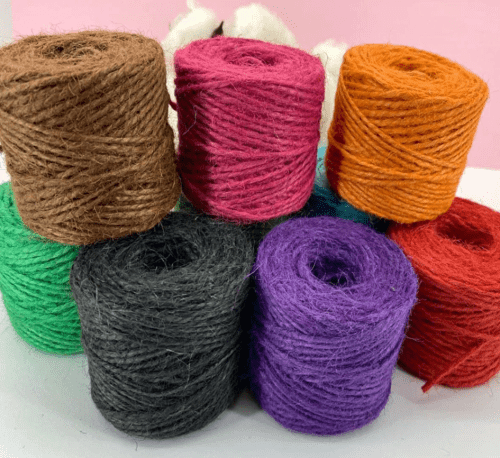


Such a detailed tutorial! Thank you! Could you tell me where I went wrong? I once tried to make a scrubber, though I did it on knitting needles. It actually came out pretty well. But the problem turned out to be the handles. They stretched out very quickly and got thin. It became really uncomfortable to use the scrubber — not only did the length change (I could still deal with that by tying the extra length into little bows), but the narrow handles also cut into my hand painfully. I just knitted the handles in plaiShow full quoteCollapse