A Clever Way to Knit in the Round with Two Straight Needles
Many knitters know plenty of tricks that make knitting easier. Today I suggest learning a technique for circular knitting on two ordinary straight needles without a cable. With this technique, you can quickly and easily knit a skirt, sweater...
BeginnerFree
Translated
A Clever Way to Knit in the Round with Two Straight Needles
Many knitters know plenty of tricks that make knitting easier. Today I suggest learning a technique for circular knitting on two ordinary straight needles without a cable. With this technique, you can quickly and easily knit a skirt, sweater...
Main Steps
Step 1
Many knitters know plenty of tricks that make knitting easier. Today I suggest learning a technique for circular knitting on two ordinary straight needles without a cable. With this technique, you can quickly and easily knit a skirt, sweater sleeves (or whatever your imagination suggests).
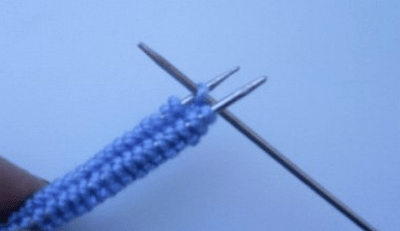
To practice and understand how knitting on two straight needles without a cable works, cast on 40 stitches in your usual way onto two needles. Divide the stitches into two parts—20 on each needle—and stretch them slightly. For larger projects, the same situation occurs, only with more stitches. Put the needles with the stitches together and prepare a third needle.
Step 2
Step 3
Step 4
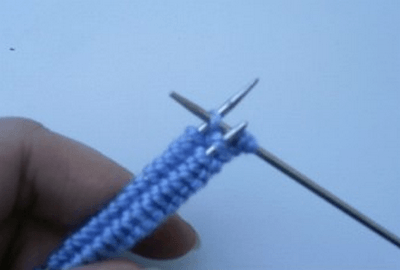
Slip the first stitch from one needle without working it. Then slip the first stitch from the other needle. Continue slipping stitches onto the third needle until all 40 stitches are on one needle.
Step 5
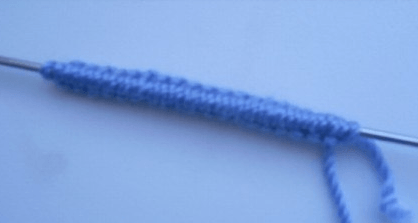
Note that one half of the cast-on stitches projects slightly forward and the other half projects backward. First work the row that projects slightly forward. Look at the first stitch: if it projects forward, begin knitting with it; if it projects backward, simply slip it to the other needle and knit the projecting stitch. Slip the next stitch, then knit the stitch after it. Continue this way to the end of the row. You will see that the two layers are not equal: one is shorter and the other is longer.
Step 6
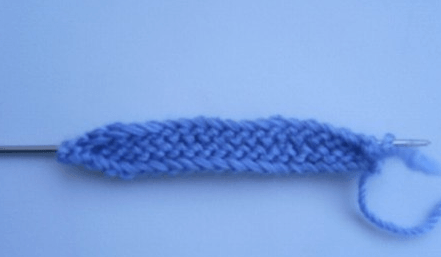
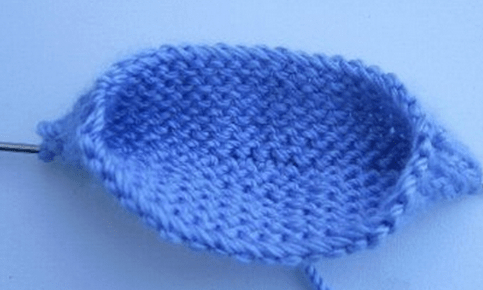
Turn the work and continue knitting, again alternating stitches (knit/slip). Once you have worked 5-7 rows, you can see for yourself that there are no seams. This technique can be used not only for garter stitch, but also for ribbing and patterns. Just remember to alternate the stitches! Happy knitting!

 BeginnerFree