
How to knit durable and long-lasting socks
In winter, it's hard to do without warm knitted socks. They are worn not only at home instead of slippers but also with winter footwear, which is especially appreciated by fishermen, hikers, and outdoor enthusiasts. If you knit by hand, you have probably wondered: how to knit socks so they last a long time?
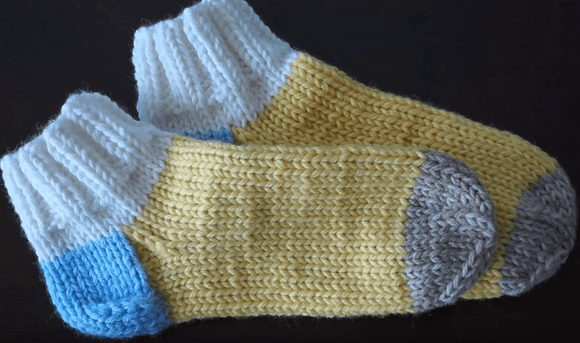
I want to share the experience passed down to me by my grandmother, who created items from natural wool and down she processed herself.
***Tip #1
How to prevent the heel from wearing out.***
This is perhaps the most common issue for those who wear socks with shoes. The heel wears out at the back, and the only way to fix this is to re-knit that part of the sock. To keep the heel from wearing out so quickly, you should add a sewing thread to the main yarn while knitting. I usually use cotton No. 10, but synthetic thread works too; the main thing is that the thread shouldn't be too thin.
***Tip #2
How to make socks warmer for children and prevent the toe from wearing out***
We all know that in winter, our toes get the coldest in our shoes. To avoid this, I knit the toe of the sock using thin wool yarn with added angora or down. You don't necessarily have to find yarn that perfectly matches the main color; you can choose contrasting ones, as this isn't critical for children's items. Adding the same strong sewing thread will also help prevent rapid wear.
Tip #3 * How to avoid holes in patterned socks*
This problem is common for socks knitted with a jacquard pattern. The connection points of the threads often pull apart, leading to small, initially invisible holes that eventually grow, requiring you to pick up stitches and darn them. It's easy to deal with this problem. It's best not to knit the pattern over the entire sock, avoiding areas that stretch the most. I usually place the pattern right after the ribbing (about 5 cm), then switch to stockinette stitch, and knit the pattern again after finishing the heel, leaving a couple of centimeters gap. * Tip #4
How to avoid stretching and wear of the cuff*
It is best to knit the beginning of the sock (the cuff) with thinner needles and yarn, which will ensure a snugger fit to the leg. You can also additionally sew elastic thread into the ribbing using a machine, threading it through the knit stitches. The top of the sock can be knitted not from wool, which wears out quickly, but from acrylic or viscose; this won't affect the warming qualities but will make the socks more durable.
If you knit with downy yarns, the guide on washing mink down and angora garments will help preserve the finished socks.


I remember my grandmother used nylon stockings, but not for knitting, but for external reinforcement of the knit. She would cut a sort of "footie" out of nylon (usually beige) and sew it onto the sole of the finished sock. The construction looked completely unreliable, but the socks really didn't wear through 👍